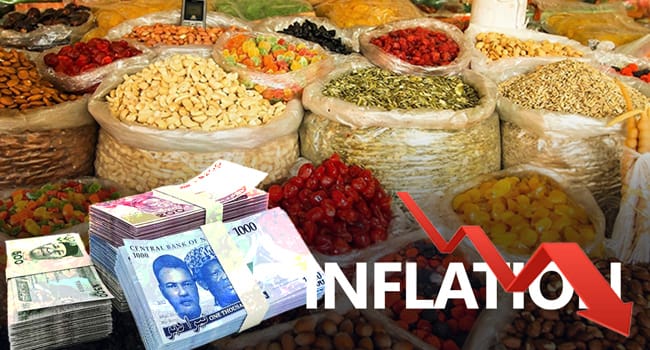
A walk through any major market in Lagos reveals the real story behind Nigeria’s food inflation crisis. The rising cost of tomatoes, onions, grains, fish and meat is no longer a short term shock but a persistent economic pressure shaping household consumption across income levels. While insecurity, flooding and currency depreciation are often cited as primary drivers, these factors do not fully explain the depth or persistence of food price increases.
At its core, Nigeria’s food inflation problem is not only about production. It is about value loss within the supply chain.
Nigeria loses an estimated ₦3.5 trillion worth of food annually due to post-harvest inefficiencies, according to the Nigerian Stored Products Research Institute. This figure exceeds the federal government’s annual agriculture budget and highlights a structural imbalance within the food system. Nigeria has the capacity to produce food at scale, yet a significant share of that output never reaches the market in consumable condition.
Data from the National Bureau of Statistics shows that food inflation remained above 30 percent through 2023, driven by sustained increases across staples such as cereals, tubers, vegetables and protein sources. The removal of fuel subsidy further intensified cost pressures as higher transport costs cascaded through the supply chain, amplifying inefficiencies and pushing food prices higher.
Beneath these pressures lies a more persistent structural constraint. Post-harvest losses for perishable commodities such as fruits, vegetables and tubers consistently range between 40 and 60 percent. In practical terms, this means that for every two truckloads of produce transported from northern Nigeria, only one arrives at urban markets in sellable condition. The rest is lost during harvesting, handling, storage or transit.
This level of loss is primarily driven by the absence of functional cold chain infrastructure.
Nigeria operates with fewer than 1,000 refrigerated trucks despite demand for several thousand units to efficiently transport perishable goods, according to the Organisation for Technology Advancement of Cold Chain in West Africa. Cold storage capacity across key agricultural clusters remains limited, forcing farmers and traders into immediate sales cycles that erode value and destabilise pricing across markets.
The implications are systemic. Farmers sell at depressed prices during peak harvest periods, while urban markets experience supply shortages driven not by low production, but by high loss rates across the supply chain. This disconnect continues to sustain food inflation despite ongoing production efforts.
What is emerging, however, is a clearer pathway for reform, one that shifts the focus from production alone to preservation, logistics and market readiness.
At Terroso Group, this approach is being operationalised through Terroso Agriculture with targeted investments in cold storage infrastructure, mobile cold rooms and technology enabled supply chain systems. These solutions are designed to preserve produce closer to the point of harvest, where losses are highest, while improving aggregation, extending shelf life and enabling more efficient distribution into urban markets.
Beyond domestic supply, this model also strengthens export readiness. By maintaining consistent temperature control and product quality across the value chain, cold storage systems enable Nigerian agricultural produce to meet international standards required for participation in global markets. This creates a pathway not only for reducing food loss, but for unlocking new sources of foreign exchange through agricultural exports.
The broader implication is that preservation infrastructure is no longer a supporting function within agriculture, it is a primary driver of value creation. Investment in cold chain systems, energy efficient storage and integrated logistics networks will determine how much of Nigeria’s agricultural output translates into economic value, price stability and global competitiveness.
As Nigeria moves further into 2024, scaling this model across the sector will require coordinated action. Government policy must prioritise infrastructure that supports post-harvest preservation, while private sector operators and investors must accelerate capital deployment into storage and logistics systems.
Development finance institutions also have a role to play in enabling long term financing for infrastructure that strengthens agricultural value chains.
The lesson is increasingly clear. Nigeria does not face a production constraint in isolation, it faces a preservation and distribution challenge that continues to translate into higher food prices and reduced market efficiency. Models that integrate cold storage, logistics and technology driven supply chains already demonstrate what is possible when this gap is addressed.
Adopting and scaling these models across the agricultural sector will be critical to reducing food inflation, improving farmer incomes and positioning Nigeria for greater participation in global agricultural trade.
The future of Nigeria’s food system will not be determined by how much is grown, but by how much is preserved, moved efficiently and delivered to market in good condition.
We’ve got the edge. Get real-time reports, breaking scoops, and exclusive angles delivered straight to your phone. Don’t settle for stale news. Join LEADERSHIP NEWS on WhatsApp for 24/7 updates →
Join Our WhatsApp Channel