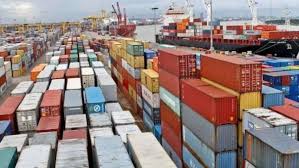
Nigeria controls over 60 per cent of West Africa’s GDP but manages only 25 per cent of regional cargo traffic due to port congestion, poor infrastructure, and inefficiencies, NPA Managing Director Dr. Abubakar Dantsoho has warned.
The federal government under President Bola Tinubu is responding with $1 billion in port upgrades, digital systems, and deep seaports to leverage AfCFTA and boost maritime dominance.
The federal government is pushing to unlock the vast potential of its marine and blue economy driven by an ambitious mix of policy reforms, infrastructure upgrades and institutional realignment under the administration of Bola Ahmed Tinubu.
At the centre of this strategy is a bold effort to overhaul the nation’s port system, expand maritime capacity and reposition the country as a dominant trade hub in West Africa.
Across multiple fronts, from legislative backing and financing to regulatory reforms and digital transformation, the federal government is attempting what industry experts describe as a long-overdue reset of Nigeria’s maritime architecture. The goal is clear: to leverage the African Continental Free Trade Area (AfCFTA) and place Nigeria at the heart of intra-African commerce.
For decades, Nigeria’s ports have served as the primary gateway for international trade, handling over 90 per cent of the country’s cargo by volume. Yet, inefficiencies, congestion, poor infrastructure and fragmented processes have limited their competitiveness, allowing smaller economies in the region to capture a disproportionate share of maritime traffic. That reality is now being confronted head-on.
The managing director of the Nigerian Ports Authority (NPA), Dr Abubakar Dantsoho, who disclosed this while addressing industry stakeholders at a forum in Lagos, said Nigeria’s port must evolve beyond their traditional limitations to compete in a rapidly integrating African market.
“The time has come for a paradigm shift in the structure of Nigeria’s economy towards the full utilisation of our marine resources. Our port system, if properly harnessed, can serve as a major driver of economic growth,” he said.
Under AfCFTA, where trade barriers are steadily being dismantled, Dantsoho warned that efficiency, not geography, will determine which countries dominate cargo flows.
“Nigeria’s geographical advantage alone is no longer sufficient,” he said. “Efficiency, speed, innovation and reliability will define leadership in this new era.”
The foundation for this transformation was laid early in the Tinubu administration with the creation of the Federal Ministry of Marine and Blue Economy, an institutional shift that signalled a strategic rethinking of Nigeria’s economic priorities.
The ministry, headed by Adegboyega Oyetola, was designed to coordinate previously fragmented maritime functions and unlock what government estimates place at a $3 trillion blue economy potential.
Since then, the administration has pursued a multi-layered reform agenda, combining infrastructure investment with policy innovation. Central to this is the port modernisation programme, which has received both executive backing and legislative support.
In a major step, the House of Representatives approved a $1 billion loan request by President Tinubu for the rehabilitation of the Lagos Port Complex and Tin Can Island Port, two of the country’s most critical maritime assets.
According to the President, the project is aimed at addressing “critical infrastructure deficiencies accumulated over decades of operation” while improving efficiency, safety and global competitiveness.
The modernisation initiative, he noted, aligns with Nigeria’s broader economic agenda under the National Integrated Infrastructure Master Plan and is essential for supporting non-oil exports and trade diversification.
At the operational level, the NPA has begun implementing targeted upgrades at Apapa and Tin Can Island ports, focusing on berth expansion, improved cargo handling and reduced vessel turnaround time.
Beyond Lagos, the government is extending the modernisation drive nationwide. Procurement processes are already underway for upgrades in Warri, Port Harcourt, Onne and Calabar ports, reflecting what officials describe as a commitment to balanced development.
Oyetola has been emphatic that the reform agenda is not Lagos-centric.
“We are committed to a balanced and inclusive development of port infrastructure across the country,” he said, noting that nationwide upgrades will enhance connectivity and stimulate regional economic growth.
In parallel, new deep seaports are being developed in multiple coastal states, including Bayelsa, Cross River, Akwa Ibom and Ondo, to expand capacity and decongest existing facilities.
The emergence of deep seaports such as Lekki Port is already reshaping Nigeria’s maritime landscape, enabling the handling of larger vessels and increasing cargo throughput—key requirements for competing in global shipping networks.
Infrastructure alone, however, is not the focus of the reforms. The government is also pushing an aggressive digitalisation agenda aimed at eliminating inefficiencies associated with manual processes.
Key initiatives include the deployment of a Port Community System (PCS) and the National Single Window platform, both designed to integrate stakeholders, streamline documentation and enhance transparency.
Industry experts say these systems could significantly reduce cargo clearance times and lower the cost of doing business—longstanding concerns among importers and exporters.
The push toward a “paperless, technology-driven port environment” is expected to improve turnaround time, curb corruption and enhance Nigeria’s attractiveness as a logistics hub.
Operational reforms are also targeting reduced cargo dwell time, faster clearance processes and improved service delivery across terminals.
Recognising that port efficiency extends beyond quay walls, the government is investing in multimodal logistics to improve cargo evacuation and inland connectivity.
Rail integration, inland dry ports, barging operations and dedicated export corridors are being expanded to ease congestion and ensure seamless movement of goods across the country.
Dantsoho stressed that without efficient hinterland connectivity, gains made at the ports would be difficult to sustain, an acknowledgment of the systemic challenges that have historically undermined Nigeria’s logistics chain.
Another critical pillar of the reform agenda is maritime security, which has seen notable improvements in recent years.
Nigeria has recorded over four years without piracy incidents, a development attributed to the Deep Blue Programme and enhanced surveillance systems.
This progress has significantly boosted investor confidence, creating a more stable environment for maritime operations and infrastructure development.
Private sector participation is also being actively encouraged, with the NPA adopting project financing models to bridge funding gaps and accelerate development.
“We are open to private sector participation through project financing. This approach is already improving efficiency and providing access to funding for critical infrastructure,” Dantsoho said.
The early results of these reforms are beginning to reflect in revenue performance and sectoral growth.
According to Oyetola, agencies under the ministry increased their combined revenue from about N700.79 billion in 2023 to approximately N1.83 trillion in 2025, a surge attributed to improved efficiency, transparency and regulatory reforms. Beyond revenue, the broader economic implications are significant.
Efficient ports are expected to reduce logistics costs, boost export competitiveness and support Nigeria’s industrialisation drive, particularly in non-oil sectors.
Analysts argue that with AfCFTA opening up a continental market, Nigeria’s ability to handle increased trade volumes efficiently could determine its position in Africa’s economic hierarchy.
Despite its size and economic weight, Nigeria currently handles only about 25 per cent of cargo traffic in West Africa, even though it accounts for more than 60 per cent of the region’s GDP.
Dantsoho described this imbalance as a clear indication that the country has not fully optimised its potential.
“It is worrisome that Nigeria, despite controlling over 60 per cent of West Africa’s GDP, handles only about 25 per cent of the region’s cargo traffic. This clearly shows that we have not fully optimised our potential,” he said.
The AfCFTA presents both an opportunity and a risk.
Countries with efficient, technology-driven ports are likely to capture a larger share of trade flows, while those lagging behind could be sidelined.
Nigeria’s current reform push is therefore as much about catching up as it is about leading.
Both government officials and industry stakeholders are optimistic that the ongoing reforms will reposition Nigeria as a leading maritime hub in Africa.
Oyetola has repeatedly pointed to the country’s strategic location, extensive coastline and large market as natural advantages that can be leveraged for growth.
“With over 823 kilometres of coastline, extensive inland waterways and a prime location along the Gulf of Guinea, Nigeria is uniquely positioned to harness the immense potential of the marine and blue economy,” he said.
Dantsoho echoed this sentiment, expressing confidence that sustained reforms will usher Nigeria into a new phase of maritime competitiveness.
“With sustained commitment to these initiatives, Nigeria’s port system will enter a new phase and emerge as a leading maritime logistics hub in Africa,” he assured.
While progress is evident, challenges remain. Infrastructure gaps, bureaucratic inefficiencies, funding constraints and the need for sustained policy consistency continue to pose risks to the reform agenda.
There are also concerns about whether improvements at the ports can be matched by similar gains in inland logistics, power supply and industrial capacity—critical factors for maximising the benefits of a modernised maritime sector.
Nonetheless, the direction of policy suggests a determined effort to address these issues through coordinated reforms and strategic investments.
As Nigeria navigates the complexities of economic diversification and regional competition, the blue economy is emerging as a critical frontier.
The convergence of policy reforms, infrastructure development and institutional realignment under the Tinubu administration represents one of the most comprehensive attempts in recent years to reposition the maritime sector.
If sustained, these efforts could redefine Nigeria’s role in African trade, transforming its ports from congested gateways into efficient engines of economic growth.
For now, the stakes are clear: in the race to dominate intra-African trade, Nigeria is betting heavily on its ports—and the outcome could shape the country’s economic trajectory for decades to come.
We’ve got the edge. Get real-time reports, breaking scoops, and exclusive angles delivered straight to your phone. Don’t settle for stale news. Join LEADERSHIP NEWS on WhatsApp for 24/7 updates →
Join Our WhatsApp Channel