
The Nigerian Maritime Administration and Safety Agency (NIMASA) has unveiled a series of youth-focused initiatives aimed at equipping young Nigerians with the skills and opportunities needed to drive the country’s Blue Economy agenda.
Director general of NIMASA, Dr Dayo Mobereola, said the programmes underscore the agency’s commitment to positioning Nigerian youths at the centre of the nation’s ambition to become Africa’s Blue Economy powerhouse.
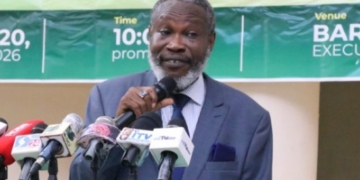
Mobereola made the disclosure in a keynote address delivered at the 10th Taiwo Afolabi Annual Maritime (TAAM) Lecture held at the University of Lagos. He was represented by the Director of Reforms Coordination and Blue Economy, Nneka Obianyor.
He commended SIFAX Group for sustaining the annual maritime lecture over the past decade, describing the initiative as a vital platform for promoting maritime knowledge and developing future industry leaders.
According to him, President Bola Ahmed Tinubu’s Marine and Blue Economy Agenda remains a key pillar of Nigeria’s economic diversification strategy, while the Minister of Marine and Blue Economy, Adegboyega Oyetola, has directed NIMASA to strengthen efforts to empower young Nigerians to take advantage of emerging opportunities in the sector.
Mobereola highlighted several youth-centred programmes being implemented by the agency, including the Nigerian Seafarers Development Programme (NSDP), the newly introduced Blue Economy Accelerator Initiative, skills acquisition centres across the six geopolitical zones, and the establishment of Institutes of Maritime Studies in selected Nigerian universities.
He said the initiatives are designed to build capacity, create employment opportunities and encourage innovation among young Nigerians, ultimately strengthening the country’s maritime workforce and Blue Economy ecosystem.
As part of the engagement, NIMASA also held an interactive knowledge-sharing session with doctoral and master’s students of the University of Lagos.
The session, led by the director of Cabotage Services, Gloria Anyasodo, featured presentations on shipping development, maritime logistics, Cabotage implementation and maritime labour regulation.
The engagement highlighted the importance of stronger collaboration between academia and the maritime industry to advance research, build capacity and develop practical solutions to the evolving challenges facing Nigeria’s maritime sector.
We’ve got the edge. Get real-time reports, breaking scoops, and exclusive angles delivered straight to your phone. Don’t settle for stale news. Join LEADERSHIP NEWS on WhatsApp for 24/7 updates →
Join Our WhatsApp Channel