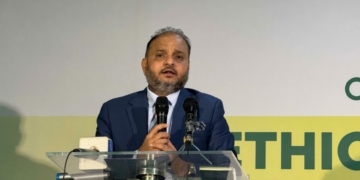
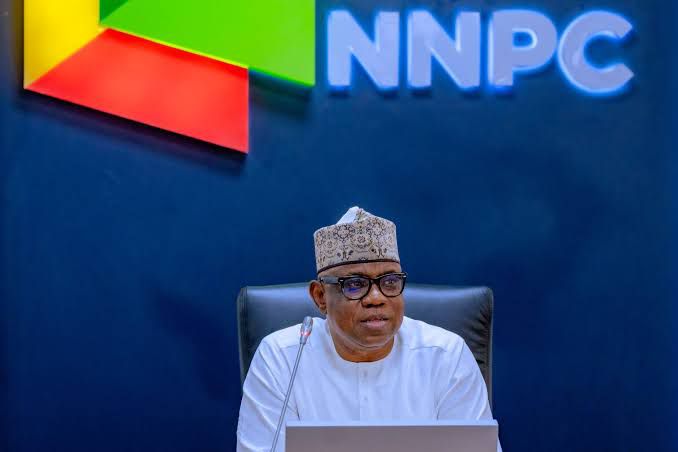
The Nigerian National Petroleum Company Limited (NNPC Ltd) has said it welcomes public scrutiny of its activities but pushed back against what it described as inaccurate claims questioning the performance of its group chief executive officer, Bayo Ojulari.
In a detailed response published on Saturday, the state-controlled commercial entity highlighted improvements in both crude oil and gas production under the current management and clarified its role in the recent oil licensing round.
The statement, issued by NNPC’s chief corporate communications officer, Andy Odeh, was prompted by media coverage of criticisms attributed to the Oil and Gas Professionals Forum (OGPF), which had questioned the leadership’s handling of the Licencing process conducted by the Nigerian Upstream Petroleum Regulatory Commission (NUPRC).
NNPC Ltd reiterated that it does not hold regulatory or allocative authority over oil licensing.
Odeh pointed to the Petroleum Industry Act (PIA) 2021, which places responsibility for conducting licencing rounds and allocating oil blocks squarely with the NUPRC.
Since its incorporation as a commercial entity, NNPC said, it has operated on a strictly commercial basis and has no legal mandate to allocate upstream acreages.
“NNPC Limited, since its incorporation, has operated strictly as a commercial entity and holds no regulatory or allocative authority,” the company said, urging commentators to confirm facts through statutory bodies where appropriate.
Production gains under current management
Turning to operational performance, NNPC published production data it says are contained in its publicly available Monthly Performance Report to show upward trends in output since April 2025.
The company said average crude production—including condensate—was 1.60 million barrels per day (mbpd) in April 2025 and rose to 1.67 mbpd by April 2026. NNPC described the roughly 80,000 barrels-per-day increase as equivalent to a six per cent rise in crude output over the 12-month period.
Average gas production grew from 7,354 million standard cubic feet per day (mmscfd) in April 2025 to 7,729 mmscfd in April 2026, a gain of 375 mmscfd or about five per cent. The company framed this as evidence of expanding gas output that supports both domestic energy security and export commitments.
Odeh said the figures are published in NNPC’s Monthly Performance Report and are available to the public for independent verification.
Call for verified information, warning on reputational harm
While reiterating its openness to scrutiny and dialogue, NNPC warned that it would take “necessary steps” to protect its reputation and that of its leadership against what it called false or unsubstantiated claims.
Odeh urged industry commentators, analysts and professional associations to verify information through “appropriate regulatory and corporate channels” before publication, arguing that greater reliance on verified sources would keep public commentary factual and constructive.
The response from NNPC came as Nigeria’s upstream sector remains under intense public and policy scrutiny.
Licencing rounds draw particular attention because allocations shape future exploration and production activity, affect investor confidence and carry political and fiscal implications. Under the PIA framework, the separation of commercial and regulatory responsibilities is a recurring theme in conversations about governance and transparency in the sector.
The Nigerian National Petroleum Company Limited (NNPC Ltd) has welcomed public scrutiny of its operations while defending the performance of its Group Chief Executive Officer, Engr. Bayo Ojulari, with the company citing increases in crude oil and gas production under his leadership.
NNPC said the clarification followed recent media reports attributed to the Oil and Gas Professionals Forum (OGPF), which questioned the performance of the company’s leadership in connection with the recently concluded oil licensing round conducted by the Nigerian Upstream Petroleum Regulatory Commission (NUPRC).
In a statement issued on Saturday, the company’s Chief Corporate Communications Officer, Andy Odeh, said NNPC remained committed to transparency and accountability and would continue to engage openly on its performance and operations.
Odeh, however, said it was necessary to clarify the company’s role in the licensing round, stressing that NNPC had no regulatory or allocative authority over the process.
According to him, the Petroleum Industry Act (PIA) 2021 places the conduct of oil licensing rounds and allocation of oil blocks within the statutory mandate of the NUPRC.
“NNPC Limited, since its incorporation, has operated strictly as a commercial entity and holds no regulatory or allocative authority,” he said.
On production, NNPC said publicly available data showed a sustained improvement in crude oil output since April 2025.
The company said average crude oil production stood at 1.60 million barrels per day (mbpd), inclusive of condensate, in April 2025, before rising through the second half of the year and stabilising at 1.67mbpd by April 2026.
It said the increase of about 80,000 barrels per day represented a six per cent growth in output.
“These figures are documented in NNPC Limited’s Monthly Performance Report, which is available to the public,” Odeh said.
The company also reported growth in gas production during the period, saying output rose from an average of 7,354 million standard cubic feet per day (mmscfd) in April 2025 to 7,729mmscfd by April 2026.
NNPC said the 375mmscfd increase represented five per cent growth and was an indication of expanding gas output in support of domestic energy security and Nigeria’s export commitments.
The company said the production figures were also contained in its publicly available Monthly Performance Report.
NNPC said it remained open to scrutiny but warned that it would take necessary steps to protect its reputation and that of its leadership against what it described as false or unsubstantiated claims.
“We encourage industry commentators, analysts, and professional associations to verify information through the appropriate regulatory and corporate channels before publication,” Odeh said.
He added that greater reliance on verified information would ensure that public commentary remained factual, balanced and constructive to informed debate on Nigeria’s energy sector.
We’ve got the edge. Get real-time reports, breaking scoops, and exclusive angles delivered straight to your phone. Don’t settle for stale news. Join LEADERSHIP NEWS on WhatsApp for 24/7 updates →
Join Our WhatsApp Channel