The 2026 World Cup was supposed to be about expansion—more teams, more games, more money. Instead, it has become something far more significant: Africa’s coronation. AFFA ACHO examines how the continent turned a bigger tournament into its greatest statement yet.
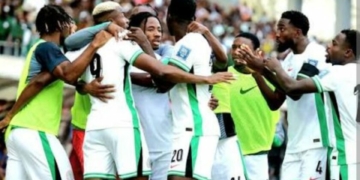
With the group stage now complete and the knockout bracket set, the continent has not just arrived—it has taken over. A record-breaking seven African nations have advanced to the Round of 32, shattering the previous record of three set in 2014. From the Atlas Lions of Morocco to the debutant Blue Sharks of Cape Verde, this is the summer African football has been waiting for.
The Numbers That Rewrite History
Of the nine African representatives at this expanded 48-team tournament—the most ever for the continent—seven have survived the group phase.
Morocco, South Africa, Côte d’Ivoire, Egypt, Cabo Verde, Senegal, and Ghana remain standing. They have combined for 12 wins, 9 draws, and just 5 losses across 26 group matches. More tellingly, they have outscored their opponents 34 to 22, a goal differential that speaks not of defensive desperation but of attacking ambition.
Cape Verde: The Fairytale That Became Reality
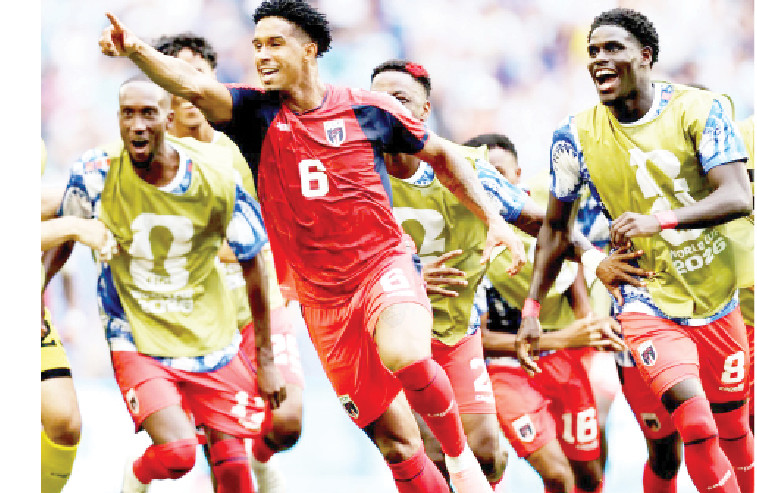
If you are looking for the soul of this tournament, look no further than the tiny island nation of Cabo Verde. With a population smaller than that of Staten Island, the Blue Sharks are swimming in uncharted waters—and thriving.
In their maiden World Cup appearance, they did the unthinkable: they held two-time champions Uruguay to a breathtaking 2-2 draw, coming from behind twice. They then silenced the Spanish giants with a goalless stalemate that saw goalkeeper Vozinha produce a performance for the ages—five saves, two of which defied the laws of physics.
Finishing unbeaten in Group H, Cape Verde now face the unenviable task of defending champions Argentina. But for a nation that only became a FIFA member in 1986, merely being on the same pitch as Lionel Messi is victory enough.
“We have nothing to lose,” said captain Bebé, the former Manchester United prodigy who has found redemption in the islands’ colors. “We are playing with house money. But do not mistake our joy for naivety—we came to win.”
South Africa: Bafana Bafana’s Long-Awaited Revenge
For 28 years, South Africa has lived in the shadow of their 1998 World Cup appearance. No more.Bafana Bafana made history by reaching the knockout stage for the first time, and they did it the hard way. After an opening-day defeat to co-hosts Mexico—a match many felt they deserved to draw—they responded with the kind of grit that defines champions.
A stunning 2-1 victory over a talented South Korean side, sealed by a 89th-minute strike from Orlando Pirates’ rising star Relebohile Mofokeng, sent the nation into euphoria. The Rainbow Nation, still healing from social and economic wounds, found a unifying force in a team that refuses to yield.
They will face Canada in the Round of 32—a winnable tie that has South Africans daring to dream of the quarterfinals for the first time in their history.
The Heavyweights Stand Tall
While the new blood grabs headlines, Africa’s traditional powers have been equally imposing.
Morocco has picked up exactly where they left off in 2022. The Atlas Lions cruised through a group containing Brazil, Scotland, and Haiti—drawing 1-1 with the five-time champions and dispatching the others with clinical efficiency. Achraf Hakimi has been the tournament’s best right-back, while the midfield trio of Amrabat, Saïss, and Ounahi has suffocated opponents with a high-press that recalls the glory of their semifinal run four years ago.
Egypt is enjoying its finest tournament since 1934. A commanding 3-1 victory over New Zealand, followed by a gritty 1-1 draw with Belgium, has the Pharaohs perched atop Group C. Mohamed Salah, perhaps playing in his final World Cup, has been transcendent—two goals and two assists, dropping deep to orchestrate like a conductor with a symphony at his feet.
Senegal , without the injured Sadio Mané, have still managed to advance thanks to a watertight defense and the emergence of 22-year-old striker Mamadou Diallo, who has three goals in three matches. The Lions of Teranga are quietly building a case as dark horses for the latter stages.
And Ghana , the Black Stars, held England to a goalless draw in a match that saw Jude Bellingham neutralized by a masterclass in man-marking from Mohammed Kudus. They followed that with a polished 2-0 win over Panama, proving that their golden generation has finally matured into a golden team.
The Diaspora Factor: A Strategic Revolution
Behind this surge lies a deliberate, strategic shift: the power of the diaspora.
FIFA rule changes allowing players to switch national allegiance have been a game-changer for Africa. At this tournament, nearly 40% of African squad members were born outside the continent—in France, England, Belgium, the Netherlands, and Germany.
The poster child is 18-year-old Moroccan prodigy Ayyoub Bouaddi. Born in France and capped at youth level for Les Bleus, he turned down a senior call-up from Didier Deschamps to represent the country of his parents. He has started every match for Morocco, dictating tempo with a composure that belies his age.
“You feel the ancestors when you put on this shirt,” Bouaddi said after the Brazil draw. “It is not just football. It is belonging.”
Similarly, Cape Verde’s Vozinha was born in Portugal. South Africa’s captain, Grant Kekana, was raised in London. The trend is not opportunistic—it is emotional. These players are choosing heritage over convenience, and the result is a fusion of European tactical discipline with African flair and athleticism.
Challenges Remain: The Road Ahead
For all the celebration, the knockout stage presents a brutal reality check. Of the seven African survivors, five face traditional powerhouses:
Cape Verde vs. Argentina
Morocco vs. Croatia (a rematch of the 2022 semifinal)
Senegal vs. Netherlands
Ghana vs. Brazil
Côte d’Ivoire vs. Portugal
Only South Africa (vs. Canada) and Egypt (vs. Australia) have what oddsmakers call “favorable” draws.
But if this group stage has taught us anything, it is that these African teams no longer fear reputations. They have spent the past two weeks punching above their weight and landing knockout blows. The expanded format gave them a door; their quality has kicked it down.
What It Means for the Future
Regardless of how the Round of 32 unfolds, African football has already won. The continent’s coefficient for future World Cup allocations will improve. European clubs are scouting deeper into the African domestic leagues than ever before. Youth academies from Lagos to Johannesburg are reporting a surge in enrollment.
Most importantly, a generation of African children watching these matches will no longer grow up dreaming of playing for France or England. They will dream of wearing the green of Nigeria, the gold of Ghana, or the blue of Cape Verde.
The Verdict
This is not a golden generation. It is a golden continent.Seven nations. Twelve wins. Zero fear. The 2026 World Cup will be remembered as the tournament where African football stopped asking for respect and started demanding it.
Now, the knockout rounds await. The giants of Europe and South America are looking over their shoulders. And for the first time in history, they are not looking down.
We’ve got the edge. Get real-time reports, breaking scoops, and exclusive angles delivered straight to your phone. Don’t settle for stale news. Join LEADERSHIP NEWS on WhatsApp for 24/7 updates →
Join Our WhatsApp Channel