..Says Cost Would Hit N20trn Yearly, Push Naira To N3,000/$
The federal government has ruled out a return to fuel subsidy, saying it would cost more than N20 trillion a year and could push the naira towards N3,000 to the dollar.
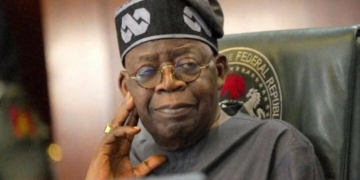
The minister of finance and coordinating minister of the economy, Professor Taiwo Oyedele, said this on Thursday at a press briefing in Abuja on fuel prices and the subsidy question.
He was responding to proposals to bring back subsidy, including one described as a “production subsidy” for local refining. He said he did not question the motives of those behind the proposals, but that the government differs with them on the remedy.
“A subsidy does not lower the cost of fuel. It only changes how it is paid, and when,” he said.
Oyedele said Nigeria consumes roughly 50 million litres of petrol a day. Returning petrol to its pre-reform price would cost more than N20 trillion a year, he said, before any allowance for higher consumption and smuggling.
He said even the N500 a litre that some have promised would cost over N16 trillion a year. He said that is nearly everything the Federation Account shared among the three tiers of government in 2025.
“The consequences for salaries, pensions, schools, hospitals and security are not hard to imagine,” he said.
The minister said weaker revenue would invite a sovereign credit downgrade, as rating agencies have already signalled. He said this would put at risk recent upgrades, including Nigeria’s first from S&P in 14 years.
He said borrowing would become costlier, capital would leave, reserves would fall and the naira would weaken. He said progress on inflation, which has allowed the Central Bank to begin lowering interest rates, would also be at risk.
“Our estimate is that the exchange rate could approach 3,000 naira to the dollar within months, and so-called subsidised petrol would cost at least 2,000 naira a litre,” he said. That is well above what Nigerians pay today, he added.
Oyedele gave four reasons for caution. First, he said pump prices follow the exchange rate because crude, freight and refining inputs are priced in dollars. To force the naira price down, the government would in effect have to subsidise foreign exchange. He said this was the multiple exchange rate system that brought the economy close to collapse before the 2023 reforms.
He said the proposal is not a true production subsidy, which supports a producer who cannot compete at market prices. He described it as a discount on crude passed through to the pump, “a consumption subsidy by another route, with the same bill attached”.
Second, he said a subsidy hides volatility rather than removing it. If the pump price is fixed while crude, freight and the exchange rate move, the risk shifts onto the public balance sheet, he said.
Third, he said discounted fuel creates leakages. Nigerian petrol is already far cheaper than in most neighbouring countries. A wider gap would mean Nigerian taxpayers subsidising motorists across the borders, he said, and higher consumption at home when global supply is tight.
Fourth, he cited the record since subsidy removal. He said it released N15.8 trillion to the Federation Account between June 2023 and December 2025, with N10.4 trillion going to states and local governments. In May 2023, he said, 27 states could not reliably pay salaries. None is in that position today.
Oyedele said the rise in pump prices began with the Gulf conflict, now in its eighth month. Petrol sold for about N830 a litre before the war, when crude was near $70 a barrel. It now averages about N1,400, with Brent above $100.
“That increase was caused by a global conflict in which we had no say,” he said. He added that without subsidy removal, the impact would have been far greater.
Oyedele said removing subsidy does not mean doing nothing. The government announced a 30-day margin discount on petrol at NNPC Limited stations, with priority for public transporters. It is also negotiating a ceiling of N1,350 a litre on the landing cost of petrol. He said the ceiling is neither a subsidy nor a price control.
He said none of the measures restores a blanket subsidy. “Short-term relief bought with long-term fragility is the most expensive money a government can spend,” he said.
The minister said the government remained open to proposals. He said any credible one should answer three questions: what it will cost, how it will be funded sustainably, and what pump price it will deliver.
“We will engage in good faith with any proposal that shows its arithmetic,” he said.
We’ve got the edge. Get real-time reports, breaking scoops, and exclusive angles delivered straight to your phone. Don’t settle for stale news. Join LEADERSHIP NEWS on WhatsApp for 24/7 updates →
Join Our WhatsApp Channel