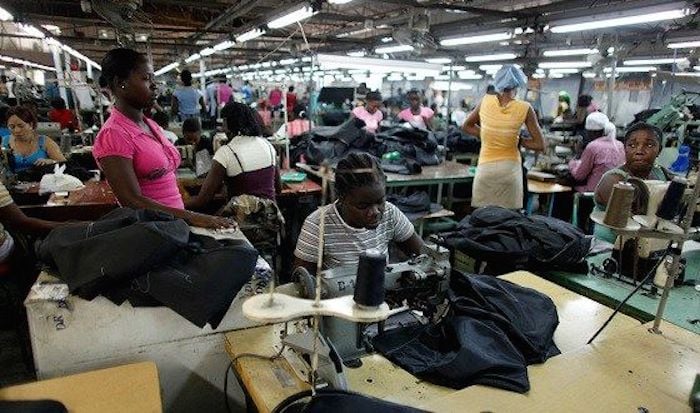
The ECOWAS Parliament and other West African institutions have stepped up efforts to implement recommended sanctions against member states that refuse to adopt policies to develop micro, small, and medium-sized enterprises (MSMEs).
The issue formed the core of discussions at the delocalised meeting of the ECOWAS Parliament’s Joint Committee on Industry and Private Sector, Macroeconomic Policy and Economic Research, Administration, Finance and Budget, and Public Accounts in Cotonou, Republic of Benin.
The discussion, which began on Monday in Cotonou, heard from Dr Tony Luka Elumelu of the ECOWAS Commission Business Council Secretariat, who presented on ‘Trade Facilitation, Regulatory Reforms and Formalisation’. He said it is now incumbent on the sub‑region to act, adding that the Commission insists that new policies are not what MSMEs currently need but an enabling environment in which businesses can thrive.
Dr Elumelu noted that ECOWAS already had strong policies, protocols, and legal instruments for private-sector development and urged the creation of the conditions needed for MSME growth.
He said, “We have very good policies, protocols, legal instruments in terms of private sector development; we also have the MSME Charter. We have created an enabling environment in this particular document for the development and growth of MSMEs, but in summary, my recommendation is that we should implement what we adopt.
“We should make sure that we create an enabling environment for these businesses to thrive and not keep adopting policies. What we need to do is enforce those policies that we have adopted and remove every bottleneck that impedes MSMEs from thriving.”
Dr Elumelu added that ECOWAS leaders should remember the region is competing with others, and therefore must stop disrupting legitimate traders.
He said, “We need to ensure that we have the necessary infrastructure for moving goods from one culture to another; we also need to look at the vision underpinning the AfCFTA protocol.
“In fact, we already know that we are going to compete with other regions, which means that we must ensure that we do not disrupt our people who are trading legitimately, so that in the end our region will benefit from economic development and the advantages inherent in AfCFTA trade.”
He also criticised multiple checkpoints as a bane to economic development and MSME prosperity, citing “the multiple checkpoints, roadblocks, and also the practicality of what we are doing in the region.”
Contributing to the discussion, principal programme officer in charge of Enterprise and Business Promotion at the ECOWAS Commission, Dr Olalekan Afolabi, said it has become necessary to move businesses from informality to formalisation. He urged ECOWAS parliamentarians to help persuade leaders to back formalisation.
We’ve got the edge. Get real-time reports, breaking scoops, and exclusive angles delivered straight to your phone. Don’t settle for stale news. Join LEADERSHIP NEWS on WhatsApp for 24/7 updates →
Join Our WhatsApp Channel