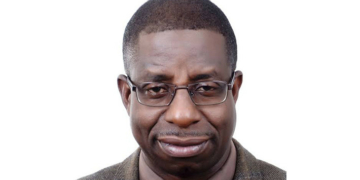
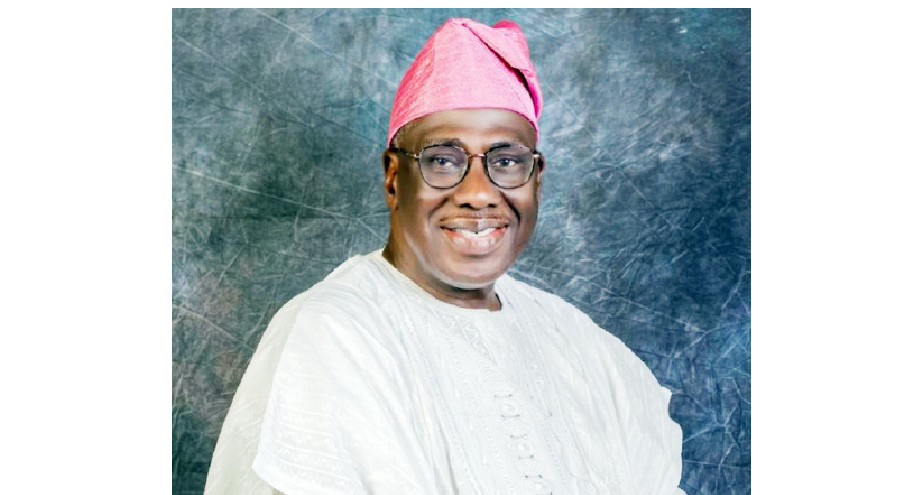
Pastor John Dara ran for the Nigerian presidency in 2011 and 2019, representing the Alliance of Social Democrats (ASD). Dara, who currently chairs the African Development Investment Limited, had served as Special Adviser to Gen. T.Y. Danjuma and participated in numerous national conferences and reform committees. In this interview with CHIBUZO UKAIBE, he discusses pressing national issues.
As a former Presidential Aspirant and candidate, you once described yourself as a champion of Northern unity. Did you ever envisage that the region would become what it is now, security-wise?
Northern Nigeria has always been divided, mainly along religious lines, but there were also some ethnic tensions because of the aspiration and inclination of the Fulani to dominate every other ethnic group in the North.
As far back as the Fulani jihad of 1804, violence has been introduced as an instrument of religious conversion and political conquest. This unfortunate culture of violence has remained with us in Northern Nigeria.
Most of the destructive and retrogressive upheavals in Northern Nigeria were driven by religious extremism. Maitasine Riots, Sharia conflicts during Obasanjo Administration, Jos Riots, Boko Haram Insurgency, and the ongoing Fulani terrorism were all driven by the unfortunate politicisation of religion in Northern Nigeria.
So, to answer your question, it’s not surprising that violence and insecurity have become endemic in our Region. Northern Nigeria can and should change. There has to be religious freedom and tolerance. There has to be urgent and massive investment in universal formal basic education. There has to be equal opportunity and mutual respect among people groups. Thus, we can have unity, security, development and modernisation in Northern Nigeria.
What’s your take on the US intervention in Nigeria, especially against the backdrop of the debate about Christian genocide in the North?
As soon as the USA declared Nigeria a Country of Particular Concern, I unequivocally rejected the claim of Christian Genocide in Nigeria. It is necessary and truthful to recognise that although killings by Muslim extremists in Nigeria are on the scale of a genocide, the victims are both Christians and Muslims. To state the problem correctly, ‘Muslim extremists are committing Genocide against both Christians and Muslims in Northern Nigeria.’ The one-sided narrative is divisive and dangerous as it can precipitate a more widespread religious conflict and radicalise many moderate Muslims.
With the premise now corrected, the USA intervention is a welcome development. The violence is getting worse in spite of our best efforts. We need all the help that we can get to completely destroy the bandits and to get the remnants to surrender. Those who can appeal to the bandits and terrorists to lay down their arms should do so by all means. However, the government must be strengthened to firmly confront these enemies of progress.
We need to have security, stability and peace to be able to eliminate poverty and backwardness in Northern Nigeria. In fact, Northern Nigeria needs a ‘Marshall Plan’ for the region’s holistic transformation. The peace, progress and prosperity of the North is a necessity for the overall transformation and well-being of Nigeria.
How can the security crisis and the region’s poverty be addressed?
As a Christian, I believe that everyone should be given a chance to repent and be de-radicalised. Let the religious leaders and elders warn these people that the game is about to change, and they should lay down their arms. However, the government needs a superior force to make banditry and terrorism shortcuts to hell for those involved. There should be clear laws against promoting, supporting or sponsoring violence against Nigeria and its citizens.
Northern States need to be more serious about providing good governance to their citizens. We should use our religiosity to fight corruption and promote human dignity. Northern Nigeria should adopt extreme measures against corruption. If Sharia recommends the cutting of the hands of petty thieves, Northern Nigeria should be ready to execute the big corruption thieves.
We need human capital development, infrastructure development and economic development to eliminate poverty. We can build a harmonious, stable and prosperous Northern Nigeria if we are serious.
What’s your impression of the Tinubu Administration? Do you think it has performed well enough to deserve a second term?
Tinubu is on the way to becoming the best President or Head of State that Nigeria has ever had since Independence. His courageous measures to unbundle and deregulate the economy are painful but necessary. The private sector is becoming stronger to take our economy to greater heights. Our resource base has substantially improved, and prospective investors have more confidence in our economy. He therefore deserves to have a landslide victory in the 2027 Presidential Election.
However, the government needs to do better in protecting the welfare of the weak and vulnerable citizens, especially amid the pains of the ongoing reforms. Every State in Nigeria should work towards self-sufficiency in the security of lives and properties. This is why there is an urgent need for State Police. The Federal Government should secure our borders and defend the integrity of our territory. The state of our Electricity supply is still disgraceful. Each State in the federation should invest to achieve self-sufficiency in Electricity. The National Grid should fill any gaps. Electricity transmission (like generation and distribution) should be deregulated to attract private and foreign investments.
Tinubu is doing very well in steering Nigeria in the right direction; the government must be seen to be practising prudence and probity to win the confidence and even the adulation of citizens.
I would also like to mention that the enlargement of the APC will foster national unity, help build elite consensus, and ensure continuity in governance and policies. Therefore, Tinubu’s political sagacity is good for a complex and pluralistic Nigeria.
Based on your reading of the events in the region, how is the North perceiving his second term bid in 2027?
Initially, the conservative leaders of the North were very apprehensive and unhappy about the Tinubu reforms. Traditionally, our people are very resistant to change. However, most of our leaders have now come to terms with these inevitable changes. They now appreciate that the changes were not to antagonise or undermine the North, but to promote efficiency, development and social transformation. In the 2027 Elections, Tinubu will receive massive, unprecedented support from Northern Nigeria, as well as from the South West and South South. The South East will eventually join the bandwagon. I believe that Tinubu will have a landslide victory in the next Presidential Election. A stronger mandate will enable him to follow through with his reform agenda and make Nigeria truly great.
You have been at the forefront of the call for responsible leadership and qualitative governance, as seen in your clamour for a new constitution and reforms. What, in your estimation, are Nigerians fundamental problems, and are they fixable?
I do not believe that we need a new Constitution of the Federal Republic of Nigeria. What we need is the continuous renewal of the existing Constitution. That is already happening through the National Assembly under the visionary and unifying leadership of Senator Akpabio. We need to move more items from the Exclusive Legislative List into the Concurrent List in the Constitution. The Federating Units (I.e.the States) should be fully in control of their Local Government affairs (within the bounds of law). Lawmakers should remove any obstacle to States’ power to create new Local Government Areas. These changes will also mean we need to substantially revise our Revenue Allocation formula in favour of the States and LGAs. We also need to increase the allocation for Derivatives to at least 15%.
What’s your view on the debate surrounding our electoral process, having participated in it a number of times? Where is the real problem? Is the recent discussion around e-transmission just an in-thing or the main thing?
Contrary to the naysayers, our electoral system has come a long way. The introduction of BVAS has drastically reduced arbitrary thumb-printing of ballot papers, ballot-box snatching, and vote inflation. The apparent low voter turnout is a result of the elimination of previous vote-inflation tactics. In any case, the Voters Register is unduly padded with ghost voters.
Real-time electronic transmission of results is desirable, and INEC should always aim to achieve it. However, an over-dependence on technology would make our elections vulnerable to hackers and technological sabotage. Without the option to finish the coalition manually when technical glitches occur, many elections will be inconclusive. This can easily be orchestrated by political underdogs who see themselves as prospective losers.
This is why it makes sense to provide that if such glitches happen, we can conclude the collation manually. Otherwise, our elections would frequently be rendered inconclusive and invalid. Most technologically advanced nations avoid overdependence on technology in their elections. The new electoral law is therefore sensible and pragmatic. Most of our election problems are caused by the unlawful behaviour of desperate contestants and their supporters. Our elections will continue to improve as law and order are enforced during elections.
You worked closely with some of this country’s former leaders. Where do you think they got it wrong? How can the problems be fixed?
Our main nation-building challenge is the shortage of high-quality leaders to manage our affairs. Past leaders failed because they were unable to deliberately develop, identify, and promote leaders and successors. Ironically, this is one of President Tinubu’s strengths. He is already grooming the next generation of leaders. Social mobilisation and leadership development should become our national priority and pastime.
You once talked about a holistic approach to tackling corruption, what does that mean and does it still apply in these times?
Although Nigeria is rich in resources, we are still essentially a poor nation. Most Nigerians grew up with a scarcity-and-poverty mentality. They feel insecure about their own future and their children’s future. This is largely why we tend to be corrupt. The inadequacy of existing measures to prevent, detect, apprehend, prosecute, and sanction corruption has enabled corruption to thrive in Nigeria. Our traditional values have also been so undermined that our society condones the display of the proceeds of corruption. The government has to show more seriousness in fighting corruption. A holistic approach will therefore focus on promoting anti-corruption education in our schools and in the larger society. Measures to prevent, deter, detect and severely punish corruption should be adopted. These will accelerate our march to greatness. Corruption should be made costly and unprofitable to those who break our anti-corruption laws.
We’ve got the edge. Get real-time reports, breaking scoops, and exclusive angles delivered straight to your phone. Don’t settle for stale news. Join LEADERSHIP NEWS on WhatsApp for 24/7 updates →
Join Our WhatsApp Channel