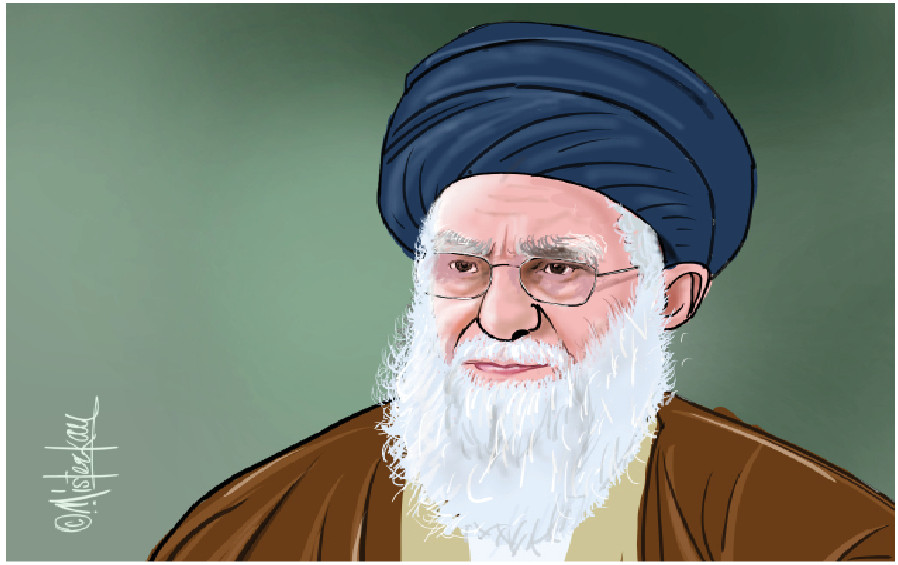
On Saturday, 28 February 2026, Ali Khamenei was killed in a coordinated strike widely attributed to Israeli execution with decisive American backing. The operation was precise, strategic, and intended to send a message beyond Tehran. Within hours, commentary in Western capitals began to drift toward familiar terrain. Some spoke of rupture. Others whispered of regime collapse. A few invoked Baghdad in 2003 and Tripoli in 2011 as if history were a template rather than a teacher.
A realist must resist such temptations. The death of a leader is an event. The endurance of a state is a structure. Iran is not suspended in the air by the will of a single cleric. It is a civilization-state anchored in difficult geography and reinforced by layered institutions. The Zagros Mountains shield its western flank. The Alborz range protects its northern corridor. The Persian Gulf and the Strait of Hormuz grant it leverage over a critical artery of global energy. Geography disciplines ambition and insecurity alike. It has shaped Persian strategy for centuries, long before the Islamic Republic emerged under Ruhollah Khomeini in 1979.
The Islamic Republic itself evolved into a hybrid system. Clerical oversight fused with republican offices. Elections operated within limits. Above all stood the Islamic Revolutionary Guard Corps, a force that functions simultaneously as military guardian, intelligence service, and economic empire. Khamenei presided over this architecture. He did not constitute it. His death introduces uncertainty. It does not automatically dissolve cohesion.
Interests Without Sentiment
What changes now must be assessed through interests, not ideals. The United States has pursued three enduring objectives in relation to Iran: preventing nuclear weaponization, protecting Israel’s security, and preserving a favourable balance of power in the Gulf. These aims have survived partisan shifts and rhetorical oscillations. They will survive Khamenei.
Washington may view the strike as reinforcement of deterrence. Yet deterrence is reciprocal. When a regime perceives vulnerability at its apex, it may conclude that only ultimate insurance guarantees survival. The history of proliferation is instructive. Pakistan accelerated under threat from India. North Korea entrenched its arsenal under isolation. States under siege do not easily surrender leverage. They consolidate it.
Israel’s calculus is sharper. Its doctrine rests on the prevention of existential threats through pre-emption if necessary. The elimination of the Supreme Leader will be read domestically as necessity rather than aggression. Yet Israel must also confront a strategic paradox. A centralized adversary can calibrate escalation. A fragmented elite may empower factions whose legitimacy depends upon demonstrating defiance. Tactical success may generate strategic volatility.
For the Gulf monarchies, the equation is pragmatic. Saudi Arabia and the United Arab Emirates have in recent years experimented with cautious de escalation toward Tehran. Their modernization agendas demand stability. They do not seek Iranian implosion. They seek predictability. Energy markets respond to risk perception, not moral framing. The mere possibility of Hormuz disruption or proxy escalation is sufficient to disturb global supply chains.
Russia and China interpret Iran through the prism of systemic rivalry with the United States. Moscow values Tehran as a counterweight to Western influence in the Middle East. Beijing views it as an energy supplier and a strategic node in continental connectivity. If Iran feels cornered by Western coercion, it may deepen alignment with both powers, reinforcing an emerging multipolar configuration.
The False Comfort of Analogy
Comparisons to Iraq, Libya, and Syria are inevitable, yet they require precision. Iraq in 2003 experienced regime decapitation coupled with institutional dismantlement. The dissolution of the Iraqi army and bureaucracy hollowed the state. Sectarian divides, long suppressed, erupted in the vacuum. Libya under Muammar Qaddafi lacked dense institutions altogether. His rule deliberately prevented autonomous structures. When he fell, militias filled the void.
Syria offers a more instructive parallel. Despite civil war, the Assad regime survived because its security apparatus remained cohesive and because external patrons intervened to prevent collapse. Institutional density and elite cohesion mattered more than popularity.
Iran differs from Iraq and Libya in decisive respects. Its coercive institutions remain intact and deeply embedded in society. The Revolutionary Guard is not an isolated praetorian force. It is interwoven with economic networks and infrastructure. National identity in Iran, despite ethnic diversity, rests upon long civilizational continuity and linguistic cohesion. Even many critics of clerical rule distinguish between opposition to governance and loyalty to the state.
Furthermore, there is no plausible prospect of full-scale occupation aimed at dismantling Iran’s system. The international environment is more contested than in 2003. Major powers would resist such an enterprise. These differences reduce the probability of immediate state collapse. They do not eliminate the possibility of instability, but they alter its likely form.
Three Possible Trajectories
The first trajectory is disciplined consolidation. In this scenario, clerical authorities and the Revolutionary Guard act swiftly to elevate a successor or collective leadership. The narrative of martyrdom and national sovereignty is invoked to suppress dissent. Nuclear policy shifts toward firmer deterrence posture, possibly maintaining ambiguity while reducing restraint. Proxy networks across Lebanon, Iraq, Syria, and Yemen remain instruments of strategic depth, yet under tighter coordination. This outcome resembles the Soviet recalibration after Stalin, where elite bargaining preserved continuity.
The second trajectory is controlled pragmatism. Here, influential factions conclude that economic stagnation and isolation pose long term threats to regime survival. Negotiations over sanctions and nuclear constraints resume from calculated realism. Proxy engagement is moderated to reduce escalation risk. Economic normalization becomes central objective. This pathway echoes aspects of China’s transformation after Mao, where ideological rigidity yielded to pragmatic reform without surrendering political monopoly. It would not herald liberal democracy. It would represent adaptive authoritarianism.
The third trajectory is competitive fragmentation. Succession disputes intensify. The Revolutionary Guard asserts more overt dominance over clerical authority. Regional proxies gain operational autonomy, either to secure resources or to prove loyalty through escalation. Nuclear assets become bargaining instruments within factional rivalry. Such fragmentation would not necessarily collapse the state, but it would heighten volatility and miscalculation risks between Iran, Israel, and the United States. The late Ottoman experience offers a cautionary reminder that internal rivalry can magnify external vulnerability.
Which path emerges will depend on elite cohesion, economic resilience, and external pressure. Realism instructs us to examine incentives rather than intentions. Who controls coercion. Who commands revenue streams. Who benefits from confrontation and who from accommodation. These factors will shape outcomes more than public rhetoric.
A System in a Shifting Order
The United States remains formidable, yet constrained by domestic fatigue and strategic competition. China’s rise and Russia’s revisionism have diluted Western cohesion. Regional powers pursue autonomy.
Iran’s succession thus becomes a test of how leadership decapitation interacts with multipolar rivalry. If Tehran consolidates and accelerates deterrence, it may embed itself more firmly within a non-Western alignment. If it recalibrates pragmatically, it may hedge between blocs, extracting concessions from each. If it fragments, instability will reverberate through energy markets and alliance structures, compelling external reassessment.
We must remember that history rarely grants clean endings. It offers instead the slow reconfiguration of power beneath dramatic events.
We’ve got the edge. Get real-time reports, breaking scoops, and exclusive angles delivered straight to your phone. Don’t settle for stale news. Join LEADERSHIP NEWS on WhatsApp for 24/7 updates →
Join Our WhatsApp Channel