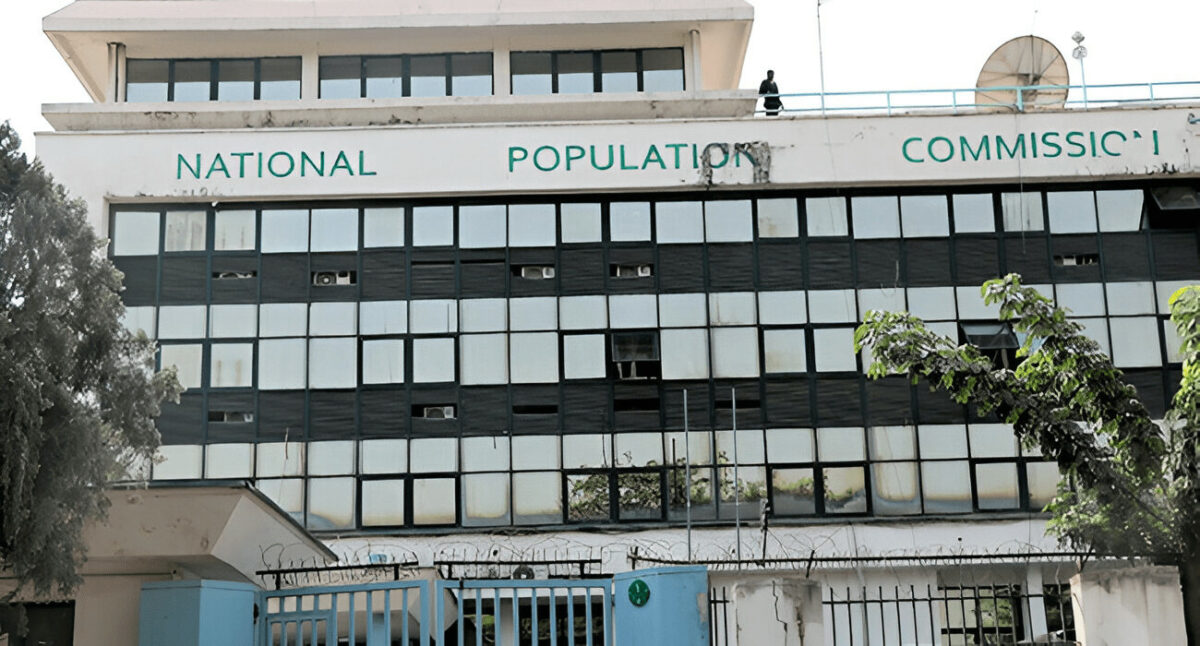
The National Population Commission (NPC) has expressed concern over Nigeria’s persistently high youth unemployment, underemployment, and the out-of-school children population, warning that these challenges continue to threaten the country’s ability to harness its youthful population for national development despite government interventions.
The Federal Commissioner of the commission for Gombe State, Abubakar Mohammed Danburam, disclosed this on Thursday in Gombe during a press briefing to mark the 2026 World Population Day.
Danburam said empirical data tracking the transition from the National Youth Policy between 2019 and 2023, to programmes under President Bola Ahmed Tinubu’s Renewed Hope Agenda showed that youth unemployment remains at about 33 per cent, while underemployment exceeds 20 per cent.
He attributed the situation largely to the widening mismatch between formal education and labour market demands, noting that nearly 80 per cent of employed young Nigerians still work in the informal sector under precarious conditions.
The Federal Commissioner also decried the country’s out-of-school crisis, saying Nigeria continues to account for nearly 20 per cent of the global population of out-of-school children despite increased interventions by governments at various levels.
According to him, regional insecurity and structural deficiencies have continued to deny millions of children and adolescents, particularly those in rural and underserved communities, access to quality education.
Danburam further observed that although Nigeria’s Total Fertility Rate has declined from 5.3 to 4.8 children per woman, adolescent fertility remains high at 15 per cent, a development he linked to inadequate access to youth-friendly healthcare services, low contraceptive uptake and limited reproductive choices for young women.
He acknowledged that the Federal Government had introduced several initiatives to improve youth development, including the 3 Million Technical Talent (3MTT) Programme, the Nigerian Education Loan Fund (NELFUND), expanded vocational training schemes and increased youth representation in governance.
According to him, the first phase of the 3MTT programme has already certified 30,000 young Nigerians across the 36 states and the Federal Capital Territory, while more than 150,000 youths are currently enrolled in tuition-free vocational training programmes across 1,600 accredited centres nationwide.
Danburam said the National Population Commission, in collaboration with the Federal Ministry of Youth Development, is monitoring the implementation of these programmes through the Youth Activities Dashboard to assess their impact on youth development indicators.
He, however, warned that infrastructure deficits, insecurity, rising cost of living and implementation gaps continue to undermine the effectiveness of the initiatives, calling for stronger investments in education, healthcare, skills acquisition and employment opportunities.
The commissioner also urged accelerated review of the National Youth Policy and renewed commitment to human capital development, stressing that Nigeria’s estimated 238 million population, one of the youngest in the world, presents a unique opportunity for economic transformation if young people are adequately empowered.
We’ve got the edge. Get real-time reports, breaking scoops, and exclusive angles delivered straight to your phone. Don’t settle for stale news. Join LEADERSHIP NEWS on WhatsApp for 24/7 updates →
Join Our WhatsApp Channel