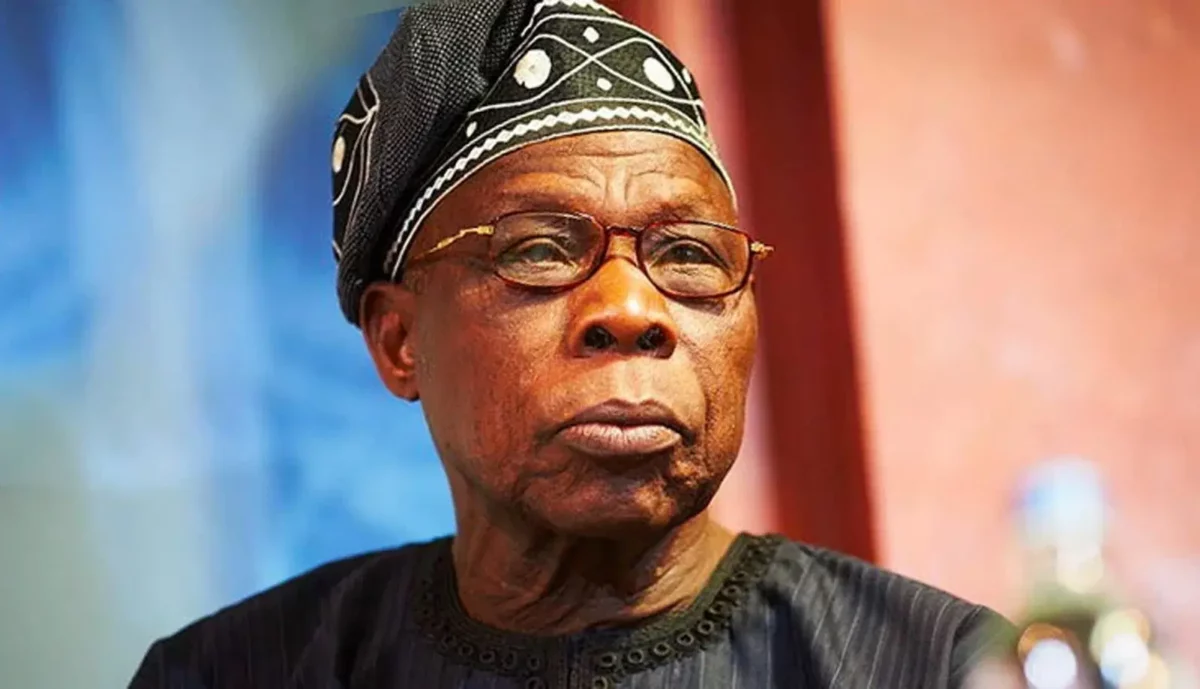
Former President Olusegun Obasanjo, has challenged African leaders to set aside, personal aggrandisement, but work towards a democracy prototype that will deliver good governance for the citizens in all ramifications.
Obasanjo particularly urged that African leaders must individually, rethink the kind of democracy they are practising in comparison with the type they inherited from the colonial masters, both in context and in content to serve the people of the continent.
He emphasised that Africa’s governance problem is fundamentally, an institutional and personality problems for which successive leaders in each of the continent has failed at consistently producing any institutional frameworks that would make good governance endure and last regardless of who the individual leader is.
The former Nigerian president maintained that leadership in the continent must take democracy seriously, not as a system to be manipulated for electoral advantage, but as one that has covenant with the people on a genuine commitment towards good governance.
Obasanjo stated these in Abeokuta, the Ogun State capital while delivering his address at the International Colloquium on “The Burden and Blessing Of Leadership: Reflections From Africa To The World”.
Speaking at the event held at the main auditorium of the Olusegun Obasanjo Presidential Library (OOPL), Abeokuta, Obasanjo emphatically declared that governance problem in Africa has fundamentally being an institutional and personality problem, stressing that successive African leaders have not consistently produced the institutional frameworks that make good governance endure and last “regardless of who the individual leader is.”
“We have produced extraordinary individual leaders like Mandela, Nkrumah, Nyerere, Sankara, Machel, but we have not consistently produced the institutional frameworks that make good governance endure and last regardless of who the individual leader is.
“We must solve the personality problem and solve the institutional problems. When an entire country’s trajectory depends on the character of one person, that country is permanently fragile,” he said.
He maintained that though democracy could be “imperfect, slow and frustrating at times”, yet, African leaders must come to terms with the reality that the alternatives are “infinitely worse”.
“Let us take democracy seriously. Not as a system to be manipulated for electoral advantage, but as a covenant with the people: a genuine commitment to good governance that is accountable, transformational, transparent, selfless and oriented toward all-embracing development, growth and the common good.
“Defend democratic institutions; strengthen independent judiciaries; protect free expression. Let us in general, rethink democracy we practised, inherited from the colonial masters in context and in content to serve Africa with our special situations in a world whose institutions were not created by ourselves for ourselves.
“Let us have democratic institutions to which we contribute with others for ourselves or in the alternative create for ourselves in context and content a democracy that will work for us and deliver in all respects.
“Build the courts for justice and not for the highest bidder. Build the regulatory bodies that are not subject to whims and caprices. Build the civil service that delivers service. Build the universities whose products compare with products of best universities in the world. Build the institutions that will outlast all of us and which will not be derailed and destroyed with abuse and misuse,” he said.
Obasanjo further urged African leaders not allow narrow nationalism to strangle continental possibilities and shared prosperity, particularly in the area of economic integration and great investments in the youths, stressing a continent that fails its youths has already planted the seeds of instability that will haunt the next several generations.
“We must integrate Africa. The African Continental Free Trade Area is one of the most important developments on this continent in a generation.
“Economic integration: genuine integration has the potential to transform Africa’s position in the global economy: to create the market depth that attracts investment, generates employment and builds the productive capacities that development requires.”
Taking a swipe at the Nigeria situation, Obasanjo emphatically stated that advocates of religious and ethnic sentiments are “great enemies” of Nigeria, stressing that the country cannot survive on such ethno-religious hegemony.
“Nigeria is not merely a nation; it is an argument: an ongoing, unresolved, occasionally violent but ultimately vital argument about what kind of people we are and what kind of future we can build together.
“I love this country with all its contradictions, and I will die loving it. I love Nigeria wholesomely and totally without bias or prejudice against anyone or any group. But we all have to make Nigeria our own and our home. It will not work if Nigeria is for the South or for the North, the East or West and for Moslems or Christians only.
“Those who perpetrate such idea or sentiment are great enemies of Nigeria. Nigeria cannot survive on hegemony.”
The former president however, maintained that leadership is not a solo endeavour, but a collective project and effort on which leaders must be held accountable.
“Africa is not a problem to be managed: Africa is a promise to be fulfilled. The question that matters now is not what my generation did or failed to do. Not even what the generation before us did or did not do. The question is what this generation will do with what has been inherited.
“As I cross my 89th year, I bow — in gratitude, in hope, and in continued commitment to the continent and the people I have spent my life serving. And I will continue to serve until my last breath,” he concluded.
We’ve got the edge. Get real-time reports, breaking scoops, and exclusive angles delivered straight to your phone. Don’t settle for stale news. Join LEADERSHIP NEWS on WhatsApp for 24/7 updates →
Join Our WhatsApp Channel