
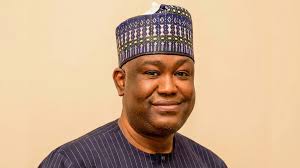
A former presidential candidate, Dr. Gbenga Olawepo-Hashim, has raised alarm over what he describes as a troubling surge in mass killings across Nigeria, warning that many of the incidents are underreported and met with disturbing global indifference.
In a statement he issued, Olawepo-Hashim, who was recognized as an Amnesty International Prisoner of Conscience in 1989, said the true scale of violence in parts of the country is being dangerously minimized, creating a false sense of normalcy around widespread bloodshed.
He cited recent attacks in Shanga Local Government Area of Kebbi State, where over 40 people were reportedly killed within the past week, with homes razed. According to him, local accounts suggest the death toll may be even higher, as casualties continue to rise. He noted that the same community had suffered earlier attacks weeks ago that left seven people dead, with little or no meaningful security response.
Olawepo-Hashim described the incident as part of a broader pattern of recurring violence in rural communities that rarely attracts sustained national or international attention.
He further pointed to similar attacks in Kwara State, particularly in Kaiama, Baruten, and Ifelodun, where between 20 and 50 people have reportedly been killed in recent weeks, including five forest guards. He lamented that many of these incidents remain confined to local reports and fail to gain wider visibility.
According to him, the crisis is even more severe across the North Central region. In Benue State, repeated attacks have allegedly claimed between 50 and over 100 lives in a matter of weeks. Plateau State has witnessed coordinated night raids leaving 30 to 80 people dead, while Niger State has recorded between 20 and 50 fatalities. In Nasarawa State, spillover violence has reportedly resulted in 10 to 20 deaths.
Altogether, he said, these figures suggest that between 130 and 300 people may have been killed within a short period in one region alone—an alarming scale of violence that he believes is being met with “selective attention and dangerous silence.”
Olawepo-Hashim warned that the growing disconnect between the reality on the ground and global awareness is morally troubling, arguing that mass killings in Nigeria are increasingly treated as routine statistics rather than urgent humanitarian crises.
He also highlighted the continued activities of armed groups such as Boko Haram and ISWAP, alongside expanding bandit networks that exploit weak security presence, difficult terrain, and delayed response systems.
At the national level, he said the widespread and repeated nature of the attacks points to deeper structural failures in security coordination, rather than isolated incidents.
The former presidential candidate also criticized what he described as the muted response of global institutions, noting that bodies like the United Nations and the African Union have remained largely silent relative to the scale of the killings.
He added that, aside from expressions of concern from U.S. President Donald Trump, much of the international community appears to have accepted what he called the “dehumanization” of Nigerian lives, despite the country’s longstanding contributions to global peacekeeping efforts. He expressed particular concern over the silence of other African nations, many of which have historically benefited from Nigeria’s support.
Olawepo-Hashim said there is a growing perception that Nigerian lives have become so devalued globally that even routine expressions of sympathy are no longer forthcoming, raising serious questions about international priorities.
He posed a series of questions to the global community: Why has the world become desensitized to mass killings in Nigeria? Why do such deaths no longer provoke sustained outrage? And how many more lives must be lost before silence is seen as complicity?
According to him, these are no longer rhetorical questions but reflect a global system that appears increasingly selective in its moral response.
He warned that the current trajectory risks normalizing mass death, where repeated tragedy loses urgency and fades into the background.
“For now,” he concluded, “the reality remains unchanged—the killings continue, the numbers rise, and too many victims remain unseen and uncounted.”
We’ve got the edge. Get real-time reports, breaking scoops, and exclusive angles delivered straight to your phone. Don’t settle for stale news. Join LEADERSHIP NEWS on WhatsApp for 24/7 updates →
Join Our WhatsApp Channel