Eight years ago, the then Speaker of the House of Representatives, Hon. Yakubu Dogara, said the government’s inability to complete the moribund Ajaokuta Steel Rolling Company, despite its enormous economic potential, had become a collective national shame.
A more graphic illustration would be apt today to describe the haunting monument that stands as a testament to the government’s ineptitude, financial waste, policy inconsistency, and absence of political will.
The history of the complex dates back 47 years, in 1979, under the Shehu Shagari administration, in his quest to drive industrialisation for the country.
The 24,000-hectare integrated steel complex was intended to produce 3 million metric tonnes of steel annually, with provision to increase capacity further to 5.2 million tonnes per annum.
Sadly, despite achieving over 98 per cent technical completion in 1994, the Russian-built Technoexport project has faced decades of mismanagement, funding issues, and operational inertia, failing to produce steel at full capacity.
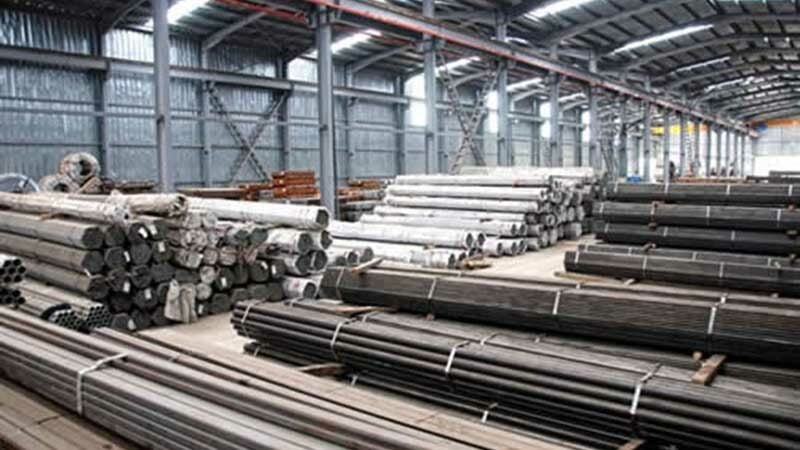
Last year, the Minister of Steel Development, Prince Shuaibu Abubakar Audu, confirmed that the country’s annual import expenditure on steel exceeds $4 billion, with imports sourced from countries such as China, Germany, India, and the United States.
He said that despite having 74 established steel plants/fabricators, only about 40 are operational, producing only a small fraction of the total demand.
Meanwhile, the importance of steel to national development cannot be overemphasised, especially in this 21st century, when steel is, in many ways, the engine room of the global economy.
According to experts, steel is a fundamental backbone of national development, driving industrialisation, infrastructure growth, and economic stability.
It is essential for constructing roads, bridges, and housing, as well as powering key industries such as automotive, energy, and machinery.
Furthermore, a strong steel sector creates millions of jobs and supports Gross Domestic Product (GDP) growth through manufacturing and trade.
The former speaker, who was on a fact-finding visit to the facility in 2018, wondered whether there was any nation on this earth that would sink more than $ 5.1 billion of its hard-earned money into any project and walk away from it when it is 98 per cent completed. Only in Nigeria, perhaps.
Just recently, President Bola Tinubu was on a state visit to the United Kingdom. He signed a £746m deal that will see two major ports in Lagos refurbished with the help of UK-backed loans.
At least £236m of supplier contracts will be directed to British firms, including £70m for British steel – the company’s largest ever export backed by United Kingdom Export Finance (UKEF).
As a follow-up, on Tuesday, the President formally wrote to the Senate requesting approval to borrow a total of $6 billion to support Nigeria’s fiscal needs and infrastructure development.
He said the project aimed to address infrastructure deficiencies, improve operational efficiency, enhance safety, and strengthen Nigeria’s position as a regional trade hub.
We know that successive governments have made various attempts to privatise the firm, including a deal with the Indian firm Global Steel Holdings, which resulted in legal disputes that tied up the project for years.
We also acknowledge that since the establishment of the complex, the country has witnessed numerous changes in government, including both the civilian and military, yet neither has been able to muster the much-needed political will and commitment to see to the actualisation of Nigeria’s steel development.
As a matter of fact, the project has never achieved full production just as the 110-megawatt power plant is said to have occasionally contributed power to the national grid.
But the main plant remains uncompleted and mostly idle, despite continued expenditures on staff and maintenance, as highlighted in the annual budgets.
A 2024 report from BudgIT’s GovSpend revealed that over N1.1 billion was spent in the previous two years alone on pensions, taxes, and various “social projects,” despite the plant’s closure.
The report said the funds were used to pay pensions to management companies, such as Pension Alliance Limited (N74,434,667.03) and Trust Funds Pensions PLC (N33,581,935.80), as well as to meet tax obligations to Kogi State (N141,911,731.02) and to fund community empowerment projects through Stefan Jaeger Nigeria Ltd. (N37,162,790.02).
The allocation of N354,286,069.55 to the IPPIS Transaction Account demonstrates the high administrative costs of maintaining the dormant monument.
As a newspaper, we are of the opinion that the government needs to be decisive on the fate of this gigantic complex once and for all, and if possible, concession it.
Our view is that any project, for that matter, launched 47 years ago may reflect foundational innovations but face challenges with adaptability and ageing infrastructure compared to today’s agile solutions.
Whereas a human adult who is 47 years old may possess a wealth of experience and knowledge, but can be constrained by generational differences in thinking and technology use compared to younger, more adaptable individuals.
The government should think and plan ahead if the country hopes to derive the utmost benefits from the complex.
We’ve got the edge. Get real-time reports, breaking scoops, and exclusive angles delivered straight to your phone. Don’t settle for stale news. Join LEADERSHIP NEWS on WhatsApp for 24/7 updates →
Join Our WhatsApp Channel