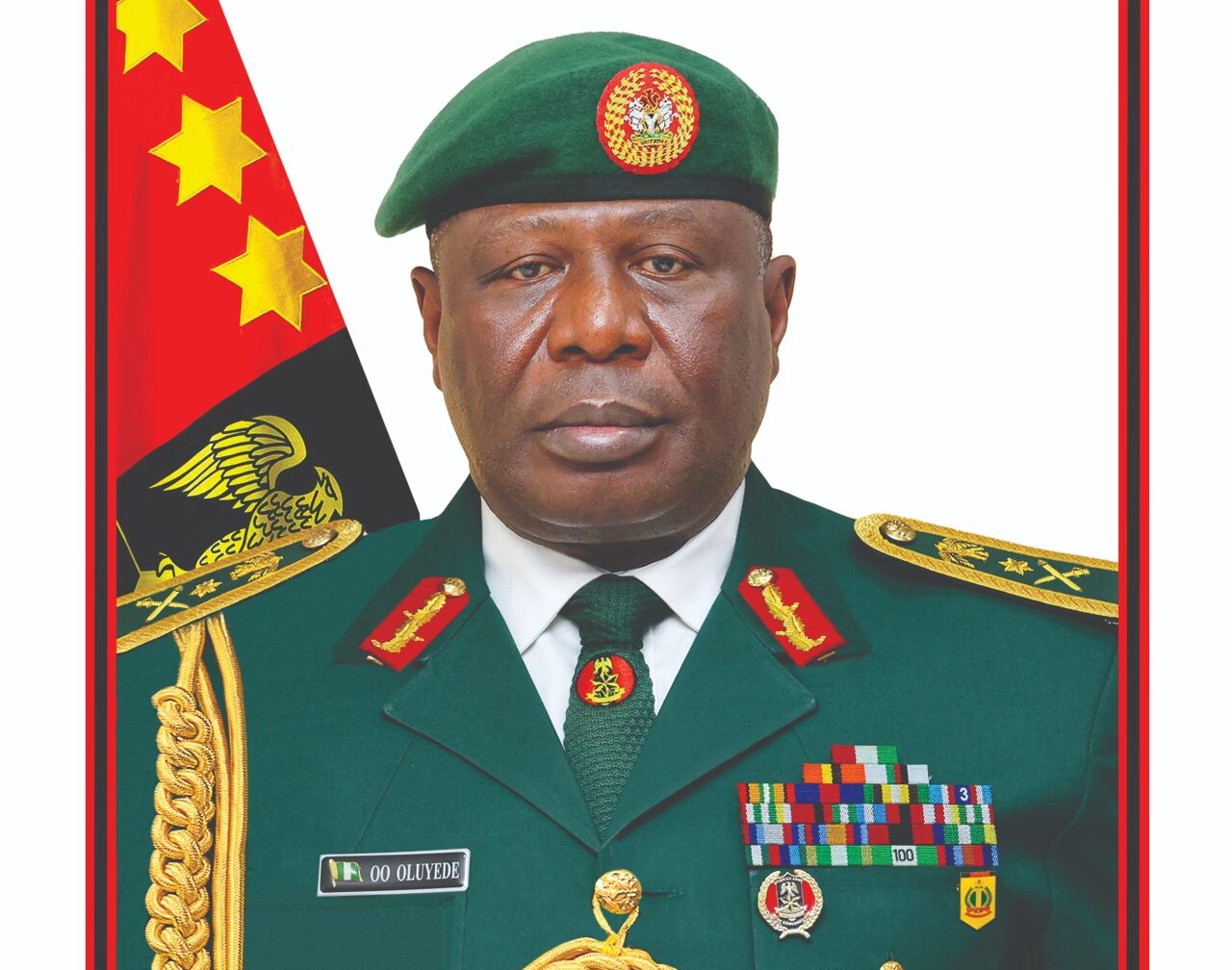
The Chief of Defence Staff (CDS), General Olufemi Oluyede, has said “Operation Safe Corridor” is neither an amnesty programme nor a sign of weakness by the government.
Gen. Oluyede spoke yesterday at the graduation of 744 participants from the De-radicalisation, Rehabilitation and Reintegration Camp, “Operation Safe Corridor”, Mallam Sidi in Gombe State.
The CDS, represented by the director of Special Operations Forces Defence, Rear Admiral Kabir Tanimu, said that “Operation Safe Corridor” reflects Nigeria’s firm belief that while kinetic operations were necessary to neutralise threats, lasting peace could only be achieved when we address the underlying drivers of de-radicalisation, disengagement and disintegration.
He, however, said this was not a reward but a deliberate strategy to reduce violence and promote long-standing stability.
“Today, we are witnessing the outcome of that belief as 744 individuals who once stood on the fringes of conflicts are now being given a structured pathway back into society.
“This is not a reward but a deliberate strategy to reduce violence, weaken extremist recruitment and promote long-term stability. To the graduating students, let me speak directly to you. This programme has given you an opportunity for reflection, a change, and a new beginning.
“Let me also emphasise that Operation Safe Corridor is not an amnesty programme, and it is not a sign of weakness.”
He explained that the programme complements military operations by addressing the human threat of conflicts, reducing recidivism, thus preventing a relapse to criminal actions and weakening the ideological foundations of violent extremism.
He cautioned the clients, “You are returning not just to your communities but to a responsibility to live peacefully, to contribute meaningfully and to reject all forms of violence and extremism. Nigeria is giving you a second chance, do not waste it.”
He therefore called on the state governments, communities, and all stakeholders involved in reintegration to fulfil their responsibilities.
“Reception, monitoring and community acceptance remain critical to sustaining the gains achieved today. This must be a collective effort,” he said.
He reiterated that security is not only by force, but also about understanding, rehabilitation and reintegration.
“It is about building a nation where even those who have strayed are given a structured path back under accountability, under supervision and under a framework that prioritises peace.”
The Coordinator, Operation Safe Corridor, Brigadier General Yusuf Ali, in his welcome remarks, said the programme was established as a deliberate strategic response to insurgency, combining security efforts with rehabilitation.
“While military operations continue to degrade and neutralise threats, it became evident that lasting peace requires a structured pathway for disengagement, rehabilitation and reintegration of those willing to renounce violence,” Ali said.
He explained that the beneficiaries underwent extensive training, including “psychosocial support, vocational training, religious reorientation, educational reform, civic education and behavioural transformation.”
“This process is not merely about disengagement; it is about rebuilding identity, restoring values and preparing individuals to return to society as responsible citizens,” he added.
Ali noted that many of the participants were victims of coercion and manipulation. “Some were abducted, others were forced, and many were drawn into the conflict due to circumstances beyond their control. But today marks a turning point,” he said.
“From this moment, they have the opportunity to reclaim their identity, rebuild their lives and pursue a future defined not by conflict but by purpose, responsibility and national development,” he added.
The coordinator emphasised that reintegration remains a shared responsibility.
“State governments, community leaders, families and institutions all have critical roles to play in ensuring that these individuals are accepted, monitored and supported,” he said.
The Governor of Gombe State, Muhammad Inuwa Yahaya, represented by his SSA on Security Matters and Intergovernmental affairs, Ambassador Yusuf Musa, charged the graduating clients to embrace the opportunity as a new beginning.
He said the programme reflects the federal government, under the Leadership of President Bola Ahmed Tinubu, commitment to peacebuilding and the De-radicalisation, rehabilitation, and reintegration of repentant persons into society.
“You’ve been given a second chance, do not take it for granted.
Go forward and become responsible, law-abiding, and productive citizens who will contribute positively to your community and the nation at large. Do not betray the trust that Nigeria has placed in you.”
We’ve got the edge. Get real-time reports, breaking scoops, and exclusive angles delivered straight to your phone. Don’t settle for stale news. Join LEADERSHIP NEWS on WhatsApp for 24/7 updates →
Join Our WhatsApp Channel