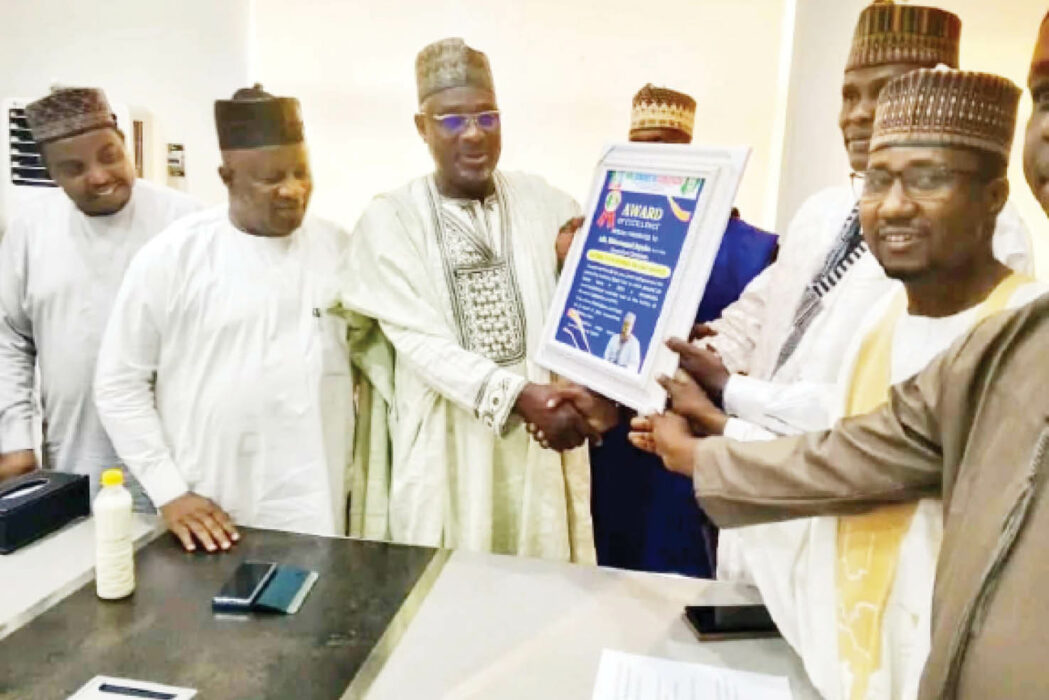
In less than two years, Katsina State has witnessed a quiet but profound transformation in its financial management system. At the centre of this reform is Alhaji Muhammad Isyaku, the Executive Chairman of the Katsina State Internal Revenue Service (KSIRS), a man whose blend of innovation, integrity, and discipline has redefined how the state generates and manages its internally generated revenue (IGR).
Backed by the political will of Governor Dikko Umaru Radda, the state has moved from manual, leak-prone collections to a fully digital, transparent, and accountable system that now serves as a model for other subnational governments across Nigeria.
“When I assumed duty, our collection was below expectation. But today, the story has changed”, he said
When Mohammed Isyaku took charge, the state’s revenue system was plagued by confusion, duplication, and lack of accountability. Multiple individuals collected money on behalf of the government without any proper record or supervision.
“It was really a situation where everyone was doing things their own way, without a unified structure or reporting mechanism,” he recalls.
Governor Radda, understanding that no government can thrive without a credible revenue base, gave a clear mandate: restore order, eliminate leakages, and build trust. With that directive, Isyaku embarked on a series of reforms focused on restructuring, retraining, and automation.
“We started by restoring order. We introduced proper documentation and accountability processes to ensure that every kobo collected could be traced. We trained our officers to understand that they are handling public funds, not personal money. That was the beginning of the turnaround”, he explained
Integrity, Skill and Knowledge; The Foundation of Reform
For Isyaku, the success of any public finance system depends on three pillars: skills, knowledge, and integrity. While technology is vital, he insists that character remains the foundation.
“You can train someone to use a computer that’s skill. You can teach them the laws that’s knowledge. But integrity is something deeper. Without it, no system can work, no matter how advanced it looks,” he notes.
He recalls a senior mentor’s advice that “integrity is the oxygen of public service,” a principle that now defines KSIRS operations. Officers are selected and assigned based on competence and trustworthiness, while new recruits undergo continuous ethical and professional training.
Drawing from the Qur’an, Isyaku references the principle of zakat collection, where only honest and trained individuals were entrusted to handle people’s wealth. “That is our moral compass,” he says. “Those who collect public funds must be prepared, disciplined, and accountable.”
The Digital Leap Forward
The Radda administration’s strong support for digital governance has been instrumental in the success of KSIRS reforms. Through a governor-approved digital billing and payment system, taxpayers can now pay their taxes online using their TIN, BVN, or NIN, without visiting any office or handling cash.
“The governor personally supported and funded the digital solution,” Isyaku emphasizes. “That political will gave us the confidence and tools to modernize the system.”
This centralized platform integrates all revenue streams and allows for real-time monitoring. It eliminates human interference, minimizes leakages, and promotes transparency. As a result, taxpayers now experience convenience and fairness, while the government enjoys accurate data and prompt remittance.
Simplifying Taxation: The Single Sticker Initiative
One of the most popular innovations under Isyaku’s leadership is the Single Sticker Initiative, introduced to simplify tax compliance for transporters.
Previously, drivers and transporters paid multiple levies to different agencies and local governments, sometimes buying up to forty stickers and spending over ₦100,000 per trip. Today, with just ₦7,500 per year, a single sticker covers all routes across Nigeria from Daura to Lagos or even Port Harcourt.
“We wanted to make business easier and fairer,” Isyaku explains. The reform has reduced harassment, streamlined collections, and significantly improved the ease of doing business in Katsina State.
Complementing this initiative is a digital enumeration system for motorcycle and tricycle operators. Each operator is registered in a secure database and pays a modest daily levy ₦100 for motorcycles and ₦200 for tricycles. Beyond enhancing revenue collection, the system doubles as a security measure, helping authorities monitor commercial operators across the state.
Data-Driven Governance
A major innovation of the Katsina Internal Revenue Service is the introduction of the Data Management and Analytics System (DMACS). This system has replaced guesswork with verified data, ensuring that tax assessments are based on real financial information rather than estimates.
Each taxpayer now fills out an annual Form 49, and the system automatically computes obligations based on the declared income data. “We’ve replaced estimation with evidence,” says Isyaku. “This makes the system fair, transparent, and free of arbitrary assessments.”
This shift to data-driven governance not only improves accuracy but also strengthens public trust, as citizens can see that tax administration in Katsina is guided by facts, not discretion.
Reforming Vehicle Licensing
To address irregularities in vehicle registration, the KSIRS has introduced a new, standardized number plate system in partnership with the Federal Road Safety Corps (FRSC). The state is also establishing its own mini number plate production plant, already approved and under installation.
The plant will make Katsina self-reliant in number plate production, reduce delays, create jobs, and improve transparency in vehicle registration processes. “This reform will ensure proper documentation and eliminate duplication,” says Isyaku.
Results That Speak for Themselves
The results of these reforms are visible and measurable. Katsina’s internally generated revenue has climbed to unprecedented levels, with the state recording over ₦3 billion in a single month the highest in its history.
This performance is the product of discipline, innovation, and political will.
“The governor gave us the confidence and support to perform, and we delivered,” Isyaku affirms.
Under Governor Radda’s leadership, Katsina has become one of the few states in Nigeria implementing a fully integrated, technology-driven tax administration framework. This transformation is not only boosting revenue but also rebuilding citizens’ confidence in government institutions.
Beyond the numbers, Isyaku’s focus remains on ethics and accountability.
“When you collect money on behalf of the government, you must be prepared to account for it. It’s not your money; it’s the people’s trust you are handling”, he emphasized.
He often reminds his officers that accountability begins with personal responsibility. “Everyone must understand the consequences of their actions. Preparation and discipline are key. If we fail to prepare those who handle money, we are preparing the system for failure.”
A Vision Anchored on Innovation and Trust
Looking ahead, Isyaku’s goal is to make KSIRS a national model of transparency, integrity, and digital efficiency.
“Our mission is not just to increase revenue figures. It’s to restore the bond of trust between government and citizens. When people see that their taxes build schools, hospitals, and roads, they will willingly comply”, he explained
He calls on the people of Katsina to support the ongoing reforms by being honest, cooperative, and tax-compliant.
“Everything we are doing is in the people’s interest. Our vision is to create a system that is fair, transparent, and accountable a system that works for everyone”, he assured.
Governor Radda’s Legacy of Reform
The achievements of KSIRS under Mohammed Isyaku are a direct reflection of Governor Dikko Radda’s commitment to institutional reform and digital governance.
By empowering technocrats, promoting transparency, and prioritizing integrity, the governor is building a state where governance is efficient and citizens can see value for every naira generated.
With the success of KSIRS reforms, Katsina is not just collecting more revenue, it is redefining public financial management in Nigeria.
The story of Isyaku and his team stands as proof that with the right leadership, technology, and values, even the most challenging public institutions can be transformed into engines of progress.
We’ve got the edge. Get real-time reports, breaking scoops, and exclusive angles delivered straight to your phone. Don’t settle for stale news. Join LEADERSHIP NEWS on WhatsApp for 24/7 updates →
Join Our WhatsApp Channel