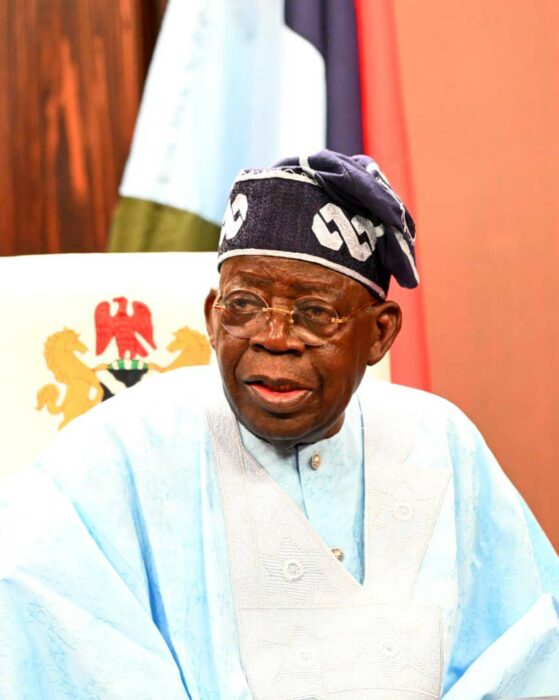
President Bola Tinubu has disclosed that over one million children who were previously out of school have been returned to classrooms under his administration’s education reforms.
The President said the intervention was part of efforts to expand access to education and ensure that every Nigerian child has the opportunity to acquire knowledge and fulfil their potential, irrespective of their background.
Tinubu made this known while highlighting the achievements of his administration in the education sector, stressing that education remains a major priority of the Renewed Hope administration.
He said the government was also investing in teacher development, expanding educational opportunities for girls and implementing a new national curriculum that restores Nigerian History to classrooms.
According to him, Nigerian children must understand the country’s history, appreciate their national identity and be adequately prepared to take responsibility for its future.
“Our children must know where we have come from, understand the country they belong to, and be prepared to take responsibility for its future,” he said.
The President also highlighted other interventions aimed at improving access to education, including the Nigerian Education Loan Fund (NELFUND), which he said had provided over ₦372 billion in student loans for institutional fees and upkeep.
He disclosed that the government’s technical and vocational education programme had attracted over 2.8 million applications, while 38 technical colleges had been rehabilitated.
Tinubu added that students in federal and selected state technical colleges now benefit from free school fees, boarding, textbooks and uniforms.
On efforts to strengthen university education, he said his administration had reached a new agreement with the Academic Staff Union of Universities (ASUU), providing for a 40 per cent increase in academic staff remuneration and measures to improve stability in the university system.
He emphasised that Nigerian students should be able to complete their academic programmes within the stipulated period, declaring that a four-year university course must take four years.
In medical education, Tinubu said the federal g myovernment was investing ₦110 billion in the rehabilitation of 24 medical schools.
He further disclosed that annual nursing enrolment had increased from 28,000 to 115,000, while medical and dental enrolment had risen from 5,000 to 12,000.
The President said his administration remained committed to creating educational opportunities for young Nigerians, noting that the circumstances of a child’s birth should not determine the limits of their ambition.
He also commended the Minister of Education, Dr Tunji Alausa, the Minister of State for Education, Professor Suwaiba Sa’id Ahmad, and other members of the education team for their contributions to the implementation of the reforms.
Tinubu urged parents, students and teachers to visit edu4pbat.ng to explore the interactive A–Z of the Nigeria Education Sector Renewal Initiative (NESRI) and familiarise themselves with available opportunities and government interventions.
He also encouraged Nigerians to provide feedback on challenges affecting education in their communities, assuring that such input would help the government identify and address problems.
“Our responsibility is to give every Nigerian child a fair chance to fulfil their potential. We have more work to do, and I am determined to see it through,” he said.
We’ve got the edge. Get real-time reports, breaking scoops, and exclusive angles delivered straight to your phone. Don’t settle for stale news. Join LEADERSHIP NEWS on WhatsApp for 24/7 updates →
Join Our WhatsApp Channel