The Group of 24 (G-24) has warned that developing countries are paying about $500 billion more in borrowing costs than developed economies, calling on the International Monetary Fund (IMF) and the World Bank to make concessional financing more affordable to prevent debt obligations from undermining economic development.
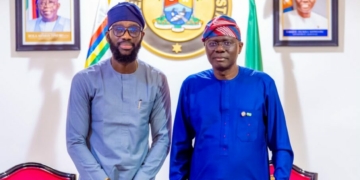
Nigeria’s Minister of Finance and Coordinating Minister of the Economy, Taiwo Oyedele, who chairs the G-24, said the rising cost of borrowing was constraining developing countries’ ability to finance infrastructure, create jobs and improve living standards.
Addressing the G24 press briefing at the ongoing IMF/World Bank Annual Meetings in Bangkok, Thailand, Oyedele urged the two international financial institutions to expand access to affordable financing, particularly for vulnerable economies facing mounting fiscal pressures.
“What we have seen by members of the G24 and across, particularly the developing countries, such as those in Africa, is the increasing burden of not just high debts or high costs of debts. To the extent that we have some estimates indicating that these developing countries are paying in the region of about $500 billion more than they should be paying compared to developed countries,” he said.
The African Union (AU) on Wednesday launched the Africa Credit Rating Agency (AfCRA), seeking to provide an alternative to the global “big three” amid rising debt burdens and borrowing costs across the continent.
Chairperson of the AU, H.E. Mahmoud Ali Youssouf had noted that credit ratings directly affect the cost and availability of capital. Where assessments do not sufficiently reflect African data, realities and context, countries can face higher borrowing costs, constraining their ability to finance infrastructure, health, education, energy, industrialisation and other development priorities, at a time when many Member States are already facing significant debt-servicing pressures.
Chair of the G24, Oyedele, noted that borrowing remained necessary to finance development, stimulate investment and create employment, but argued that the terms and cost of financing must be addressed to ensure that debt supports rather than undermines economic growth.
“Our charge to both the IMF and the World Bank is to find means of making particularly short-term, more affordable concessional borrowing available to particularly the vulnerable countries, and on a more long-term basis, find means framework and policies to mobilise private capital so that public capital that is always constrained is applied only to, for example, social services,” Oyedele said.
The G-24’s intervention comes as developing economies contend with rising debt-service obligations and competing demands for limited public resources, including healthcare, education, infrastructure and social protection.
For countries struggling to meet these needs, high borrowing costs can leave governments with less money to invest in productive sectors and essential public services, even as they continue to borrow to finance development.
Oyedele also cautioned governments against relying excessively on taxation to address fiscal pressures, warning that poorly designed tax policies could deepen hardship among vulnerable households and weaken economic activity.
He said governments must balance domestic revenue mobilisation with responsible borrowing and expenditure management, stressing that the consequences of both taxation and debt must be considered in determining fiscal policy.
“The way I like to put it is: if you collect taxes, you raise the money now, and that itself has a lot of trade-off. What taxes are you collecting? Are you collecting taxes from the most vulnerable, and this will deprive them of money to provide food, health, education? They have to be mindful of, mindful of tax, and debts is future taxes.
“So it is not one or the other. It is to strike a balance, bearing in mind ultimately that the essence of tax and of debts is to cater for the people. If you put people always at the centre of your policies, you will not be perfect, but you are likely to strike a balance that works and is sustainable.”
Director of the G-24 Secretariat, Iyabo Masha, said progress had been made in strengthening the international debt-resolution architecture, including through updates to debt sustainability assessments and restructuring procedures.
She noted that the IMF had updated its debt sustainability framework by introducing additional metrics to improve assessments of countries’ capacity to carry debt.
Masha also cited changes to restructuring procedures under the Global Sovereign Debt Roundtable and the Common Framework, saying the developments could help countries secure faster resolutions when debt becomes unsustainable.
However, she called for greater participation by private creditors in debt-resolution initiatives, particularly for countries with significant exposure to privately held bonds that may not benefit fully from existing arrangements.
She also urged advanced economies to support improvements in the way credit-rating agencies assess developing countries, arguing that ratings should not unfairly penalise them. Masha said the G-24 had made progress in addressing weaknesses exposed by previous debt crises, including Sri Lanka’s experience, but acknowledged that substantial work remained.
She noted that the launch of the Borrowers’ Platform, spearheaded by the United Nations Conference on Trade and Development (UNCTAD), provides an avenue for debtor countries to strengthen their collective voice and exchange knowledge on sustainable borrowing practices.
Meanwhile, Oyedele stressed that the success of economic policies should be measured by their ability to generate employment and improve living standards, rather than by headline growth figures alone.
He said developing countries, particularly those with young and expanding populations, needed to ensure that economic expansion translated into jobs and broader economic opportunities.
“It is not only just the World Bank and the IMF. This is a collective responsibility for all of us to ensure that growth is not just for the sake of growth. It has to be job-rich. It has to be inclusive, and at the end of the day, must be able to translate to better living standards for our people,” he said.
Oyedele also pointed to the potential effects of artificial intelligence, warning that its adoption and regulation would require deliberate policy choices to prevent economic growth from coinciding with rising unemployment.
We’ve got the edge. Get real-time reports, breaking scoops, and exclusive angles delivered straight to your phone. Don’t settle for stale news. Join LEADERSHIP NEWS on WhatsApp for 24/7 updates →
Join Our WhatsApp Channel