Pad Up Africa, in partnership with the ÀLÁÁFÍÀ Initiative for Gender and Development, has raised concerns that poor menstrual health education, persistent cultural stigma and weak implementation of existing government policies are fueling the growing rate of teenage pregnancies in Nigeria.
The organisations also stressed the importance of involving men and boys in menstrual health advocacy to break harmful misconceptions surrounding menstruation and foster stronger community support for girls and women.
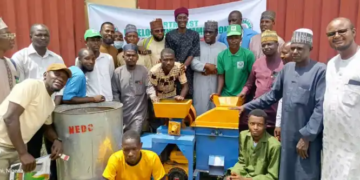
The call was made on Sunday during a menstrual health outreach held in Karmo Village, Jiwa Chiefdom, Abuja Municipal Area Council (AMAC), with the theme, “Because Every Girl Deserves to Feel Confident, Every Day.”
Speaking during the outreach, a representative of Pad Up Africa, Lori, said the intervention was inspired by the realities faced by vulnerable girls who lack access to sanitary pads and adequate menstrual health education.
According to her, many of the beneficiaries had either never used sanitary pads before or had been using them without understanding their menstrual cycle.
“We have many indigent women and girls here who cannot afford sanitary pads. To our surprise, some of them had never used sanitary pads before, while others had been using them without understanding their menstrual cycle,” she said.
Lori warned that inadequate knowledge of menstrual health is contributing to the increasing number of teenage pregnancies across the country.
“We are seeing an increasing number of teenage pregnancies because many young girls do not understand their menstrual cycle. This programme is not intended to encourage unsafe sexual behaviour. Rather, it is to help young people understand their menstrual cycle so they can make informed decisions. “Abstinence remains the safest option, but understanding the menstrual cycle is important in preventing unintended pregnancies,” she added.
She explained that the outreach deliberately engaged men and boys in discussions about menstruation to encourage them to support girls and women while promoting greater understanding of the physical and emotional changes associated with menstruation.
Lori, however, identified cultural resistance and inadequate funding as major challenges confronting menstrual health advocacy.
“Whenever we enter a new community, acceptance does not always come immediately, especially when we try to involve men in conversations around menstruation. It takes a lot of engagement and persuasion before they understand that menstrual health is everyone’s responsibility,” she said.
She also urged governments at all levels to move beyond policy formulation to effective implementation, noting that although menstrual hygiene management has been approved for inclusion in primary and secondary school curricula, implementation remains largely ineffective.
“Passing a policy is one thing; ensuring it is implemented is another. Once these policies are fully implemented, stigma surrounding menstruation will reduce significantly in our schools and communities.
“We also need stronger collaboration among government agencies, NGOs, community-based organisations and traditional leaders so we can harmonise advocacy efforts, expand awareness and begin to measure real progress,” she added.
Founder and Executive Director of the ÀLÁÁFÍÀ Initiative for Gender and Development, Dr. Temilola George, said the organisation was established to complement government efforts by delivering community-based interventions targeted at improving the lives of vulnerable people.
“This is our first major project, and we intend to implement many more impactful programmes. The government cannot do everything alone. Organisations like ours exist to mobilise resources, carry out charitable projects and improve lives,” she said.
George explained that the outreach theme, “Pads with Confidence,” highlighted the need to restore dignity and confidence to girls during menstruation, particularly those forced to rely on unhygienic alternatives due to poverty.
“Some girls stay indoors because they fear being stained, while others still rely on rags or old cloth because they cannot afford sanitary pads. Through sensitisation and the distribution of affordable sanitary pads, we can improve menstrual hygiene, protect women’s health, build confidence and create healthier communities,” she said.
She appealed to civil society organisations, development partners, community leaders and government institutions to strengthen collaboration in expanding menstrual health education and ensuring girls have access to accurate information, affordable sanitary products and supportive environments.
The Village Head of Karmo Sabo, Jiwa Chiefdom, Chief Umar Sarki Gani, described the outreach as timely and impactful, saying it equipped women and girls with practical knowledge on menstrual hygiene and personal health.
“I am overwhelmed by this programme because it truly educates women on proper personal hygiene and how to take care of themselves during their menstrual period. The message has been well received, and I look forward to seeing organisations like this continue to visit our community to educate our people for a better future,” he said.
The traditional ruler urged the government to provide financial and institutional support to organisations offering health education in underserved communities.
One of the beneficiaries, Saidu Aisha, expressed appreciation to the organisers, saying the programme improved participants’ understanding of menstrual hygiene, menstrual cycle management and the importance of seeking medical attention for severe menstrual pain.
“We were taught how to take care of ourselves and understand our menstrual cycle. We also learned that severe menstrual pain should not be ignored because it may not be normal. We sincerely appreciate this organisation for coming to our community,” she said.
We’ve got the edge. Get real-time reports, breaking scoops, and exclusive angles delivered straight to your phone. Don’t settle for stale news. Join LEADERSHIP NEWS on WhatsApp for 24/7 updates →
Join Our WhatsApp Channel