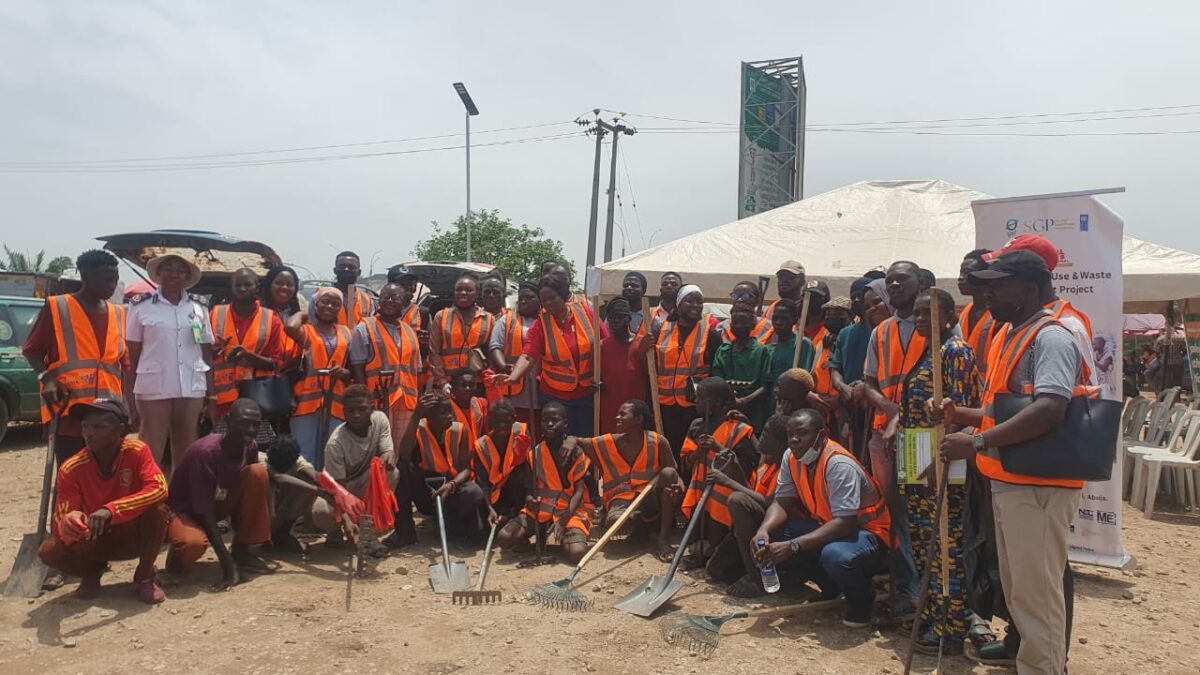
Stakeholders under the Digital Peers International (DPI)–SGP 2.0 Project have intensified campaigns for environmental sustainability, youth participation, and responsible plastic waste management during an FCT Clean-Up Exercise held at Gwagwalada Park, Area 1, Garki, Abuja.
The exercise, organised under the DPI-SGP-supported project titled “Deploying the Power of IT-Engaged Youths in Effective Plastic Use and Plastic Waste Management 2.0,” brought together environmental advocates, volunteers, scavengers, media organisations, and government agencies to promote cleaner communities and behavioural change around plastic disposal.
Speaking during the exercise, the Chief Executive Officer of DPI and a retired Permanent Secretary of the Federal Ministry of Environment, Dr Ibukun Odusote, said the initiative was aimed at sensitising residents and park users on the importance of cleanliness, healthy living, and sustainable plastic waste management. “We are cleaning up Gwagwalada Park to sensitise park users to understand that cleanliness is wealth.
Our health is important, and this project is focused on the effective use of plastics and plastic waste management,” she said.
Odusote explained that the project, supported by the United Nations Development Programme Global Environment Facility Small Grants Programme (UNDP-GEF SGP), deploys young people to tackle plastic pollution while promoting innovative ways of converting waste into economic value. According to her, indiscriminate disposal of plastic waste, particularly sachet water nylons, contributes significantly to blocked drainage systems and flooding during the rainy season. “We don’t want plastics littering the roads. When people drink sachet water, they should not throw the nylon on the streets because they block waterways and prevent the free flow of water,” she stated.
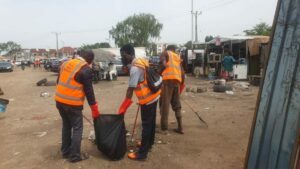
She noted that the clean-up exercise also involved scavengers popularly known as “Babanbola,” who were engaged to support waste collection while learning the economic value of recyclable plastics.
“We are transforming waste into wealth. We have encouraged them to continue collecting plastics because plastics are valuable resources,” she added.
Odusote disclosed that some beneficiaries of the project were already converting plastic waste into products such as jewellery, furniture, clothing materials, and interlocking tiles. She cited the example of a young participant operating a small-scale recycling plant that converts melted plastic mixed with sand into durable interlocking tiles. “He has a cottage industry where he melts plastics and produces interlocking tiles that can last for over 100 years. Nigerians need to embrace innovations like this because plastics can become economic assets,” she explained.
The DPI boss further called for stronger government investment in youth-led recycling initiatives and environmental enterprises capable of generating employment and supporting sustainable development. According to her, the organisation is already extending the initiative beyond the FCT into Nasarawa and Niger states. At the same time, participants from Kaduna and Kano have also joined voluntarily due to growing interest in the project.
Representing the Abuja Environmental Protection Board (AEPB), Eyo Maureen, who stood in for the Divisional Head of Waste Disposal Facility and Resource Recovery, Engr. Sherifat Lawal described the clean-up exercise as a reflection of collective responsibility towards environmental protection. She warned that poor sanitation practices and indiscriminate waste dumping continue to threaten public health, worsen flooding, and damage the ecosystem.
“The environment is our shared home. The way we treat it today will determine the kind of future we leave for coming generations,” she said. Maureen stressed that environmental sanitation should not be left solely to government agencies, urging individuals, schools, households, markets, and organisations to adopt proper waste-disposal and recycling practices.
Participants at the event also called on media organisations to sustain awareness campaigns that promote behavioural change and strengthen environmental responsibility across communities.
We’ve got the edge. Get real-time reports, breaking scoops, and exclusive angles delivered straight to your phone. Don’t settle for stale news. Join LEADERSHIP NEWS on WhatsApp for 24/7 updates →
Join Our WhatsApp Channel