

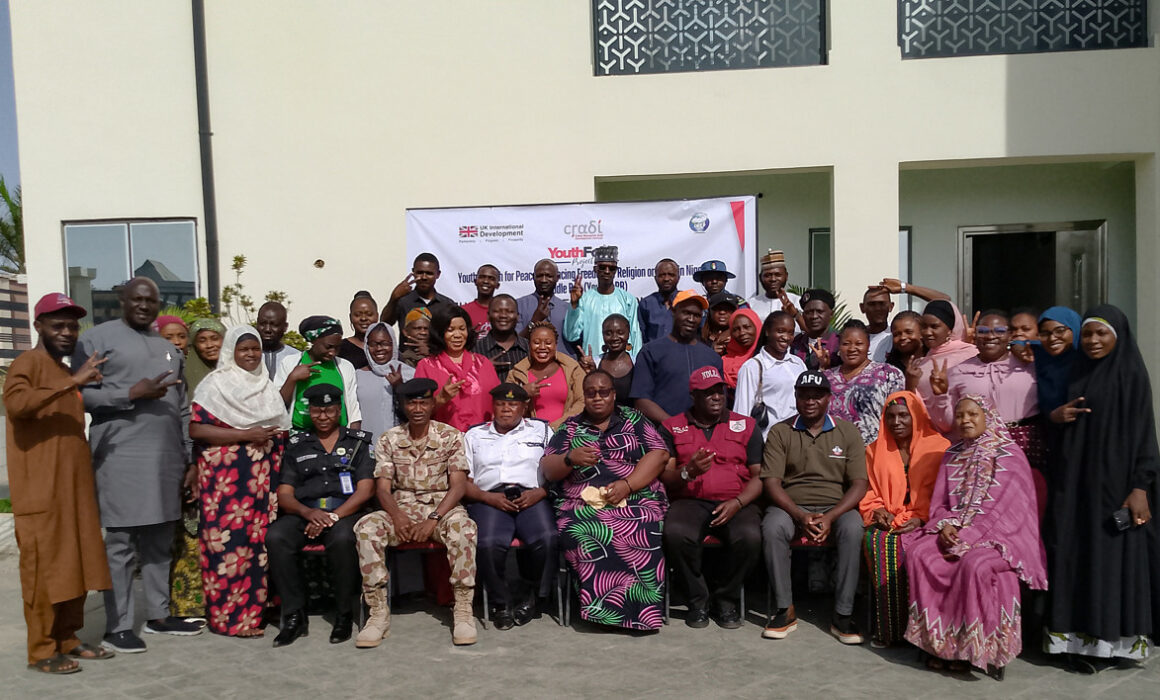
Stakeholders from government institutions, civil society organisations, security agencies and youth groups have called for stronger youth participation in peacebuilding and greater protection of Freedom of Religion or Belief (FoRB) across communities in Nigeria’s Middle Belt.
The call was made during a multi-stakeholder policy dialogue held in Jos, Plateau State, where participants examined emerging conflict indicators and explored strategies for preventing tensions from escalating within communities.
The dialogue, organised under the project “Youth of Faith for Peace: Advancing Freedom of Religion or Belief in Nigeria’s Middle Belt (YouthFoRB)”, took place at the Crest Research and Development Institute (CRADI) complex in Jos.
The forum provided a platform for stakeholders to assess security and social challenges affecting communities and to design collaborative responses that promote peaceful coexistence.
In a welcome address, facilitators stressed the importance of sustained dialogue, cooperation and community participation in addressing threats to peace and stability. The opening session also featured the recitation of the Nigerian national anthem.
During the programme, representatives from communities participating in the YouthFoRB initiative presented findings from a youth-led interfaith conflict analysis carried out in Angwan Rukuba, Bulbula and Gamajigo communities in and around Jos.
The analysis identified several emerging issues that could undermine stability if left unaddressed. These include cases of rape and gender-based violence, rising school dropout rates among young people, the proliferation of illegal pharmacies linked to drug abuse, and the activities of youth groups associated with violence in parts of the state.
Other concerns highlighted by participants included hate speech, threats among rival youth groups, pickpocketing and increasing alcohol consumption among young people.
Participants noted that although some of the challenges may appear isolated, they have the potential to deepen tensions within communities characterised by ethnic and religious diversity.
To address the issues raised, participants were divided into working groups corresponding with the focus communities of Angwan Rukuba, Bulbula and Gamajigo.
The groups examined the root causes of the identified challenges and proposed practical interventions that could be implemented through collaboration between community leaders, civil society organisations and relevant government authorities.
Each group also discussed the roles of key stakeholders and identified resources that could support community-level responses to emerging tensions.
A separate session focused on strategies for preventing the escalation and spillover of local disputes into wider ethnic or religious conflicts.
Participants emphasised the need for early warning mechanisms, community dialogue platforms and coordinated responses among stakeholders to detect and address tensions before they escalate.
At the end of the dialogue, the working groups developed community action plans outlining priority interventions, implementation timelines and responsible actors.
Facilitators commended participants for their active engagement and stressed the importance of sustained collaboration among youth groups, community leaders, civil society organisations and security agencies in maintaining peace.
The dialogue forms part of ongoing efforts under the YouthFoRB initiative to strengthen youth-led peacebuilding structures and promote the protection of Freedom of Religion or Belief in diverse communities across Nigeria’s Middle Belt.
Participants expressed optimism that the action plans developed during the dialogue would enhance cooperation among stakeholders and help address emerging tensions before they develop into broader conflicts.
We’ve got the edge. Get real-time reports, breaking scoops, and exclusive angles delivered straight to your phone. Don’t settle for stale news. Join LEADERSHIP NEWS on WhatsApp for 24/7 updates →
Join Our WhatsApp Channel

