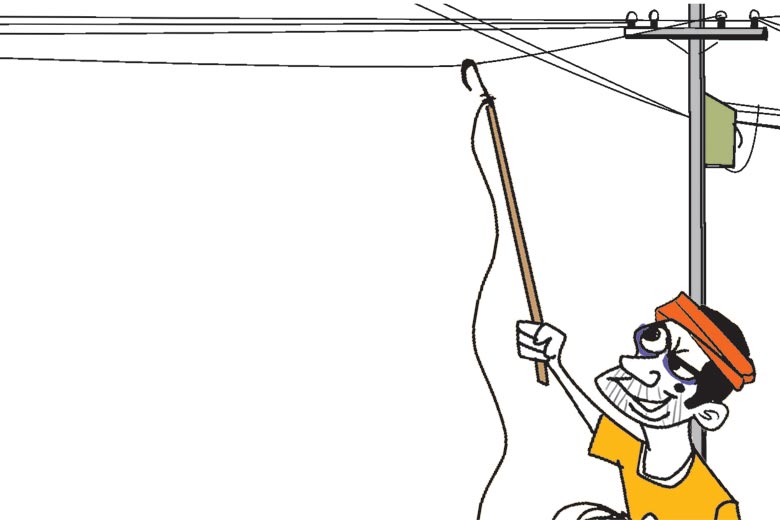
At a time when Nigeria is working to relaunch its economy, particularly in the face of continuous challenges, the country’s electricity industry is at a crossroads. Now widespread and persistent, energy theft has become a severe challenge to energy distribution corporations (Discos) and the larger goal of national recovery and self-reliance.
The newly passed Electricity Act 2023, which intends to combat electricity theft by imposing harsher penalties, demonstrates the federal government’s acknowledgement of this problem. However, Nigeria’s economic future remains jeopardised without solid enforcement and coordination from all parties, including innovative attempts from forward-thinking Discos.
Energy theft is not a new issue, but the prevalence in Nigeria is startling. Approximately 40% of the country’s electricity is stolen or squandered. Illegal connections, meter manipulation, and infrastructure sabotage are standard, especially in densely populated cities and neglected rural areas. The sheer scope of this theft takes billions of naira from the power sector each year, worsening existing financial and operational issues.
For many discos, this truth is crushing. With billions in losses, many businesses struggle to maintain existing infrastructure, let alone grow or improve their networks. As a result, their operational capacities are limited, and their financial survival is constantly jeopardised. This generates a vicious loop in which dissatisfied customers, annoyed by inconsistent power supplies, justify illicit connections, exacerbating the sector’s income shortfalls.
However, the implications extend beyond the electrical sector. Energy theft substantially impacts overall economic growth. With reliable electricity, firms, particularly those in manufacturing and heavy industries, rely on costly, efficient generators. This boosts production costs, lowers competitiveness, and slows job development. Investor confidence, a key indicator in Nigeria’s economic recovery, has also been damaged, as the recurrence of energy theft reveals governance inefficiencies that are impossible to ignore.
While energy theft is an industry-wide issue, the financial and operational impact differs by Disco. Many people, especially those who work in high-density, low-income areas, are devastated financially. Electricity theft can result in billions of dollars in yearly losses, impeding much-needed infrastructure investments that would otherwise support growth and reliability.
If this menace is allowed to continue, the power sector will not grow, and the discos will continue to run into losses.
The discos are in a hazardous condition, trying to break free from the cycle of low income and bad service performance.
Despite the pessimism, a few Discos have emerged with inventive ideas. These forward-thinking enterprises have become the cornerstone in protecting the federal government’s electricity regulations by taking bold, proactive steps to combat the threat of energy theft.
The federal government has acknowledged the need for more robust legislative frameworks to discourage energy theft. The Electricity Act of 2023 imposes harsher punishments, including fines of up to six times the value of stolen electricity and prison sentences of up to three years. These restrictions are designed to serve as a deterrence, conveying that energy theft will not be condoned.
However, persistent enforcement is required for the law to be successful. The challenge will be successfully applying the rule in rural areas and heavily populated urban slums, where illegal connections are most prevalent. The new legislation may only have the intended effects with appropriate enforcement.
Despite these efforts, one of the most significant obstacles is societal attitudes regarding electricity theft. Many Nigerians regard electricity as a fundamental entitlement and fail to realise the far-reaching economic ramifications of stealing power.
Further public education, continued investments in smart infrastructure, and stringent implementation of the Electricity Act 2023 will be vital.
Nigeria is at a crossroads in its economic recovery, and the stakes have never been higher. The power sector, long beset by inefficiency, cannot afford energy theft to continue unabated.
– Alo, an energy expert, wrote in from Lagos
We’ve got the edge. Get real-time reports, breaking scoops, and exclusive angles delivered straight to your phone. Don’t settle for stale news. Join LEADERSHIP NEWS on WhatsApp for 24/7 updates →
Join Our WhatsApp Channel