
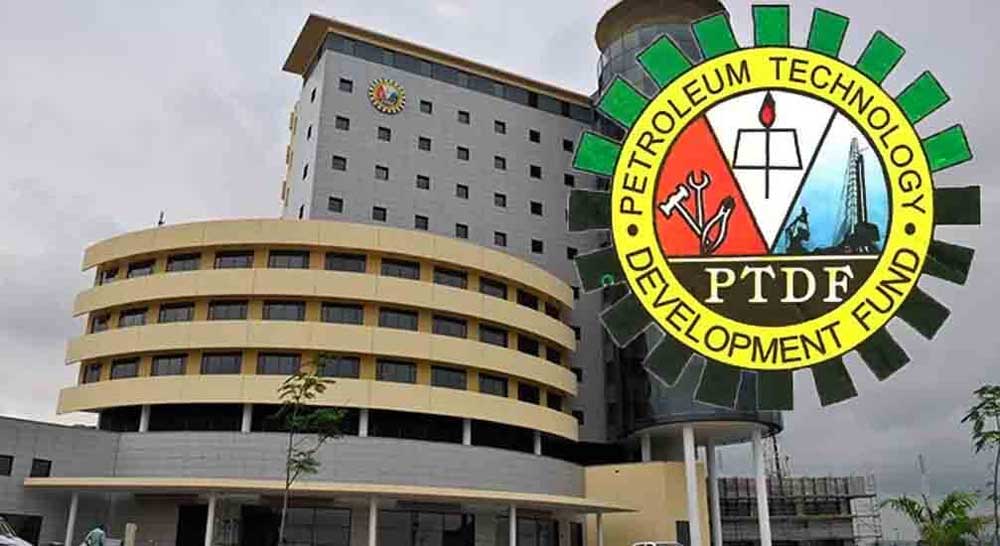
The Petroleum Technology Development Fund (PTDF) said it has sponsored nearly 15,000 Nigerians for studies at home and abroad, even as 1,571 scholars were currently studying in 15 countries, as of July 2026.
This is as the Fund is now asking the United Kingdom to help address visa rejections, high tuition fees and the monitoring of its scholars, which it says are putting pressure on the programme.
The executive secretary of the Fund, Professor Shu’aibu Shehu Aliyu, made the request on Tuesday at a meeting with the British High Commissioner to Nigeria, Pete Vowles. The meeting was held at the General Shehu Musa Yar’adua University of Geological Sciences and Engineering Technology, Kaduna.
Scale of the scholarship programme Aliyu said the Fund had sponsored the beneficiaries through its Overseas Scholarship Scheme and In-Country Scholarship Scheme, for undergraduate and postgraduate studies.
He said that as of July 2026, 1,571 scholars were studying in 15 countries and more than 120 partner institutions. He added that demand for PTDF scholarships was still rising.
The executive secretary said the UK had for decades been the Fund’s main partner in building skills for Nigeria’s energy sector.
He said the PTDF worked with 24 British universities, including Robert Gordon, Strathclyde, Portsmouth, Aberdeen, Newcastle, Birmingham, Glasgow, Leicester, Liverpool and Manchester.
He said the partnership had helped train thousands of Nigerian engineers, geoscientists, researchers and energy professionals.
Aliyu also said the Fund worked with institutions in Germany, France and Malaysia, where it sought cheaper ways to train Nigerians. He said the Fund still wanted to keep its long-standing ties with the UK.
Concerns over fees, visas and monitoring
The Executive Secretary told the High Commissioner that the Fund was facing problems with its UK partners. He listed these as tuition fees that were high compared with other European countries, and visa rejections.
“I would like to take this opportunity to highlight several challenges we are facing with our UK partners for the High Commissioner’s attention,” he said.
He said the Fund also wanted a plan to monitor its scholars in the UK, with support from the UK government and the host universities.
Aliyu did not give figures for the fee increases or the number of visa rejections.
UK response
Responding, Vowles said the British High Commission understood the difficulties, especially those linked to visas and increases in tuition fees.
“We will take these concerns away as a team and communicate them to the relevant stakeholders within the UK system,” he said.
The High Commissioner said the PTDF and the High Commission had worked together to simplify the process. He said the PTDF’s recognition as a government-approved sponsor was expected to help.
“Having the PTDF recognised as a government-approved sponsor will hopefully make the process much smoother,” he said.
He did not promise any change in fees or visa rules.
Moving part of the training to Nigeria
Aliyu said the Fund had introduced the Split-Site PhD Programme to reduce the cost of studying abroad. Under it, scholars do part of their doctoral studies in Nigeria and the rest in a partner university in the UK.
He said the programme also strengthens local institutions, and scholars still earn qualifications that are recognised internationally. According to him, three UK universities, Portsmouth, Strathclyde and Robert Gordon, run the programme with the Kaduna university.
He said the Fund wanted to expand the programme and add short executive courses, so that Nigerian and other African students could earn UK-recognised qualifications in Kaduna at a lower cost.
The Executive Secretary said the Fund was also trying to reduce capital flight by expanding training within Nigeria, and to rely less on overseas institutions. He said the Fund wanted Nigeria to become an exporter of skilled energy professionals.
How the Fund is structured
Aliyu said the PTDF carries out its work through three areas: Human Capital Development, Institutional Capacity Building, and Research and Development.
He said Human Capital Development, which covers the scholarships, remained the Fund’s main activity.
“Human capital development remains PTDF’s flagship intervention,” he said.
He said the Fund also runs two institutions. One is the Centre for Skills Development and Training in Port Harcourt, which trains technicians, artisans and craftsmen for the oil and gas industry in welding, fabrication, instrumentation and offshore safety.
The other is the Kaduna university, formerly the College of Petroleum and Energy Studies. He said it was now the Fund’s degree-awarding institution, offering postgraduate courses and research.
Aliyu said the campus had laboratories, simulation centres, hostels, a postgraduate school, a conference centre and other facilities. He said buildings alone would not be enough.
“Physical infrastructure is only as effective as the academic, technical, and institutional frameworks that power it,” he said.
He said the Fund wanted UK partners to help develop those frameworks through exchange programmes. Under these, UK academics and industry experts would teach and research in Kaduna, while Nigerian researchers would work in UK laboratories.
He also said the university could carry out research on cleaner fossil fuel technology, hydrogen, carbon capture, geothermal energy and solar power, with UK research bodies.
Business interest for UK partners
The Executive Secretary said the partnership should benefit both sides. He said UK universities and energy technology companies could gain access to the African energy market, to Nigerian talent, and to a place to test technologies meant for emerging markets.
“This partnership is a two-way street,” he said.
He said Nigeria’s Petroleum Industry Act and national energy policies required stronger local content and more self-reliance in technology, and that the Kaduna university was meant to support this.
Scholars’ experience
Two scholars joined the meeting virtually and described their scholarship experience as good.
Speaking from Scotland, Zulqornain Abdulsalam Gambari said his research experience had been pleasant. Olamide Oseni, speaking from Aberdeen, said his experience had been positive, despite a slight language challenge.
Proposed working group
Aliyu asked the British High Commission to join the PTDF in setting up a Joint Working Group. He said it should include PTDF officials, representatives of UK universities and industry stakeholders.
He said the group would draw up a framework to hold both sides accountable and show clear results from the cooperation.
He said the Fund was ready to work with the UK Department for Education, the Department for Business and Trade, and the Foreign, Commonwealth and Development Office on the UK International Education Strategy 2026.
He said the Fund looked forward to a “swift, productive, and mutually rewarding partnership” in December, when the International Education Chief of the Foreign, Commonwealth and Development Office visits Nigeria.
Vowles thanked the Fund for continuing to work with UK universities.
“We are truly grateful that you have continued to choose to work with the UK university sector,” he said.
He said he was pleased that many of the partnerships were with Scottish universities, including Aberdeen and Strathclyde. He added that Scotland is his home part of the UK.
The High Commissioner said the High Commission would keep working with the PTDF and looking for ways to help Nigerian scholars study in the UK. He hoped the partnership would benefit both sides.
We’ve got the edge. Get real-time reports, breaking scoops, and exclusive angles delivered straight to your phone. Don’t settle for stale news. Join LEADERSHIP NEWS on WhatsApp for 24/7 updates →
Join Our WhatsApp Channel