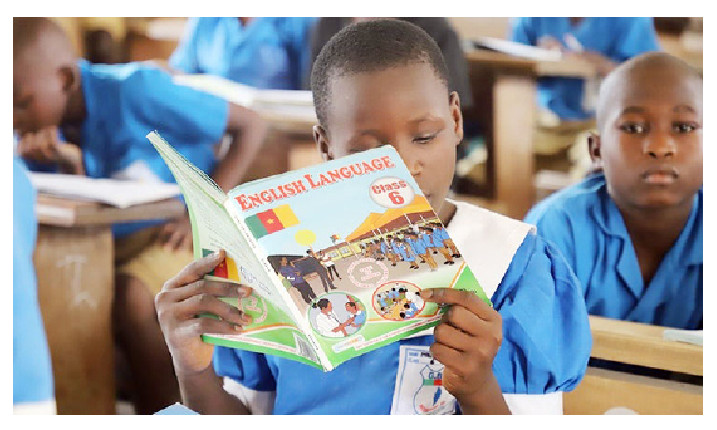
Nigeria’s planned National Textbook Ranking System is expected to improve the quality and standardisation of books used in primary, junior secondary and senior secondary schools.
But as the country prepares for the new framework, the success of the reform will depend not only on how textbooks are assessed, but also on whether approved books are affordable and available to pupils across the country.
For many parents, the beginning of a new school term already comes with a heavy financial burden. Beyond school fees, uniforms, transport and stationery, families are often required to purchase long lists of compulsory textbooks, workbooks and activity materials.
In some private schools, new books are prescribed every session, including materials that cannot be passed down to younger children because pupils are expected to write directly in them.
The Federal Government believes the new ranking system can bring greater order to Nigeria’s crowded textbook market by ensuring that only quality, curriculum-compliant learning materials are approved for use in schools.
However, education stakeholders say the reform will face its biggest test in the classroom, where the quality of a book matters only if teachers and pupils can access and use it.
The government introduced the National Textbook Ranking System to address the growing number of textbooks in circulation and strengthen quality assurance in the education sector.
Under the framework, the Nigerian Educational Research and Development Council, NERDC, will assess and rank textbooks for use at the basic and senior secondary levels. The initiative is expected to support greater consistency and help schools, teachers and parents identify materials that meet national standards.
As preparations continue, NERDC has extended the deadline for the submission of textbooks and other instructional materials for the 2026 Phase I assessment, reassessment and ranking exercise to August 7, 2026.
The Council said the extension would allow more publishers, authors and other eligible stakeholders to complete their submissions, while warning that no further extension would be granted.
The exercise has also raised concerns about the cost of participation for publishers. In July, NERDC reduced the textbook assessment fee from N2,000 to N1,500 per page and cut the ranking fee from N1 million to N750,000 per textbook title.
The Council said the reduction was intended to ease the financial burden on publishers and encourage wider participation.
Nigeria’s textbook market contains publications of varying quality. While some books are carefully researched, clearly written and reviewed by subject specialists, others contain factual errors, outdated information, weak illustrations and poorly structured exercises.
In some classrooms, teachers still rely on textbooks that are not fully aligned with the curriculum. This can create confusion when pupils are taught topics differently from the way they are presented in prescribed books or examined in national assessments.
The new ranking system could provide a stronger quality filter if the assessment goes beyond grammar, printing and physical appearance. A useful evaluation process should determine whether a textbook promotes understanding, problem-solving and critical thinking rather than encouraging pupils to memorise information without fully grasping it.
Textbooks must also reflect the realities of Nigerian learners. Examples drawn from local communities, agriculture, technology, entrepreneurship, Nigerian history and everyday social challenges may help pupils connect classroom lessons with life outside school.
Curriculum alignment is particularly important as schools adjust to revised learning frameworks. If textbooks continue to follow outdated subject structures or fail to cover newly introduced areas, teachers may be forced to combine several books, prepare additional notes or depend on online resources that many pupils cannot access.
While quality is essential, the cost of textbooks may determine whether many pupils benefit from the reform.
Market checks by LEADERSHIP indicate that textbook prices vary widely depending on the publisher, class level, location, edition and whether a school uses standard, specialised or imported materials.
Some locally produced primary school textbooks may cost between N1,500 and N5,000 per copy, while commonly prescribed junior and senior secondary titles may range from about N4,000 to N6,500 or more.
For a pupil required to buy between eight and 12 books, the total cost may rise to between N25,000 and N50,000, depending on the school and publisher.
In some private schools, complete book packages containing specialised, imported or school-branded materials may cost N60,000, N80,000 or significantly more.
The burden becomes heavier for families with two or three children. A parent may spend more than N100,000 on textbooks alone at the beginning of an academic session, excluding school fees, uniforms, transport, exercise books, stationery and other charges.
Estimates from school cost guides also suggest that books and learning materials can account for a substantial part of the additional expenses parents face outside tuition.
For low-income households, rising prices mean that some pupils begin a new term without all the books prescribed by their schools. Siblings may share textbooks, while parents buy only the most important ones and postpone the purchase of others.
Some families turn to second-hand books or photocopied materials, even when such materials may be outdated or no longer fully aligned with the curriculum.
The Federal Government’s reusable textbook policy could provide relief if approved books are designed to last for several years and are not unnecessarily combined with disposable workbooks.
However, the policy’s impact will depend on how publishers price the books and how schools implement the guidelines.
A textbook may receive the highest quality rating but still remain beyond the reach of many families. If approved books are expensive, the reform could widen the gap between pupils in well-funded private schools and those in public schools or low-income communities.
For many families, the choice may not be between a high-quality book and a poor-quality one. It may simply be between buying a book and going without one.
Also, access may be one of the biggest challenges facing the reform. Schools in Abuja, Lagos, Port Harcourt and other major cities may find it easier to obtain approved textbooks through established publishers, bookshops and distribution networks.
However, schools in rural communities and remote areas may face delayed deliveries, high transportation costs and limited access to book vendors.
A national ranking system will have limited impact if approved textbooks are concentrated in urban markets while schools in underserved communities continue using old, unapproved or photocopied materials.
The government will therefore need to make the approved list publicly available and easy for schools, teachers and parents to understand. There should also be a reliable system for checking the status of textbooks and identifying authorised suppliers.
Speaking on the development, ab Abuja based teacher, Mr Isaac Moji, said for the reform to succeed, approved textbooks must be affordable, widely available and supported by effective teacher training.
He said schools in rural and low income communities must not be left behind, while the assessment process must remain transparent and responsive to curriculum changes.
“The measure of success will not be the number of textbooks assessed or ranked. It will be whether a pupil in a crowded public school, a rural community or a low-income household can access a relevant, understandable and durable book and use it to learn better,” he said.
We’ve got the edge. Get real-time reports, breaking scoops, and exclusive angles delivered straight to your phone. Don’t settle for stale news. Join LEADERSHIP NEWS on WhatsApp for 24/7 updates →
Join Our WhatsApp Channel