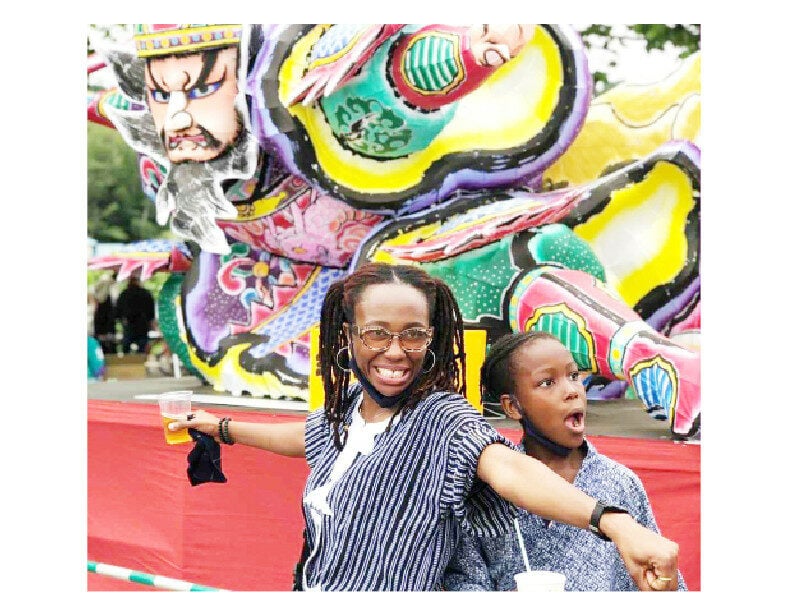
When I moved to Japan with my five-year-old son, Doxa, I assumed the transition would be simple. He had just graduated from kindergarten in Nigeria and was ready to start elementary school. Confident, I headed to the ward office, certificate in hand, as a proud mother of a graduate eager to begin this next chapter.
That was when Japan handed me one of my biggest culture shocks. It was my first taste of how administrative rules reflect deeper values about childhood and readiness in Japanese society.
Despite his certificate, I was told my child couldn’t start school. The clerk explained that elementary school was only for six-year-olds. Somewhat deflated, I enrolled him in an international kindergarten, planning to wait out the months until he turned six.
But this first shock was just the beginning; Japan wasn’t done surprising me.
As the new school year approached in April, I learned the fine print: a child must be six by April 1 to start elementary school. Not six on April 14th, which is his birthday, but SIX BY APRIL FIRST, full stop. And no, it was not an April Fool’s Day prank!
As someone who finished secondary school at 15, I had hoped for a fast track for my son. Instead, I found myself adjusting to Japan’s slower, more uniform approach.
Over time, raising an only child who now has lived longer in Japan than Nigeria gave me new insights into Japanese education. In this article, I reflect as an educator on how the system shaped my parenting.
Once Doxa started elementary school, we hit another surprise: students are encouraged to walk themselves and drop-offs are discouraged. While surprising, this system helps foster independence, as schools are selected within a 10–15 minute walk from home, supporting this practice.
For me, who was chauffeured to school all the way up to university level, this was a shock. I had to learn to trust the system. Doxa, of course, adapted far faster than I did. Apart from getting lost once or twice in the early days, he grew more independent with every walk. Soon, he was happily striding to school and back without hesitation. He’s in the sixth grade now and a pro. Can you tell?
Food was another battlefield. My child resisted Japanese meals, so I would constantly cook Nigerian-style stews, poundo yam, and egusi, which are not cheap staples here. Then came the Japanese school lunch system: you clean your plate, even if you don’t like the set menu, period. As strict as it sounded, it worked. That training opened his palate, and slowly, he learned to enjoy Japanese food. Nigerian meals became an occasional treat, and the rest is history.
Food was only one of the hurdles; the language barrier was and continues to be the biggest. My Japanese is conversational – enough for daily life, but not always for schoolwork or notices. I use Google Translate a lot, but I still miss things. I’ve had to improve so I can communicate effectively with his teachers when needed.
Then there’s parenting in the digital age. I’m a self-confessed snooping mum who believes in checking phones and school bags. However, with everything in Japanese and my reading skills shaky, I’ve used ChatGPT to translate LINE messages in his class group chats and the exchange of messages between him and his classmates. Thankfully, nothing alarming has come up.
Now, with Doxa nearing his teens, new challenges are emerging. Our daily chats and sex education talks have grown more frequent. Japan’s strictness in some things contrasts with its permissiveness in others, as seen in the open display of adult magazines in convenience stores. To prepare him, I focus on instilling strong values so he’ll thrive here and beyond.
Raising a bilingual child is one of my proudest achievements. Although his Japanese writing is stronger than his English, I’m glad for the opportunity. It’s why we’ve stayed. He loves it here and enjoys being the tallest one in class (he’s the same height as his current teacher at 163cm tall). I am grateful that he fits in and thrives.
I feared bullying and whether he’d be accepted, but Japan has welcomed him, and he has found his place. Still, I worry about how the group-oriented culture here can stifle individuality. There’s even a Japanese proverb that translates to: “The nail that sticks out will be hammered down.”
I want my child to fit in, yes, but not at the cost of losing his voice. So I keep reminding him that it’s okay to have his own opinions. If something doesn’t sit right, he should feel free to speak up. That balance between belonging and individuality may be the biggest lesson I want him to carry. It’s not only for surviving Japan, but for becoming a globally minded child who can thrive anywhere.
Written by Lola Ojo
We’ve got the edge. Get real-time reports, breaking scoops, and exclusive angles delivered straight to your phone. Don’t settle for stale news. Join LEADERSHIP NEWS on WhatsApp for 24/7 updates →
Join Our WhatsApp Channel