The Rural Electrification Agency (REA) has acknowledged the contribution of international development partners and industry bodies to Nigeria’s clean-energy market, saying their support has contributed to coordination, market development and technical collaboration in the off-grid sector.
The REA, with the support of development partners including UK PACT, Deutsche Gesellschaft für Internationale Zusammenarbeit (GIZ), Beckaphyl, the Global Off-Grid Lighting Association (GOGLA), SNV, Heinrich Böll Stiftung (HBS), and Murty International, established the Off-Grid Stakeholder Coordination Forum.
According to the agency, the involvement of these partners has supported coordination, market development, knowledge exchange, technical support and stakeholder engagement in Nigeria’s off-grid energy sector.
The Forum is a platform for coordination and information-sharing among participants in Nigeria’s off-grid and clean-energy sector.
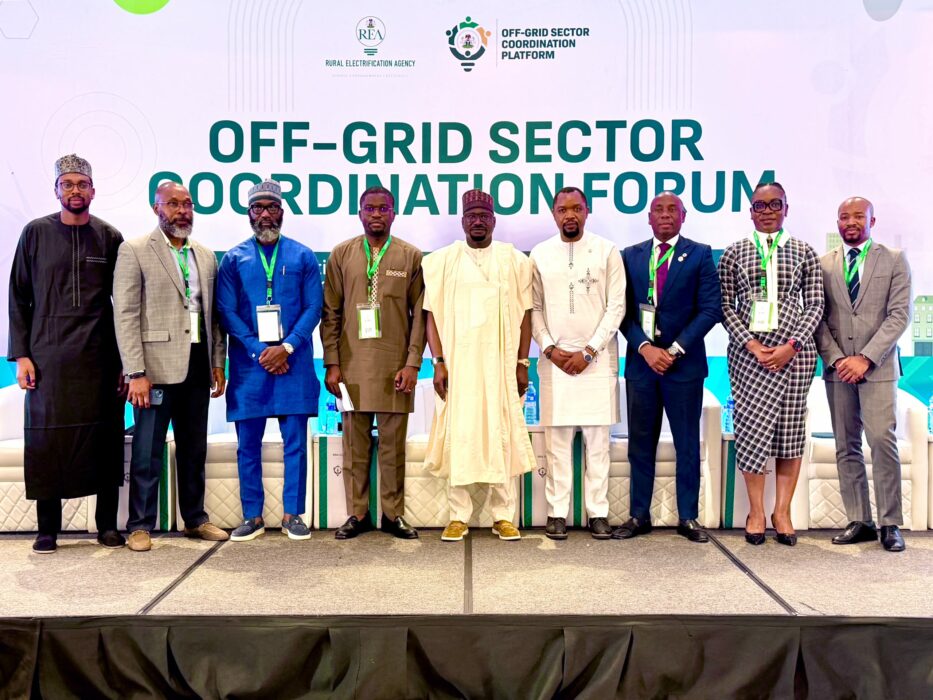
The Forum was launched in Abuja under the theme, “Repositioning Sector Coordination for Strategic Growth, Partnership and Delivery.” It brings together government institutions, state governments, development partners, financiers, private-sector operators, industry associations, civil society organisations and other stakeholders working in Nigeria’s decentralised energy sector.
The initiative responds to the scale and complexity of Nigeria’s off-grid sector, where different institutions and organisations are implementing projects and interventions across communities, sometimes with overlapping mandates, funding streams and development objectives.
Stakeholders at the launch said stronger coordination was needed to ensure that investments complement one another, resources are used efficiently and underserved communities are reached.
The Forum also recognises the contribution of development partners and industry organisations to Nigeria’s clean-energy market.
Speaking at the launch, the managing director/chief executive officer of REA, Abba Abubakar Aliyu, said the sector needed a common coordination framework.
According to Aliyu, “the objective is not to create another layer of bureaucracy, but to provide a mechanism through which stakeholders can better understand who is doing what, where interventions are being deployed, what resources are available, and how different initiatives can be better coordinated”.
He said improved coordination could reduce duplication, improve institutional and operational processes, support the allocation of available resources and help prevent multiple programmes from targeting the same communities while other underserved locations receive less attention.
The minister of Power, Joseph Tegbe, who was represented by the chief of staff, Federal Ministry of Power, Adedoyin Adelabu, said the ministry remained committed to service and policy guidance.
He said inadequate coordination could result in duplicated efforts, missed investment opportunities and slower delivery of electricity to Nigerians in underserved areas.
According to him, “The Forum is therefore expected to serve as a continuous platform for shared information, addressing common problems, partnership development and coordinated action, rather than a one-off stakeholder engagement.
“The Forum will consequently provide opportunities for stakeholders to identify common challenges, share lessons and data, align priorities and develop partnerships that could help extend interventions from individual projects to solutions that can be applied more widely.”
Stakeholders at the launch also spoke about the need for coordination in the sector.
We’ve got the edge. Get real-time reports, breaking scoops, and exclusive angles delivered straight to your phone. Don’t settle for stale news. Join LEADERSHIP NEWS on WhatsApp for 24/7 updates →
Join Our WhatsApp Channel