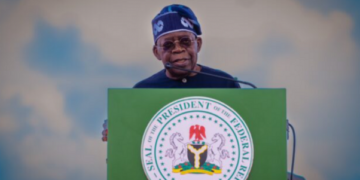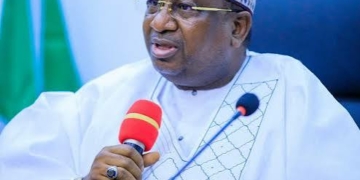

Some civil society organisations (CSOs) have told President Bola Ahmed Tinubu that his economic reforms must translate into better living conditions for Nigerians, saying the real test of prosperity is its impact on households.
Reacting to President Tinubu’s 66th Independence Day address, the executive director of CREAP Africa, Sylvanus Udoenoh, said while the President’s message that Nigeria has moved from reform to an “age of prosperity” is noted, the gains must be felt in communities.
CREAP Africa said President Tinubu had pointed to economic growth, declining inflation from its peak, improved foreign reserves, greater foreign-exchange stability, reduced oil theft and increased non-oil export revenues as signs that reforms are reshaping the economy.
“CREAP Africa recognises the importance of acknowledging progress while remaining attentive to the realities experienced by citizens,” Udoenoh said.
He noted that the President himself acknowledged that millions of Nigerians continue to struggle with food, education, healthcare, transportation and other basic needs, and identified lowering the cost of living, creating productive jobs, strengthening social protection and expanding opportunities for young Nigerians as priorities for the next phase.
“For us, the real measure of the transition from ‘reform to prosperity’ will ultimately be how these national-level gains translate into better lives in communities. Economic growth must be accompanied by accountable governance, inclusive development, decent employment, accessible public services, stronger local institutions and meaningful opportunities for young people and vulnerable households.
“Prosperity should not remain an economic indicator; it should become something citizens can experience in their homes, workplaces and communities,” he said.
Udoenoh called for a renewed social contract built on citizen participation, transparency, accountability, peace, inclusion and shared responsibility.
“We welcome the call to look forward, but looking forward should also mean listening to citizens, confronting persistent inequalities beyond mere campaign and political pronouncements, especially now that we are heading to the next general elections, and ensuring that the promise of Nigeria is reflected in the everyday experiences of its people,” he added.
Similarly, the Civil Society Legislative Advocacy Centre (CISLAC) said Nigerians are bearing the brunt of economic corruption, bad governance and policy failures amid the cost-of-living crisis.
In a statement signed by its Executive Director, Auwal Musa Rafsanjani, CISLAC said while President Tinubu’s declaration that reducing the cost of living was a priority is important, the crisis cannot be addressed without confronting deeper governance challenges.
The organisation said the President’s acknowledgement that many families still struggle with rising costs of food, school fees, medical bills and transportation must be followed by concrete action.
According to CISLAC, economic corruption has become a “hidden tax” on Nigerians, as public resources lost through compromised contracts, revenue leakages, patronage and waste reduce government’s capacity to provide essential services.
“Every naira lost to corruption, inflated contracts, revenue leakages, abandoned projects and wasteful expenditure is money denied to citizens who desperately need functioning public services,” the organisation said.
It criticised poorly sequenced or inadequately cushioned reforms, arguing that citizens should not continually be asked to sacrifice while government institutions remain inefficient and the cost of governance remains high.
“Nigerians should not continually be asked to pay more for fuel, electricity, transportation, food and essential services while public institutions fail to demonstrate equivalent sacrifice, efficiency and accountability,” CISLAC said.
The group said improvements in macroeconomic indicators should not be treated as the sole measure of progress when households still struggle with basic necessities.
It urged the Tinubu administration to make the fight against economic corruption and bad governance an integral part of economic strategy, calling for stronger measures to block revenue leakages, improve procurement transparency, recover stolen assets, sanction corrupt practices, eliminate wasteful expenditure and reduce the cost of governance.
CISLAC also urged the government to ensure increased public revenues are visibly invested in services that reduce household expenses, including food, transportation, electricity, healthcare and education.
“Until corruption is reduced, institutions begin to work and public resources genuinely serve the public, Nigerians will continue paying the price of bad governance in every market, every household and every business,” it said.
We’ve got the edge. Get real-time reports, breaking scoops, and exclusive angles delivered straight to your phone. Don’t settle for stale news. Join LEADERSHIP NEWS on WhatsApp for 24/7 updates →
Join Our WhatsApp Channel