
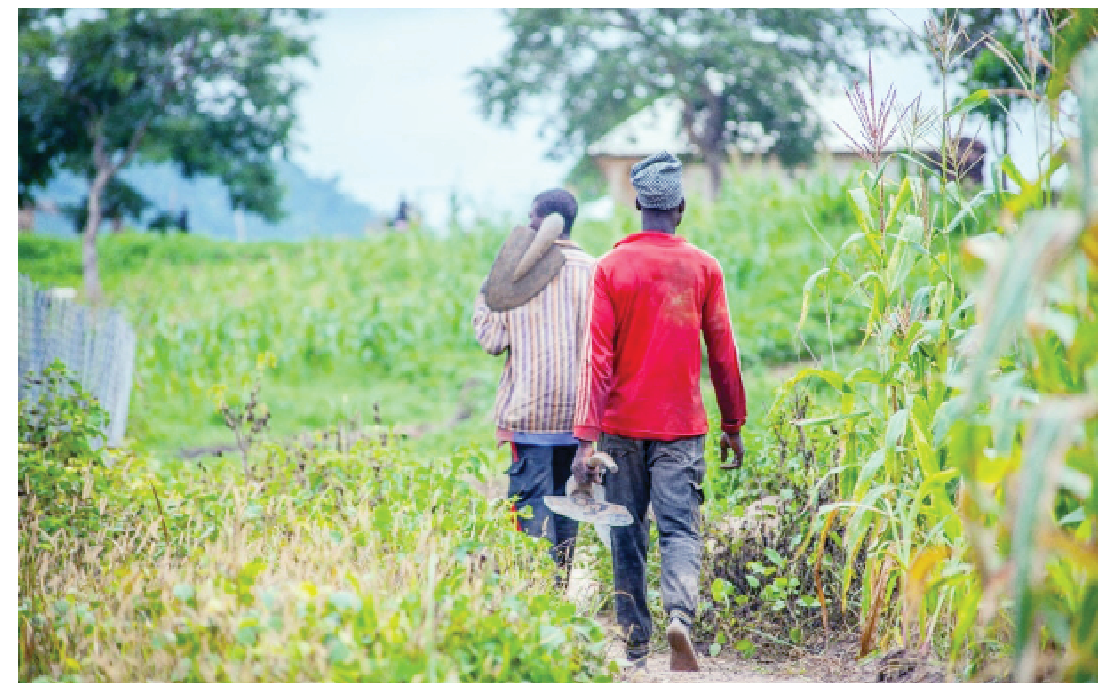
Days after an initial warning, stakeholders in Nigeria’s agricultural sector have raised fresh concerns over the risk of mass hunger following renewed attacks on farmers and the imposition of compulsory levies before crops can be harvested.
The development comes amid worsening economic hardship and food insecurity, with stakeholders urging the Federal Government to take decisive steps to tackle terrorism and insecurity threatening agricultural production across the country.
Speaking on the situation, the chief executive officer of the Centre for the Promotion of Private Enterprise (CPPE), Dr Muda Yusuf, lamented the rapidly rising cost of farm inputs, warning that urgent intervention is required to prevent a reversal of recent gains in food security.
According to Yusuf, essential inputs such as fertilisers, improved seeds and seedlings, agrochemicals, farm machinery and equipment, livestock feeds and vaccines, as well as storage and packaging materials, have become increasingly unaffordable for farmers across various value chains.
He stressed that reducing the cost of inputs must be treated as a core food security strategy, adding that access to single-digit interest loan facilities, improved technical support, and effective extension services is critical.
He noted that high financing costs continue to compound production challenges, warning that without stabilising farmer incomes, Nigeria’s agricultural transformation would remain elusive.
Yusuf further cautioned that price volatility discourages farming activities.
“Price collapses destroy incentives to farm, reduce production over time, and worsen rural poverty,” he said.
He, however, called for a structured framework that integrates price stabilisation tools, buffer stock reforms, investment in storage and logistics, expansion of processing capacity, structured trading systems, affordable financing, and insurance mechanisms.
He urged collaboration among federal and state governments, commodity exchanges, development finance institutions, and private investors to establish a transparent and fiscally sustainable farmer income protection system. He added that the impact of rising input costs is already being felt at the farm level.
Meanwhile, the National President of the All Farmers Association of Nigeria (AFAN), Farouk Rabiu Mudi, reiterated concerns that renewed attacks on farmlands and the enforcement of forceful levies by bandits could push the country into mass hunger if urgent government intervention does not occur.
Describing the situation as an affront to national security, Mudi said it was unacceptable for bandits to impose levies of up to N50,000 on over 1,200 farmers across Kano and Katsina states.
He called on the federal government to urgently rescue affected farmers and reclaim their farmlands from criminal elements, warning that the situation amounts to a direct challenge to Nigeria’s sovereignty.
Mudi cautioned that allowing bandits to retain control of farming communities would worsen economic hardship and deepen food shortages nationwide.
Similarly, a general secretary of an affiliate of the Nigeria Labour Congress (NLC), who spoke on condition of anonymity, lamented the rising wave of insecurity and its devastating impact on farmlands.
“Is it not painful that bandits now raid villages and markets, abduct traders, destroy farm produce, and demand huge ransoms for kidnapped victims?” he asked. “The government must take drastic steps to curb the invasion of terrorists into the agricultural sector.”
We’ve got the edge. Get real-time reports, breaking scoops, and exclusive angles delivered straight to your phone. Don’t settle for stale news. Join LEADERSHIP NEWS on WhatsApp for 24/7 updates →
Join Our WhatsApp Channel