The House of Representatives has moved to tighten Nigeria’s environmental governance framework with a proposed Extended Producer Responsibility (EPR) Bill that will compel manufacturers, producers and businesses to take responsibility for the waste generated from their products.
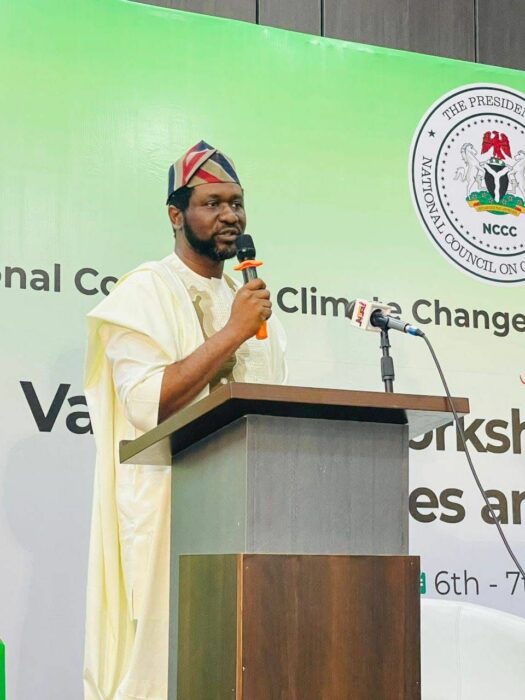
Deputy chairman of the House Committee on Environment, Hon. Terseer Ugbor, unveiled the proposal in Abuja during the launch of waste battery receptacles for small-sized batteries, an initiative by the Federal Ministry of Environment in collaboration with the Alliance for Responsible Battery Recycling (ARBR).
Ugbor said the bill seeks to strengthen Nigeria’s legal framework for waste management across all sectors by ensuring that producers, manufacturers, importers, businesses and even private individuals are held accountable for the environmental impact of the waste they create.
He explained that the legislation would provide clear guidelines for managing different waste streams in the country, particularly as Nigeria battles rising pollution from improperly disposed batteries, plastics, electronics and other hazardous materials.
According to him, the proposed law will mark a major shift from the country’s long-standing linear economy where products are used and discarded to a circular economy that promotes recycling, reuse and environmental sustainability.
“The EPR Bill will ensure that environmental responsibility is not left to government alone. Everyone involved in production and consumption must share in managing the waste they generate,” he said.
Ugbor stressed that stronger collaboration between the National Assembly and the executive arm of government remains critical to achieving lasting environmental reforms, noting that the legislation would serve as a major pillar for sustainable development.
He expressed optimism that once passed into law, the EPR Act would revolutionise waste management in Nigeria and emerge as one of the most ambitious environmental protection reforms of the 10th Assembly.
The lawmaker also linked the proposal to broader national efforts to tackle climate change, reduce pollution and improve public health, warning that failure to act decisively on waste management could worsen environmental degradation and health risks across the country.
Stakeholders at the event described the bill as timely, saying it could become a game changer in Nigeria’s push for cleaner cities, safer communities and a more sustainable economy.
We’ve got the edge. Get real-time reports, breaking scoops, and exclusive angles delivered straight to your phone. Don’t settle for stale news. Join LEADERSHIP NEWS on WhatsApp for 24/7 updates →
Join Our WhatsApp Channel