
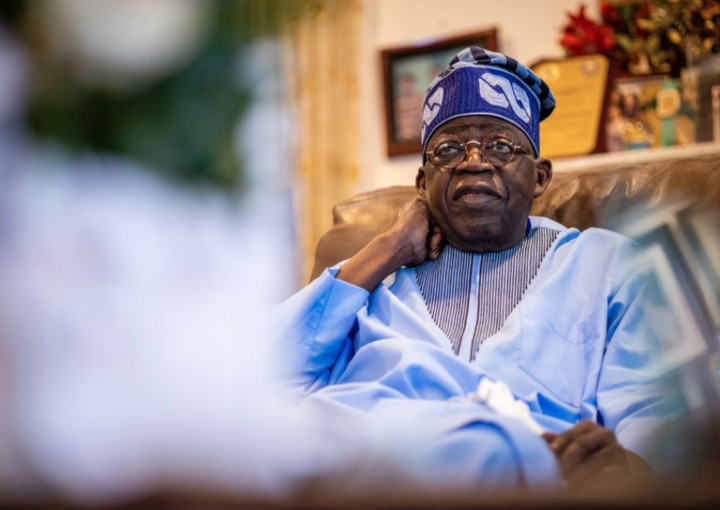
A policy think-tank, the Independent Media and Policy Initiative (IMPI), has said that President Bola Tinubu’s economic reform agenda would have struggled to survive without the resilience, patience and sacrifices of Nigerians.
Chairman of the initiative, Dr Omoniyi Akinsiju, said that by resisting the temptation to revert to unsustainable populism, Nigerians had provided the bedrock stability required for the reforms to mature.
In a press statement issued yesterday, titled “Nigerians as Actual Executors of Tinubu’s Reforms as the Economy Transits from Consumption to Productivity,” Akinsiju said the success and long-term sustainability of the economic reforms were profoundly dependent on the Nigerian public.
Nigerians, he said, functioned simultaneously as the primary shock absorbers, the ultimate arbiters of accountability, and the engine of behavioural realignment required for a market-driven economy.
“Rather than being passive spectators, we have observed the role of Nigerians in three critical dimensions: bearing the immediate structural shocks during the sacrifice phase; enforcing fiscal accountability and the social contract; and driving behavioural shifts and local productivity.
“The most immediate and painful role Nigerians have played is absorbing the massive inflationary and cost-of-living shocks triggered by orthodox economic corrections.
“By enduring the immediate spiralling costs of transportation, food and energy following the removal of the fuel subsidy and the floating of the naira, the public has effectively provided the ‘fiscal breathing room’ the government needed to prevent a sovereign default and rebuild external reserves.”
He also explained that for market reforms to succeed, global investors and local citizens alike must see that saved revenues were being utilised transparently, adding that Nigerians played a vital role as enforcers of the social contract.
Through civil society advocacy, public discourse and social media engagements, he said Nigerians had consistently demanded that the trillions of naira saved from the removal of the fuel subsidy be visibly channelled into tangible infrastructure, healthcare and human capital development rather than bureaucratic waste.
“The success of targeted mitigation frameworks, such as the student loan scheme (NELFUND), compressed natural gas (CNG) transport initiatives and direct cash transfers, relies entirely on the public actively participating in monitoring and holding these institutions accountable to ensure that the benefits are not swallowed by corruption.”
Akinsiju also explained that long-term economic stability could not rely on central bank interventions or foreign portfolio investments alone but required a structural shift in how Nigerians produced and consumed.
“As the floating of the naira makes imported goods exponentially more expensive, the role of Nigerian consumers and businesses is shifting towards ‘Buying Nigerian’ and supporting local manufacturing, agriculture and tech start-ups. This is what will ultimately reduce the country’s systemic vulnerability to foreign exchange volatility.
“As the administration seeks to aggressively boost non-oil revenue, citizens and businesses transitioning into the formal economy play a vital role in building a sustainable, tax-funded fiscal architecture, reducing Nigeria’s historical dependence on volatile oil windfalls.”
We’ve got the edge. Get real-time reports, breaking scoops, and exclusive angles delivered straight to your phone. Don’t settle for stale news. Join LEADERSHIP NEWS on WhatsApp for 24/7 updates →
Join Our WhatsApp Channel