By Samuel Akpobome Orovwuje
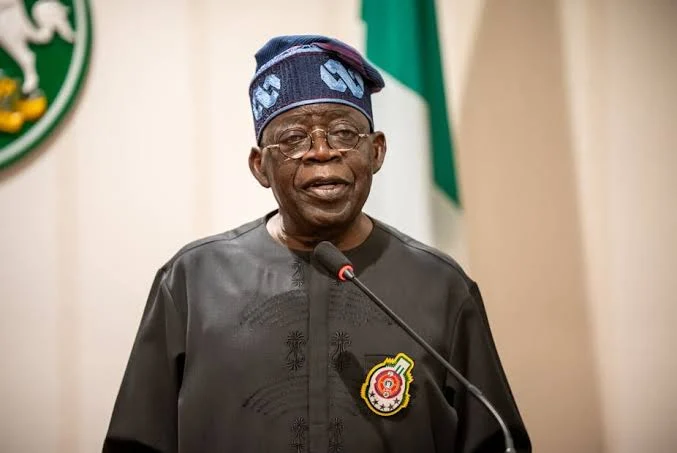
President Bola Ahmed Tinubu’s proposed state visit to the United Kingdom the first by a Nigerian leader in 37 years comes not as a ceremonial flourish, but as a strategic moment long delayed. It is unfolding against Nigeria’s toughest economic conditions in a generation, a fragile democratic climate, and a global system increasingly defined by rivalry rather than rules.
Nigeria today is Africa’s largest economy, with a GDP estimated at over $450 billion following recent rebasing, according to the National Bureau of Statistics (NBS). Yet this scale masks deep vulnerability. Inflation stood above 28 per cent in 2024, food inflation exceeded 30 per cent, and more than 40 per cent of Nigerians live below the national poverty line (NBS, World Bank). The naira’s sharp depreciation has improved external balance sheets but eroded household purchasing power. It is within this reality not nostalgia that Tinubu’s visit must be interrogated.
The international system that once framed Nigeria–UK relations has fractured. Britain is still redefining its global role after Brexit, while the liberal international order that shaped post–Cold War diplomacy is visibly strained. As Henry Kissinger wrote in Diplomacy (1994), “Foreign policy begins with an accurate assessment of reality, not with the pursuit of abstract ideals.” The reality today demands strategy, not symbolism.
Bilateral trade between Nigeria and the UK is valued at £6–7 billion annually, according to the UK Office for National Statistics. Nigeria remains one of the UK’s most important African trading partners. Yet the structure of that trade has changed little since independence: Nigeria exports crude oil and gas; it imports manufactured goods, pharmaceuticals, financial services, and capital equipment.
Disappointingly, manufacturing contributes less than 10 per cent of Nigeria’s GDP, while power generation hovers around 4,000–5,000 megawatts for a population exceeding 220 million (NBS, World Bank). These are not abstract numbers; they explain joblessness, high import dependence, and Nigeria’s exposure to external shocks.
History offers useful contrasts. Under General Yakubu Gowon, Nigeria leveraged post-civil-war diplomacy to secure British and European technical support for reconstruction. During President Olusegun Obasanjo’s first tenure (1976–79), Nigeria’s assertive foreign policy translated into stronger trade positioning within the Commonwealth and OPEC. His return as a civilian president (1999–2007) restored Nigeria’s credibility, unlocking debt relief negotiations that culminated in the 2005 Paris Club debt exit, a diplomatic and economic milestone. Those successes were not accidental. They aligned diplomacy with economic strategy.
Furthermore, Economist Ha-Joon Chang argues in Kicking Away the Ladder (2002) that no country has industrialised by relying on free trade alone; development requires deliberate investment in productive capacity. A renewed Nigeria–UK relationship must therefore prioritise industrial cooperation particularly pharmaceutical manufacturing, agro-processing, renewable energy components, and digital services rather than remain stuck in raw-material exports.
Nigeria’s democratic condition is equally central. The 2023 general elections recorded voter turnout of approximately 27 per cent, one of the lowest since 1999 (INEC). Elections continue to hold, but public confidence in institutions is thinning. Civic space feels contested, and many Nigerians increasingly view politics as transactional rather than participatory.
With the 2027 general elections approaching, democratic legitimacy will again be tested. Political theorist Robert Dahl warned in Polyarchy (1971) that democracy erodes not only through authoritarian takeover, but through gradual disengagement and institutional decay. Nigeria’s challenge today is precisely this slow erosion of trust.
The UK has historically supported Nigeria’s democratic institutions through election observation, judicial reform, civil service training. But in a world where values often compete with interests, such engagement must be renewed with seriousness. Democratic stability is not a moral luxury; it is an economic and security necessity.
A Tinubu-era reset should therefore embed democratic integrity into bilateral cooperation not as rhetoric, but as sustained institutional support extending beyond election cycles and on the other hand security cooperation will remain unavoidable. Nigeria continues to confront insurgency in the North-East, banditry across the North-West, and organised crime nationwide. Defence spending has increased steadily, yet insecurity persists.
The lesson is not that force is irrelevant, but that it is insufficient. In The Anarchical Society (1977), Hedley Bull argued that order in international relations depends not only on power, but on institutions and shared rules. This insight applies domestically as well.
The UK’s value lies not only in military assistance, but in institutional experience: procurement transparency, police reform, civil–military accountability, and justice-sector strengthening. Security cooperation divorced from governance reform risks entrenching fragility rather than resolving it.
Pointedly, for the UK, Tinubu’s visit poses a strategic choice. Post-Brexit Britain has spoken often of renewed engagement with Africa, but rhetoric without depth convinces no one. Nigeria is not a peripheral state; it is Africa’s demographic anchor and a regional stabiliser whose trajectory affects West Africa particularly the Sahel and beyond.
Past Nigerian leaders understood this leverage. President Goodluck Jonathan’s diplomacy (2010–2015) strengthened Nigeria’s trade and security engagement with both the UK and the US, particularly in energy and counter-terrorism. Influence followed credibility.
A structured Nigeria–UK strategic council tracking trade, governance, security, and digital cooperation would move relations from episodic visits to sustained coordination. It would also signal respect for Nigeria as a strategic actor, not merely a market.
Tinubu’s proposed state visit arrives at a defining moment. Nigeria’s reforms are painful but unavoidable. Democratic confidence is strained but salvageable. The road to 2027 will test both leadership and institutions.
Nigerians today are unsentimental. They judge partnerships by results, not ceremony. The UK, for its part, must decide whether it seeks transactional access or long-term relevance.
– Orovwuje is Public Affairs Analyst and Foreign Policy Enthusiast.
Expectedly, this visit should yields concrete progress on industrial development, democratic resilience, and institutional reform, it could echo earlier moments when Nigerian leadership translated diplomacy into tangible gains. If it settles for symbolism, it will fade quickly into history.
Lastly, in a fragmenting global order, relationships endure not because of shared pasts, but because they respond honestly to present realities. Nigeria and the UK now have a rare opportunity long delayed to prove that theirs still can.
Orovwuje is Public Affairs Analyst and Foreign Policy Enthusiast. [email protected] , 08034745325
We’ve got the edge. Get real-time reports, breaking scoops, and exclusive angles delivered straight to your phone. Don’t settle for stale news. Join LEADERSHIP NEWS on WhatsApp for 24/7 updates →
Join Our WhatsApp Channel