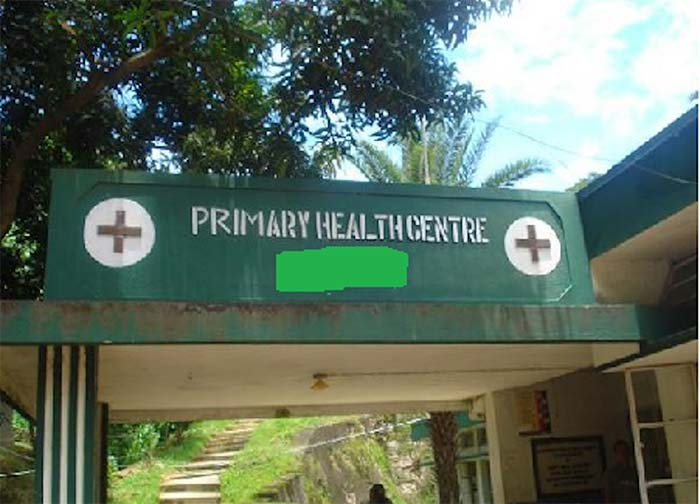
It is gladdening to see that the Federal Government’s sustained focus on revitalisation of primary healthcare services is yielding visible fruits nationwide. In an effort to strengthen frontline health facilities, improve routine immunisation services, and enhance the delivery of essential healthcare to communities across the country, the Federal Ministry of Health has flagged off the installation of solar-powered energy systems to Primary Healthcare Centres across 17 states of the country. The flag off was performed by the Federal Minister of Health and Social Welfare, Prof. Muhammad Ali Pate, at the Apo Primary Healthcare Centre in Abuja.
The Minister declared that the intervention supports the Federal Government’s broader drive to revitalise primary healthcare and ensure that health facilities at the community level are better equipped to deliver lifesaving services. Prof. Pate further stated that reliable energy is essential to the effective functioning of primary healthcare centres, particularly for sustaining vaccine cold chains, preserving essential medicines, enabling digital health reporting, and supporting health workers in delivering quality care. The flag off is the beginning of a nationwide program.
Prof. Pate emphasised the need to have a reliable power supply in our primary healthcare centres so that vaccines can remain potent, and medicines can be properly stored, such that health workers are better supported to deliver services to mothers, children, and families who rely on these facilities every day. He also said that the solar-powered energy systems were provided by a partnership between the Federal Government, GAVI Vaccine Alliance, and UNICEF, through the Primary Healthcare Development Agency, NPHCDA.
Prof. Pate commended the partners for working closely with Nigeria’s health institutions to deliver the intervention, describing it as a good example of how global partnerships can support national priorities and deliver results at the community level. “This intervention demonstrates how partnerships, when aligned with national leadership and implemented through our institutions, can deliver real improvements in healthcare services where it matters most at the frontline “, the minister said. Prof. Pate placed the initiative within the context of the Nigeria Health Sector Renewal Investment Initiative launched under the leadership of President Bola Ahmed Tinubu, which prioritises strengthening health systems and expanding access to quality care for Nigerians. Prof. Pate announced that more than 4,000 primary healthcare centres across the country have been revitalised with about 120,000 frontline healthcare workers retrained, bringing improved services closer to communities and strengthening the foundation of Nigeria’s health systems. He emphasised that primary healthcare centres remain the backbone of the health system providing critical services like immunisation, maternal care, disease prevention, and referrals.
Since the launch of the Nigeria Health Sector Renewal Investment Initiative, remarkable improvements have been witnessed in our primary healthcare systems. There has been a massive rise in the utilisation of primary healthcare centres from 15.1 million in 2024 to 170.8 million visits in 2025. About 1,965 primary healthcare centres in Nigeria reached level 2 functionality in 2025, making it possible for them to provide 24 hr service delivery.
A 12% reduction in newborn deaths was also reported across 172 local governments of the country. By December of 2025, it was recorded that over 4000 women had access to free C-section services through the free C-section federal Initiative for poor and vulnerable women. Monumental strides have been made in the development and improvement of the nation’s oncology centres through a PPP with the Nigeria Sovereign Investment Authority, NSIA; with three advanced oncology centres launched in Katsina, Benin, and Enugu. The centres are expected to serve 2,000 oncology patients and 350,000 diagnostic clients annually while training up to 500 clinicians nationwide. Six other centres are being developed to create the largest network of oncology and diagnostic centres in West Africa.
The centre in Katsina situated at the Federal Teaching Hospital for example is equipped with advanced technology including a TrueBeam Linear Accelerator, CT Simulator, 3-D HDR, Iridium Brachytherapy Machine – the second of its kind in Nigeria, Ultrasound machine, Treatment Planning System, and a Class 2-A Biosafety Cabinet. The Nigeria Health Sector Renewal Investment Initiative, NHSRII, has also just launched the Cohort II of the National Health Fellows Program. With a second launch, 1,548 young professionals have been deployed to 774 local govt areas to strengthen primary healthcare. With each local govt of the federation providing two indigenes. As a keen observer of Prof. Pate’s efforts in the health sector who hails from my state, Bauchi; I must say that in him we are very pleased.
We’ve got the edge. Get real-time reports, breaking scoops, and exclusive angles delivered straight to your phone. Don’t settle for stale news. Join LEADERSHIP NEWS on WhatsApp for 24/7 updates →
Join Our WhatsApp Channel