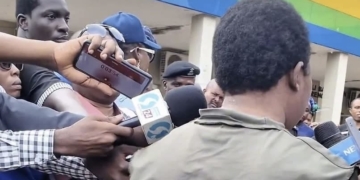
National Human Rights Commission (NHRC) is investigating the attack on a Nigerian journalist even as concerns mount over growing threats to press freedom, misuse of cybercrime laws and shrinking civic space in the country.
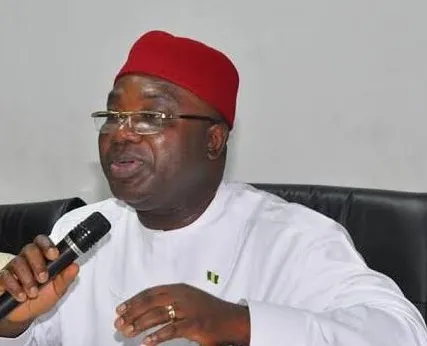
The executive secretary of the NHRC, Tony Ojukwu, disclosed this in Abuja yesterday during a high-level workshop organised by the Centre for Journalism Innovation and Development in collaboration with the NHRC and sponsored by Konrad-Adenauer-Stiftung, to commemorate the 2026 World Press Freedom Day.
Ojukwu warned that attacks on journalists, intimidation of media professionals and the misuse of laws such as the Cybercrimes Act were undermining constitutional democracy and weakening public trust in institutions.
“In fact, on the day World Press Freedom Day was celebrated globally, we witnessed an attack on a journalist somewhere in Nigeria, which the commission is already investigating,” he said.
The NHRC boss painted a grim picture of the dangers confronting journalists globally and in Nigeria, citing arbitrary arrests, unlawful detention, digital surveillance, cyber attacks and extrajudicial killings as growing threats against media practitioners.
According to him, “a society where journalists are intimidated, censored, attacked or silenced cannot truly claim to be democratic or secure.”
He stressed that press freedom remained central to democratic governance, accountability and sustainable peace, insisting that freedom of expression was not optional but a constitutional and international obligation binding on both state and non-state actors.
Ojukwu disclosed that the Commission would on May 18 issue a fresh advisory on civic space and human rights as part of efforts to deepen protection for freedom of expression and other interconnected rights.
He also threw the Commission’s weight behind the Human Rights Defenders Bill currently before the National Assembly, describing it as critical to safeguarding civic freedoms.
The event, themed “Shaping a Future at Peace: Promoting Press Freedom for Human Rights, Development and Security,” drew key stakeholders from government, the media, civil society and the international community amid increasing debates over democratic freedoms and media safety in Nigeria.
Speaking at the event, Minister of Information and National Orientation, Mohammed Idris, defended the press freedom record of President Bola Tinubu’s administration, saying journalists had never had it better.
“I have been in journalism practice for almost 45 years and I can say we have never had it this good,” the minister declared.
Idris referenced recent incidents involving journalists in Bauchi State and intervention by security agencies, arguing that the Tinubu administration remained committed to democratic freedoms, media independence and responsible journalism.
He, however, warned that press freedom must be balanced with professionalism and national responsibility, particularly in the face of fake news, hate speech, misinformation and digital manipulation.
“Peace and democracy cannot flourish where truth is suppressed. Human rights cannot thrive where information is manipulated,” he said.
The minister added that the Federal Government was investing heavily in digital innovation, broadband expansion, cybersecurity and youth-focused technology initiatives, including the 3MTT programme, to prepare Nigeria for the digital economy.
Also speaking, Resident Representative of the Konrad-Adenauer-Stiftung in Nigeria, Moritz Sprenker, said press freedom remained the backbone of democratic societies and warned that suppressing journalists could fuel instability and polarization.
“A free and independent press is essential for checks and balances. It exposes abuse, holds institutions accountable and gives a voice to those who might otherwise not be heard,” Sprenker said.
He urged journalists to continue asking difficult questions and defending fact-based public debate despite mounting pressure and risks.
The workshop comes amid renewed scrutiny of civic space in Nigeria and rising concerns by local and international observers over harassment of journalists, digital restrictions and increasing tensions between security agencies and the media.
Stakeholders at the event stressed that without an independent press, democracy, transparency and national development would remain under threat.
We’ve got the edge. Get real-time reports, breaking scoops, and exclusive angles delivered straight to your phone. Don’t settle for stale news. Join LEADERSHIP NEWS on WhatsApp for 24/7 updates →
Join Our WhatsApp Channel