The Socio-Economic Rights and Accountability Project (SERAP) has urged a Federal High Court to order the leadership of the National Assembly to refer the allegations of the N3 million Bribe-for-Bills to appropriate anti-corruption agencies for investigation and prosecution.
SERAP is also asking the court, in the case which is yet to be assigned to a judge, for an order of mandamus to compel the Senate President, Godswill Akpabio, and the Speaker of the House of Representatives, Tajudeen Abbas, to take all necessary measures to protect the whistleblower, Hon. Ibrahim Auro, who made the allegations regarding the N3 million Bribe-for-Bills.
The civil society organisation stated that it was forced to file the suit because the National Assembly failed to investigate claims that lawmakers pay up to N3 million to sponsor or present bills, motions, and petitions.
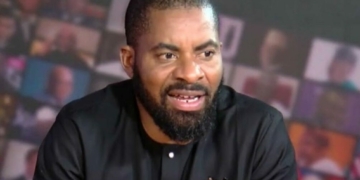
Auro, a member of the House of Representatives (APC, Jigawa), had allegedly claimed in a viral video recorded in Hausa that members of the National Assembly pay between N1 million and N3 million each to sponsor or present legislative items.
In an affidavit attached to the suit, SERAP argues that the allegation of quid pro quo in lawmaking has severely undermined the democratic rights of Nigerians.
The plaintiff also argued that the allegations represent fundamental breaches of the Nigerian Constitution, the country’s anti-corruption legislation, and international obligations under the UN Convention against Corruption, to which Nigeria is a state party.
SERAP stated that the allegations have revealed how lawmakers are abusing their entrusted positions, denying Nigerians their constitutional and democratic rights.”
The organisation maintained that it is in the interest of justice for the court to compel Akpabio and Abbas to ensure a proper investigation into the allegations, as this would help build trust in democratic institutions and strengthen the rule of law.
SERAP further averred that the National Assembly should operate as an accountable legislative body that protects the public interest and ensures accountability in cases of corruption, including the alleged N3 million Bribe-for-Bills.
The plaintiff argued that Hon. Auro, as a whistleblower, is protected under Article 33 of the UN Convention against Corruption, signifying the importance of his disclosures regarding the alleged bribery.
SERAP also submitted that Section 15(5) of the Nigerian Constitution mandates public institutions, including the National Assembly, to eliminate all corrupt practices and abuses of power.
Nigeria has also committed, through the UN Convention against Corruption, to prevent and combat corruption, including bribery, and these commitments must be upheld.
Auro has stated that the process of presenting motions and bills at the National Assembly is financially prohibitive, claiming, “Since I was elected as a member in 2015, no individual has given me a bill to pass. Also, the bills and petitions need to be paid for.”
He has further alleged, “You have to pay between N1 million and N3 million to present a bill. Once the bill is presented, you must lobby all 360 members of the House for support.” Auro hinted that similar, unreported allegations of the ₦3 million Bribe-for-Bills may exist in the Senate as well. Currently, no date has been set for the hearing of the lawsuit.
We’ve got the edge. Get real-time reports, breaking scoops, and exclusive angles delivered straight to your phone. Don’t settle for stale news. Join LEADERSHIP NEWS on WhatsApp for 24/7 updates →
Join Our WhatsApp Channel