National Human Rights Commission (NHRC) has raised alarm over the sharp increase in human rights complaints in Nigeria.
It asserted that the trend reflects both persistent violations and growing public awareness of reporting mechanisms.
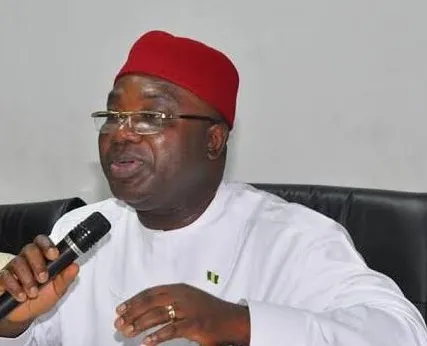
At the presentation of the commission’s First Quarter 2026 Human Rights Situation Dashboard in Abuja, the executive secretary, Dr Tony Ojukwu, said complaints rose steadily from 180,341 in January to 223,144 in February and peaked at 256,132 in March.
Ojukwu identified discrimination as the most prevalent violation, topping complaints in both January and March, while issues related to law enforcement conduct and protection of human dignity dominated reports in February. He said the figures underscore systemic inequalities and the urgent need for reforms in both public and private institutions.
He explained that the dashboard, introduced in 2024, was designed to institutionalise transparent, data-driven reporting on human rights conditions, combining complaints received nationwide with data from the Commission’s Human Rights Observatory to capture even unreported abuses.
According to him, the rising numbers reflect a complex reality, persistent violations on one hand and improved reporting and public trust in the system on the other.
The NHRC boss noted that the first-quarter data validate projections outlined in the Commission’s 2026 Human Rights Outlook, which flagged insecurity, discrimination, gender-based violence, shrinking civic space, and worsening socio-economic conditions as key risks.
He highlighted ongoing insecurity across regions, including insurgency in the North-East, banditry and kidnappings in the North-West, and communal conflicts in the North-Central, citing recent attacks in Jos and Nasarawa as evidence of unresolved tensions fueling displacement and loss of lives.
Ojukwu also drew attention to recurring cases of gender-based violence, mob actions, alleged abuses by security agencies, and increasing economic hardship affecting access to food, housing, and livelihoods.
He called for stronger accountability, improved access to justice, and coordinated, rights-based responses from government and stakeholders, stressing that the Commission remains committed to prevention, protection, and institutional strengthening.
The NHRC further urged the media and civil society to amplify the dashboard’s findings and hold duty bearers accountable, describing the report as “a clear call to action” for more responsive governance and stronger institutions.
Ojukwu also commended the Federal Government for domesticating the African Union’s Kampala Convention on internally displaced persons, describing it as a critical step toward addressing displacement and vulnerability in the country.
He reaffirmed the Commission’s commitment to sustaining the dashboard as an independent accountability tool, noting that it has already gained international recognition, including at the United Nations, and is being considered as a model across West Africa.
We’ve got the edge. Get real-time reports, breaking scoops, and exclusive angles delivered straight to your phone. Don’t settle for stale news. Join LEADERSHIP NEWS on WhatsApp for 24/7 updates →
Join Our WhatsApp Channel