
The Nigerian Communications Commission (NCC) has disclosed that more than 5,000 fibre-optic cable cuts were recorded across the country in the first six months of 2026, raising fresh concerns over the vulnerability of critical telecommunications infrastructure to road construction, excavation and other civil works.
The commission said the incidents were disrupting telecommunications services, increasing the operating costs of network providers and exposing businesses, government institutions and other essential services to avoidable interruptions.
Executive Vice Chairman of the NCC, Dr Aminu Maida, disclosed the figure at a stakeholders’ workshop on the protection of fibre-optic infrastructure during road construction and rehabilitation.
According to him, the scale of the damage makes it necessary for stakeholders to prevent fibre cuts before they occur rather than rely on repairs after networks have been damaged.
Maida said fibre-optic networks had become critical to the functioning of modern society, supporting banking, healthcare, education, government services, commerce, security and emergency communications.
The latest figures highlight a major infrastructure challenge for Nigeria as the country seeks to expand broadband access and deepen its digital economy.
Fibre remains critical to the expansion of high-speed internet because it provides the backhaul capacity required to connect telecommunications sites, data centres, businesses and other users to the wider internet.
Consequently, repeated damage to fibre infrastructure can affect more than telephone calls and mobile data. A major fibre disruption can slow or interrupt digital banking, electronic payments, cloud services, business operations, government platforms and other services that increasingly depend on reliable connectivity.
The NCC recalled the widespread telecommunications disruption of February 2024, when extensive fibre cuts affected millions of Nigerians and created congestion on alternative network routes as subscribers switched to available connections.
The latest incidents therefore come against the backdrop of an industry already facing substantial infrastructure and operational costs as operators expand capacity to meet rising demand for data and digital services.
Nigeria’s existing fibre infrastructure has expanded significantly over the years, but the country still faces gaps in metropolitan and last-mile fibre coverage. Earlier NCC data put the existing national fibre infrastructure of major operators and public-sector initiatives at more than 37,000 kilometres, underscoring both the scale and strategic importance of the infrastructure that must be protected.
At the same time, the telecommunications industry continues to make a significant contribution to the Nigerian economy. NCC data show that the telecommunications sector accounted for 9.19 per cent of the country’s Gross Domestic Product (GDP) in the first quarter of 2026, demonstrating the sector’s growing importance to economic activity.
Against this background, stakeholders at the workshop stressed the need for stronger coordination between road construction agencies, telecommunications operators, contractors and other infrastructure owners.
The permanent secretary, Federal Ministry of Works, Raphael Adelador, said road construction and telecommunications infrastructure frequently occupy the same physical space, making coordination essential.
He called for better mapping of fibre routes and improved information sharing so that contractors and consultants could identify the location of underground telecommunications infrastructure before excavation begins.
Adelador warned that damage to fibre networks could result in service disruptions, lost productivity, financial losses and inconvenience to citizens.
Representing the Permanent Secretary, Federal Ministry of Communications, Innovation and Digital Economy, Stanley Musa, director of Telecoms and Postal Services, said the protection of telecommunications infrastructure was a shared national responsibility.
He said the government was working with relevant stakeholders to strengthen compliance with technical standards and right-of-way requirements, improve information sharing and develop clearer procedures for protecting telecommunications infrastructure during construction activities.
The government’s position reflects a growing recognition that the expansion of Nigeria’s digital economy cannot depend solely on the deployment of new infrastructure. Existing infrastructure must also be protected from damage, particularly as road construction and urban development accelerate across the country.
The Office of the National Security Adviser (NSA) also raised the stakes, with Air Vice Marshal Effiom Ewa, Director of Critical National Standards and Infrastructure Protection, stating that fibre-optic infrastructure had been designated as critical national information infrastructure.
Ewa warned that damage caused by negligence, interference or actions that expose the infrastructure to damage could attract legal consequences, while calling for strict compliance with established procedures during construction and maintenance activities.
The development also reinforces the importance of the Federal Government’s efforts to improve coordination around telecommunications infrastructure, particularly as Nigeria pursues wider broadband coverage and greater digital inclusion.
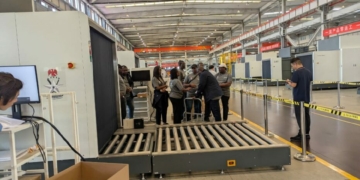
The two-day workshop brought together representatives of government ministries and agencies, security organisations, telecommunications operators, contractors and other stakeholders to develop practical measures for reducing fibre damage during construction projects.
The stakeholders are expected to improve coordination, information sharing and accountability before, during and after road construction and rehabilitation projects.
For the telecommunications industry, the issue extends beyond the immediate cost of repairing damaged cables. Fibre cuts can require network rerouting, emergency maintenance and deployment of alternative capacity, while prolonged disruptions can affect customer experience and undermine confidence in digital services.
The problem also comes at a time when the NCC is strengthening its focus on quality of service. The commission’s regulatory framework requires operators to meet minimum quality-of-service standards, while network operators are required to submit periodic performance reports to the regulator.
The NCC has also introduced a consumer compensation framework that came into effect in April 2026 for subscribers affected by prolonged or repeated poor network quality in areas where operators fail to meet specified regulatory performance indicators. However, the framework recognises that events such as fibre cuts, theft, vandalism and other exceptional circumstances may require separate consideration.
This makes prevention of fibre damage increasingly important, particularly where network outages originate from activities outside the direct control of telecommunications operators.
Stakeholders have repeatedly identified infrastructure deployment challenges, including right-of-way issues, power supply constraints, multiple taxation and inadequate metropolitan fibre infrastructure, as barriers to broadband expansion. NCC have also identified infrastructure sharing and fibre duplication as challenges affecting the development and utilisation of broadband infrastructure.
Hence, as Nigeria expands its digital infrastructure, seeking to build a digital economy capable of supporting financial technology, e-commerce, cloud computing, artificial intelligence and other data-intensive services, protecting the physical the protection of existing fibre networks will therefore become increasingly important just as every damaged cable represents not only a repair cost for operators but also a potential interruption to the digital services on which households, businesses and public institutions now depend.
We’ve got the edge. Get real-time reports, breaking scoops, and exclusive angles delivered straight to your phone. Don’t settle for stale news. Join LEADERSHIP NEWS on WhatsApp for 24/7 updates →
Join Our WhatsApp Channel