S&P Global Ratings has acquired a controlling stake in Nigerian credit ratings Agency Agusto & C, which requires regulatory sign-off and is anticipated to be finalized in the second half of 2026.
Agusto will continue to operate independently under Nigerian regulations, S&P stated.
S&P Global Ratings described the deal as “a strategic step for both companies” that would “complement and support the growth strategy of the S&P Global Ratings division in Africa.” The financial details of the transaction were not revealed, according report by Briefs.co.
The deal broadens S&P’s involvement in African local debt markets, especially corporate bonds, an area where Agusto has operated for more than 30 years. The agency, based in Lagos, provides credit evaluation and analysis services for firms in Nigeria and other nations like Kenya, Rwanda, and Ghana. Since its founding, it has issued over 4,000 ratings, the statement noted.
International rating agencies have been under fire from African governments and organizations such as the United Nations for not accurately reflecting local economic realities. This move by S&P is part of a broader trend among these firms to increase their on-the-ground presence.
For instance, Moody’s Ratings purchased Global Credit Rating Co., a South African firm with a continent-wide footprint, back in 2024.
This consolidation reflects a broader recognition among global credit rating giants that local expertise is critical for accurately assessing risk in African economies. International agencies have frequently been accused of misjudging the creditworthiness of African nations, often overlooking domestic growth drivers and institutional strengths.
By partnering with established local players like Agusto, S&P aims to enhance the credibility and granularity of its African ratings. Agusto & Co., with its deep roots in Nigeria and presence in other major African markets, offers invaluable on-the-ground insights that global models alone cannot capture.
The acquisition underscores the growing recognition that accurate sovereign and corporate credit assessments in Africa require deep local knowledge. International agencies have often been criticized for applying global models that miss domestic economic nuances, such as Nigeria’s robust informal sector or institutional resilience. By integrating Agusto’s expertise, S&P aims to provide more nuanced ratings that reflect local realities, potentially reducing the risk of rating downgrades that have historically triggered capital flight from the region.
Yann Le Pallec, president of S&P Global Ratings, said, “This partnership “can foster informed analysis, constructive market dialogue, and greater investor confidence both regionally and internationally”.”
The trend of global agencies buying African rating firms is driven by the need for granular, market-specific data that global models cannot easily produce.
In Nigeria, for example, the informal economy accounts for a large share of GDP and employment, yet it is often invisible in standard credit metrics. Agusto’s decades of experience navigating these complexities give S&P a direct channel to that information.
Similarly, political and regulatory dynamics in individual African countries require continuous monitoring that only a local partner can provide efficiently.
This acquisition mirrors Moody’s earlier purchase of Global Credit Rating Co., signaling that the big three raters now see local integration as essential for credible coverage across the continent.
Axxela Limited Brings More Businesses Entities Into Gas Power Transition
By CHIKA IZUORA, Lagos
Axxela Limited, has connected more businesses to clean energy by linking them to vast natural gas pipeline network.
The customer connections, spans the manufacturing, hospitality, pharmaceutical, and fast-moving consumer goods (FMCG) sectors, which represent a significant milestone in the company’s efforts to deepen domestic gas utilisation and expand energy access across key economic clusters.
The recent connections, which cut across critical industrial hubs, were facilitated through Gaslink Nigeria Limited, one of Axxela’s subsidiary companies.
They include Radisson Blu Anchorage Hotels, Sheraton Hotels, Jawa International Limited, Solem Agro, and Abimbola Agro, among others.
Kehinde Alabi, Executive Vice President, Axxela Gas Distribution, said, “These connections go beyond the expansion of our customer portfolio; they reflect our commitment to broadening energy access for businesses across critical sectors of the economy and supporting Nigeria’s drive towards increased domestic gas utilisation. By enabling these businesses to embrace cleaner and more affordable energy solutions, we are helping to improve their operational efficiency while also supporting their environmental sustainability goals.
“We recognise that collaboration with key players across diverse sectors is essential to powering industries and shaping a more sustainable future for Nigeria and the region. These new connections underscore our commitment to expanding domestic gas use, reducing carbon footprints, and providing cost-effective energy alternatives in line with the Federal Government’s energy transition objectives.”
Through its growing infrastructure investment footprint, Axxela continues to play a pivotal role in unlocking the economic potential of natural gas by advancing domestic gas utilisation, enabling industrialisation, and supporting a sustainable energy transition in line with the Federal Government’s vision of a gas-powered economy.
With a diversified portfolio of over 200 commercial and industrial customers across Nigeria and West Africa, Axxela remains at the forefront of delivering integrated energy solutions that empower industries, strengthen energy security, and contribute to long-term economic growth and prosperity.
OPEC May Consider Production Raise For September
By CHIKA IZUORA, Lagos
The Organization of Petroleum Exporting Countries and its allies known as OPEC+ are preparing to endorse one more production increase for September and then put the monthly quota parade on hold through the end of the year.
Under the arrangement, Saudi Arabia, Russia, Iraq, Kuwait, Algeria, Kazakhstan, and Oman are expected to raise their combined September target by about 188,000 barrels per day when they meet on August 2, sources told Reuters.
That would match the increases announced for June, July and August and for complete the return of a 1.65-million-bpd voluntary cut agreed in 2023, adjusted for the UAE’s departure from OPEC in May after which the OPEC+ appears ready to stop.
One source said current production targets would remain in place from October until new quotas take effect in January 2027. No final decision has been made.
The pause would leave another 2 million bpd of group-wide cuts in place through the end of 2026.
Deciding what happens to those barrels will require OPEC+ to settle a much less pleasant matter: how much each member should be allowed to produce.
The group is reviewing the maximum sustainable production capacity of its members, which will be used to set 2027 baselines. Iraq and other producers want higher quotas to reflect investments that have expanded their capacity.
Everyone wants credit for barrels they say they can pump. Recent events have made the counting considerably messier.
The Iran war has reduced exports from several Middle Eastern members and cut deeply into the group’s effective spare capacity. Iraq remains constrained by export bottlenecks. Kazakhstan has reduced production after attacks disrupted Black Sea loadings. Russia is dealing with refinery and terminal outages.
The OPEC+ has spent months raising targets while actual group output fell. The increases still gave members permission to restore supply whenever wells, pipelines, ports, and shipping lanes allowed it. Permission was the easy part.
The group now has to decide how much capacity really exists, who gets to claim it, and whether the market will need it in 2027. The IEA expects a substantial surplus if oil flows through the Strait of Hormuz recover.
Baker Hughes Forecasts Drop In Annual Expenditure By Oil And Gas Companies
By CHIKA IZUORA, Lagos
Major global energy technology company, Baker Hughes has predicted that annual global spending by oil and gas producers would decline modestly this year, with growth in Latin America, offshore Africa, and North America land offset by lower spending in Europe and the Middle East.
The Middle East conflict has dominated energy markets this year, with repeated flare-ups in tensions between the U.S. and Iran forcing producers to take a more cautious stance instead of increasing drilling activity.
“Customers remain focused on maximizing production from existing assets while preserving flexibility to respond to evolving market conditions,” CEO Lorenzo Simonelli said on a conference call with analysts after the company reported earnings on Sunday.
Shares of the oilfield services provider were up more than 6%, after it beat quarterly profit estimates, with industrial and energy technology orders doubling year-over-year to a record $7.1 billion. But Baker warned that the IET segment is expected to face a 1 per cent-2 per cent revenue hit from the disruptions caused by the conflict.
The company forecast third-quarter revenue from the IET segment between $3.17 billion and $3.47 billion, below analysts’ expectations of $3.79 billion, according to data compiled by LSEG.
“While the overall impact from Middle East disruptions should remain modest, we expect some increase in logistics and inflationary pressures at our regional facilities during the third quarter,” CFO Ahmed Moghal said.
However, Moghal added the impact of the Iran war is expected to be offset by strength in regions outside the Middle East.
In North America, it expects further seasonal recovery in the third quarter, with Brazil and Mexico driving growth in Latin America.
Baker Hughes is also relying on resilient growth areas such as LNG infrastructure and power grid upgrades to cushion volatility in oil prices for oilfield contractors.
The company said it would further expand its gas turbines and generator capacity, which is expected to come online by 2029, supporting nearly $5 billion in annual power systems revenue opportunity
NLNG Reaffirms Growth Strategy, Energy Security And Sustainability
By CHIKA IZUORA, Lagos
The Nigeria Liquified Natural Gas (NLNG) has reaffirmed its commitment to driving sustainable growth, enhancing Nigeria’s energy security and delivering long-term value through operational excellence, expansion of production capacity and strategic infrastructure developmeht.
Speaking during the interactive session, Engr. Adeleye Faladethe Managing Director and Chief Executive Officer, highlighted the significant progress made in improving plant performance. He noted that the Company’s operational utilisation has recovered considerably, with sustained efforts underway to achieve and maintain world-class levels of operational efficiency.
Falade said NLNG remains focused on safely delivering Train 7, strengthening domestic gas availability, supporting Nigeria’s industrialisation agenda and creating sustainable value for shareholders and the country, with the project expected to increase NLNG’s production capacity by approximately 35 per cent, from 22 million tonnes per annum (mtpa) to 30 mtpa, while significantly increasing Liquefied Petroleum Gas (LPG) production for the domestic market.
Describing Train 7 as one of Africa’s largest LNG expansion projects, Falade said the investment demonstrates NLNG’s confidence in Nigeria’s gas future and its commitment to supporting the country’s long-term economic growth.
“Train 7 represents much more than additional production capacity. It reflects our confidence in Nigeria’s gas potential and our commitment to creating long-term value through increased exports, stronger domestic gas supply, Nigerian Content development and economic growth,” he said.
Presenting highlights of the Company’s performance since commencement of operations, Falade noted that NLNG has generated over US$149.6 billion in revenue, paid more than US$47.2 billion in dividends to shareholders, and remitted over US$10.8 billion in taxes to the Federal Government since becoming tax compliant. The Company has also built an asset base exceeding US$22.9 billion, loaded more than 6,285 LNG cargoes, and continues to supply over 500,000 tonnes of LPG annually to the Nigerian market.
He noted that these milestones underscore NLNG’s enduring contribution to Nigeria’s economy, energy security and global competitiveness.
Reaffirming NLNG’s support for the Federal Government’s Decade of Gas initiative, Falade emphasised that natural gas remains critical to industrialisation, economic diversification, energy security and Nigeria’s transition to a lower-carbon future.
According to him, the company’s growth strategy is currently centred on the successful delivery of the Train 7 Project, which will increase NLNG’s production capacity by approximately 35 per cent—from 22 million tonnes per annum (MTPA) to 30 MTPA—and increase LPG production by about 50 per cent, adding an estimated 250,000 tonnes annually to the domestic market.
“Train 7 represents more than additional production capacity. It is an investment in Nigeria’s future—creating jobs, strengthening our competitiveness and unlocking greater value from our vast gas resources. Our priority remains the safe delivery of the project while positioning NLNG for sustained growth.”
On sustainability, Falade reaffirmed NLNG’s commitment to responsible nvironmental stewardship. He highlighted ongoing investments in emissions monitoring and reduction, conservation initiatives, including the protection of the FinimaNature Park, and continued collaboration with regulators on carbon capture and storage initiatives as part of the Company’s broader decarbonisation journey.
He highlighted the Bonny–Bodo Road Project as one of Nigeria’s most significant corporate infrastructure investments, noting that the project has provided the first road connection between Bonny Island and mainland Rivers State while unlocking new economic opportunities for surrounding communities.
Addressing industry challenges, Falade acknowledged that feedgas availability remains a priority for the Nigerian gas sector but expressed confidence that ongoing collaboration with government, regulators and upstream partners, supported by recent reforms, will strengthen long-term gas supply and underpin future growth.
He added that despite increasing competition from emerging LNG producers, NLNG remains well positioned through operational excellence, reliable delivery, disciplined execution and continuous investment in its people and assets.
Calling for greater focus on commercialising Nigeria’s vast gas resources, Falade stressed that the country’s competitive advantage would depend not only on the size of its reserves but on its ability to convert those resources into lasting economic value.
“Nigeria possesses one of the world’s largest gas reserves. Our collective responsibility is to monetise that resource responsibly and sustainably, creating jobs, expanding energy access, driving industrialisation and improving lives for generations to come.”
Earlier, the General Manager, External Relations and Sustainable Development, Sophia Horsfall, said the annual Facts & Figures presentation reflects NLNG’s commitment to transparency, openness and constructive engagement with the media.
She noted that providing timely access to credible information and business insights enables informed reporting and strengthens public understanding of the role natural gas plays in Nigeria’s economic development and energy future.
“Today’s engagement is not simply about sharing statistics. It is about providing context that enables better understanding of NLNG’s business, our contribution to Nigeria’s economy, and the strategic role natural gas continues to play in supporting sustainable development,” Horsfall said.
She added that NLNG remains committed to deepening engagement with the media through timely information sharing, greater access to subject matter experts, and opportunities for journalists to gain first-hand insight into the Company’s operations.
The interactive session featured robust discussions on global LNG market dynamics, domestic gas utilisation, energy transition, sustainability, Train 7, Nigerian Content and the future of Nigeria’s gas industry, reinforcing NLNG’s commitment to openness, collaboration and informed public discourse.
NNPCL/Seplat JV Urges Broader Investment In Education
By CHIKA IZUORA, Lagos
Seplat Energy and its Joint Venture partners have advocated more funding for the country’s education system, arguing that Nigeria’s most damaging infrastructure deficit may not be roads, power or ports, but a weak education system producing too few work-ready citizens for an economy seeking to industrialise, digitalise and compete.
With about 10.5 million primary-school-age children out of school and only about one in four children aged 7 to 14 able to read a simple sentence or handle basic numeracy, education can no longer be treated as a peripheral social concern it said adding that it is core national infrastructure.
This is why Nigeria must move beyond the old model of corporate philanthropy in education the one-off donation, ceremonial scholarship or isolated classroom block and encourage interventions that strengthen the full learning pipeline.
The NNPC/Seplat Energy Joint Venture’s education model offers a useful example because it spans teacher development, student competition, school infrastructure, scholarships and entrepreneurship support. Its value lies not only in scale, but in structure: it treats education as a system, not a photo opportunity.
Providing data, the JV said 34 per cent of Seplat’s 780 undergraduate scholarships have gone to students from host communities, while the Seplat JV PEARLs Quiz is open to secondary schools in Delta, Edo and Imo States, with more states to follow.
Since 2012, PEARLs Quiz has impacted 61,035 teachers and students, with N101 million in prize funding has supported school projects such as libraries, classroom blocks and buses.
In addition, STEP has recorded 1,334 educators trained, including 1,232 secondary-school teachers and 102 Ministry of Education staff.
Too often, companies still approach education through isolated gestures that create goodwill but little systemic change. Nigeria now needs a more disciplined and ambitious full value-chain approach that addresses teachers, students, learning environments, progression pathways and employability as linked parts of one ecosystem.
What distinguishes the Seplat model is that it works across several pressure points at once. Teacher quality is improved through structured capacity building. Student motivation is reinforced through academic competition and recognition. Schools receive infrastructure support. Scholarships widen access to tertiary education, while entrepreneurship training connects learning to economic independence. The logic is simple: if a system is broken at several points, meaningful intervention cannot occur at only one.
The same systems thinking is visible in host communities and host states. PEARLs Quiz rewards academic excellence while leaving behind assets that strengthen schools long after the competition ends. STEP focuses on the teacher as the multiplier: a scholarship may transform one student, but a strong teacher can influence hundreds over time. The undergraduate scholarship allocation also shows a balance between national reach and local responsibility, recognising the special obligation companies have to communities closest to their operations.
The firm says, “The policy lesson is clear. Every serious sector in Nigeria depends on education for its future workforce: energy needs engineers and technicians; healthcare needs skilled professionals; agriculture and manufacturing need technical competence; and the digital economy needs software, design and analytical talent. Poor education today becomes poor productivity tomorrow. Private-sector participation in education should therefore be recognised not as optional benevolence, but as enlightened self-interest and national economic strategy.
For government, the task is to mobilise private-sector capital and execution capacity through intentional partnerships with federal and state education authorities. For companies, the challenge is to move from random acts of generosity to structured interventions that improve learning quality, teacher capability, school infrastructure and access pathways. For the media, the responsibility is to distinguish interventions that genuinely move systems from those that merely generate headlines.
Seplat Energy’s model is worthy of attention because it goes beyond the one-off gesture. It links teachers to students, students to facilities, facilities to opportunity, and opportunity to long-term development. Nigeria does not need just more corporate interventions in education; it needs better-designed ones.”
30 Nigerians Complete Capacity Building In Non-Destructive Testing
By CHIKA IZUORA, Lagos
The Nigerian Content Development and Monitoring Board (NCDMB), through its Capacity Building Division (CBD), has successfully concluded the Human Capacity Development (HCD) training programme in Non-Destructive Testing (NDT) Levels I and II for 30 Nigerians, reaffirming its commitment to developing globally competitive indigenous manpower for Nigeria’s oil and gas industry.
The close-out ceremony, held on Friday, July 24, 2026, at the Skills Development Centre, East-West Road, Roumudara, Port Harcourt, marked the successful completion of the intensive technical training facilitated by the Board in partnership with Gennesaret Resources Nigeria Limited.
Delivering the keynote address, the General Manager, Human Capital Development, Ms. Alexis Emelle, charged the graduates to maximize the knowledge and skills acquired during the programme by becoming valuable contributors to the nation’s oil and gas industry.
She noted that the Board had made a deliberate investment in their future by equipping them with internationally recognised technical competencies, entrepreneurship knowledge, and employability skills, stressing that the responsibility now rests with the beneficiaries to translate those opportunities into meaningful careers and enterprises.
According to the NCDMB official, the Board has empowered the trainees with the requisite knowledge, technical skills and professional tools to function effectively as Quality Assurance/Quality Control (QA/QC) Engineers, Pipeline Inspection Engineers, Safety Inspection Engineers and Non-Destructive Testing professionals.
She encouraged the graduates to pursue higher professional qualifications, including NDT Level III certification, through personal initiative while leveraging the international certifications earned during the programme to secure employment or establish viable businesses.
Ms. Emelle further emphasized that the Board deliberately incorporated entrepreneurship, personal development and employability training into the curriculum to prepare participants not only for paid employment but also for self-reliance and business creation.
She also commended the female participants for embracing highly technical career paths traditionally dominated by men, describing their participation as a reflection of the Board’s commitment to gender inclusion and equal opportunities within Nigeria’s energy sector.
Earlier in his welcome remarks, the Managing Director/Chief Executive Officer of Gennesaret Resources Nigeria Limited, Mr. Akinwale Esho, disclosed that the programme commenced with a kick-off ceremony on March 17, 2026, while technical training began on March 23, 2026.
He explained that although the programme was designed for 30 participants, one participant did not report for the training while another withdrew due to health challenges. Of the remaining trainees, one was temporarily absent on emergency leave but was expected to complete the programme, resulting in 28 participants successfully qualifying for certification.
Mr. Esho stated that participants underwent intensive classroom and practical instruction in Visual Testing, Magnetic Particle Testing, Liquid Penetrant Testing, Radiographic Testing, Radiographic Film Interpretation and Ultrasonic Testing at both NDT Levels I and II.
The programme also featured entrepreneurship development, Health, Safety and Environment (HSE), presentation and communication skills, as well as extensive practical on-the-job training designed to expose participants to real industry applications.
According to him, the comprehensive package comprising 14 specialised courses positions the graduates for immediate employment across several technical disciplines within the oil and gas industry, including pipeline inspection, fabrication inspection, QA/QC, engineering inspection and related fields.
He added that approximately 80 per cent of the certificates awarded are internationally recognised, while the NDT Level I and II certifications remain valid for five years, subject to periodic revalidation in accordance with international industry standards.
A major highlight of the ceremony was the presentation of certificates to participants who successfully completed the programme.
Three outstanding participants were honoured with the Most Distinguished Trainee Awardin recognition of their exceptional academic performance and commitment throughout the programme. The award recipients were Amadi Marline, Kobani Mary Ndaa, and Gana Ebikonoboere Naomi.
Speaking on behalf of the graduating class during the vote of thanks, one of the award recipients, Amadi Marline, expressed profound appreciation to the Nigerian Content Development and Monitoring Board for its unwavering commitment to championing local content development through strategic investment in indigenous capacity building.
He also commended Gennesaret Resources Nigeria Limited for its professionalism, dedication and quality instruction, noting that the training has equipped participants with globally relevant competencies required to make meaningful contributions to Nigeria’s oil and gas industry.
The Human Capacity Development programme forms part of the Nigerian Content Development and Monitoring Board’s broader mandate of building indigenous technical capacity, enhancing local participation and creating sustainable employment opportunities within Nigeria’s oil and gas value chain
Petroleum Minister Says Local Content Policy A Major Socio-Economic Value Driver
By CHIKA IZUORA, Lagos
The Minister of State for Petroleum Resources (Gas), Rt. Hon. Obongemem Ekperikpe Ekpo, on Saturday commended the Nigerian Content Development and Monitoring Board (NCDMB) for demonstrating that Local Content Policy could be a force for transforming lives and creating socio-economic value through community-focused interventions.
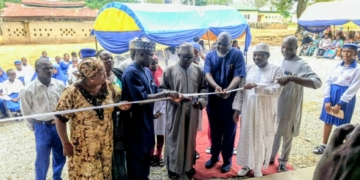
Speaking at the commissioning of a state-of-the-art Information and Communication Technology (ICT) Centre at Ika Comprehensive High School, Ikot Akpan Anwa, Akwa Ibom State, the Minister said such a strategic investment in the area, with vast possibilities for research and online learning through diverse educational platforms, would bolster human capital development, digital literacy and sustainable community development.
The ICT Centre, built and equipped by the NCDMB, comprises a modern computer laboratory with 50 networked desktop workstations, an interactive smart board, projector, server room and Starlink high-speed Internet connectivity to support digital learning, research and computer-based examinations. Designed to accommodate up to 70 users, the facility also features air-conditioned learning spaces, a staff room, store and separate convenience facilities. Power reliability is supported by a 15kVA generator and a 15kVA solar power system with battery backup, complemented by a dedicated network infrastructure for seamless connectivity.
“This ICT Centre,” according to the Minister, “is far more than a building equipped with computers; it is an investment in the future of our children and a gateway to knowledge, innovation, creativity and opportunity.” Continuing, he noted that, “Nations that invest in the digital education of their young people today are the ones that will lead the world tomorrow.”
He said the initiative of the Board aligns with the Renewed Hope Agenda of President Bola Ahmed Tinubu by advancing access to quality education, youth empowerment, digital transformation and inclusive economic growth, as young Nigerians in rural communities acquire relevant digital skills and competencies to participate effectively in a technology-driven economy.
Representing the Executive Secretary of the NCDMB, Engr. Felix Omatsola Ogbe, the Director, Corporate Services, Dr. Abdulmalik Halilu, stated that digital literacy and ICT capacity development remain a key component of the Board’s human capital development mandate aimed at building a skilled workforce for the Nigerian oil and gas industry and the broader economy. He noted that the facility would provide students with access to digital learning, research tools, artificial intelligence and global knowledge resources.
“This ICT Centre is more than a building; it is an investment in the future of our young people,” he stated, adding, “It represents our commitment to extending Nigerian Content objectives beyond industry into classrooms, where innovation, technology and skills development can empower the next generation.”
Halilu stressed that the project’s long-term success depends on collaboration among the Board, the school and the host community. He urged the community to take ownership of the facility and ensure its proper maintenance and sustainability for future generations.
“Our expectation is not simply to hand over a facility but to see measurable outcomes in the lives of the students who will use it. We therefore call on the school and the host community to safeguard this centre and ensure it continues to deliver value for many years to come.” He added.
Speaking on behalf of the project delivery team, the Managing Director of Standard Institute of Technology Limited, Engr. Alexander Nsidibe, expressed appreciation to NCDMB for the confidence placed in the company to deliver the project. He described the ICT Centre as a demonstration of the Board’s commitment to quality infrastructure development and human capital advancement. He pledged the company’s continued support for the facility’s maintenance for one year after handover, noting that the Centre would enhance students’ digital competencies and prepare them for productive life in industry.
In her welcome address, the Principal General of Ika Comprehensive High School, Mrs. Nkom John Umoette, described the ICT Centre as a transformative intervention that would bridge existing digital access gaps. She noted that the school lacked an ICT facility, which constrained students’ exposure to digital learning and computer-based education.
She expressed appreciation to Rt. Hon. Ekpo and the NCDMB for making the project a reality, stating that the facility would equip students with essential digital skills, improve their preparedness for computer-based examinations, and create greater opportunities for academic excellence and future careers.
A representative of the community commended the Minister and the NCDMB for the delivery of the ICT Centre, noting that the facility would significantly improve access to digital learning and computer-based examinations. He recalled that students previously travelled to Uyo and neighbouring communities to register for and take examinations such as JAMB, incurring additional costs and facing logistical challenges
Manufacturers Says Unreliable Electricity Impacting Business Conditions In Nigeria
By CHIKA IZUORA, Lagos
Nigerian manufacturers are blaming unreliable energy supply as standing agaisnt their efforts to remain competitive.
Though they expect business conditions to improve over the next three months but structural constraints, particularly access to affordable long-term finance and reliable electricity, continue to hinder industrial growth.
The manufacturers further expressed a cautiously optimistic outlook for the second half (H1) despite persistent energy, financing and logistics challenges.
Their overall forecast was contained in the latest Industry Pulse Survey by the Pan African Manufacturers Association (PAMA) said.
Presenting their findings, the association’s Secretary-General, Segun Ajayi-Kadir, said the survey, which captured responses from over 100 manufacturers across the continent, showed operators are becoming increasingly resilient through operational efficiency, supplier diversification and expansion into regional markets under the African Continental Free Trade (AfCFTA).
“The survey reveals a manufacturing sector that remains resilient despite significant headwinds. Companies are adapting through innovation, digitalisation and regional market expansion, but sustainable industrial growth will require decisive policy action to address longstanding structural challenges,” he said.
He said energy and power reliability remained the biggest operational challenge facing manufacturers. High electricity tariffs, unreliable public power supply and continued reliance on expensive diesel-powered self-generation continue to erode profitability across the continent, he said.
The second major challenge identified was high cost of capital, with elevated interest rates across many African economies limiting access to affordable credit for working capital, investment and expansion.
Cross-border logistics also ranked among the top constraints despite growing regional trade opportunities under AfCFTA.
It said manufacturers cited customs delays, non-harmonised regulations and transport bottlenecks as major factors increasing the cost and complexity of doing business across African borders.
The survey’s business outlook indicators pointed to gradual improvements over the next quarter.
Ajayi-Kadir explained that manufacturers attributed their improved outlook to stabilising supply chains, expanding regional trade opportunities under AfCFTA and moderating global energy prices.
“Businesses are increasingly shifting away from survival strategies towards productivity-led growth. Investment in automation, digital technologies and regional value chains is becoming central to Africa’s industrial transformation,” he said.
He urged governments to prioritise industrial competitiveness by improving electricity supply, strengthening
transport infrastructure and implementing predictable industrial policies that encourage long-term investment.
He also called on development finance institutions (DFIs) to expand access to affordable long-term local currency financing, particularly for manufacturers investing in modernisation, while urging AfCFTA institutions to accelerate customs reforms, harmonise standards, digitise trade documentation and improve border efficiency.
He added that stronger collaboration between governments, manufacturers’ associations and development partners would be critical to unlocking Africa’s manufacturing potential.
“The findings demonstrate that African manufacturing is not standing still. Despite extremely difficult operating conditions, manufacturers are building resilience, embracing innovation and positioning themselves for greater participation in regional value chains. With the right policy environment and improved access to finance and energy, the sector can become a far more powerful engine of economic growth, industrialisation and job creation across the continent,” he said.
Africa Holds Biggest Global Resources Essential To Energy Battery Production-Report
By CHIKA IZUORA, Lagos
Africa, reportedly holds some of the world’s largest reserves of several minerals essential to battery production, however despite that resource base, the continent’s battery energy storage market was worth only $80.8 million in 2025, according to Next Move Strategy Consulting.
This is compared with the global market value of $50.81 billion, according to MarketsandMarkets.
The imbalance becomes more significant as supply constraints for strategic minerals intensify.
The International Energy Agency (IEA) projects a 40 per cent lithium supply deficit and a 30 per cent copper supply deficit by 2035 unless mining investment accelerates substantially.
Emerging battery technologies are unlikely to alter the industry’s geopolitical balance in the near term.
China continues to dominate the production of several critical battery materials, supplying 75 per cent of the phosphoric acid used in LFP batteries and 95 per cent of the manganese sulfate required for sodium-ion batteries.
The IEA said that concentration underscores China’s continued strategic influence over global battery supply chains.
Global installed battery energy storage capacity is expected to increase from 224.8 gigawatts (GW) at the end of 2025 to 1,300 GW by 2030, representing a compound annual growth rate of 42 per cent, according to GlobalData’s report, Strategic Intelligence: Batteries in Power (2026), published on July 28.
GlobalData attributed its growth forecast to the accelerating electrification of the global economy, the rapid deployment of solar and wind power, rising electricity demand from artificial intelligence data centers and the continued decline in lithium-ion battery prices.
The forecast reinforces an earlier trend identified by the IEA.
In its 2024 report, Batteries and Secure Energy Transitions, the agency projected that lithium-ion battery prices would decline by 40 per cent between 2023 and 2030.
The decline in battery costs is also driving technological changes across the industry. Utilities are increasingly replacing two-hour battery systems with four-hour systems capable of storing surplus solar generation during the middle of the day and supplying electricity during evening peak demand.
“The power sector is increasingly standardizing procurement around four-hour systems,” said Rehaan Shiledar, an analyst at GlobalData.
Battery storage systems now perform functions well beyond emergency backup power.
GlobalData said batteries actively manage electricity flows between generation sources and consumers, respond to voltage fluctuations within milliseconds and help balance electricity supply and demand across power grids.
The shift is evident in the rapid expansion of hybrid solar-plus-storage projects. By sharing the same site and grid connection, these facilities reduce construction costs while storing excess solar generation for dispatch during periods of peak electricity demand.
Beyond electricity networks, data centers have emerged as one of the fastest-growing markets for battery storage systems. Batteries are increasingly replacing conventional uninterruptible power supply (UPS) systems by actively managing energy flows, reducing electricity costs through peak shaving and ensuring uninterrupted power within milliseconds, the analyst added.
The market is also diversifying technologically. Lithium iron phosphate (LFP) batteries now account for nearly 50 per cent of the global electric vehicle battery market, compared with less than 10 per cent in 2020.
Meanwhile, sodium-ion batteries, which depend less on scarce critical minerals, are gradually emerging as credible alternatives, according to the IEA’s Global Critical Minerals Outlook 2025.
China and the United States together accounted for 74.6 per cent of global installed battery storage capacity at the end of 2025, supported by favorable regulatory frameworks and large-scale procurement programs, GlobalData said.
Europe aims to increase its market share to around 15% by 2030. However, achieving that objective will require reducing its dependence on China, which controls 85% of global battery cell production and more than 75 per cent of the refining capacity for the raw materials used in battery manufacturing, according to the IEA.
JMG Unveils Advanced Hybrid Solar Power System In Lagos
By CHIKA IZUORA, Lagos
JMG Limited, has successfully commissioned an advanced hybrid solar power system in Lagos, reinforcing the company’s commitment to delivering reliable, sustainable, and cost-efficient energy solutions for businesses across Nigeria.
The installation combines 66kWp of high-efficiency solar photovoltaic (PV) generation, 80kW of hybrid inverter capacity, and 81.92kWh of lithium battery storage, creating a fully integrated energy platform designed to maximize reliability while significantly reducing dependence on diesel-powered generation.
Engineered using advanced load analysis with Fluke Load Analyzer and PV system simulation software, the system is expected to generate approximately 94.8MWh of clean electricity annually, supplying around 80 per cent of the branch’s energy requirements.
Beyond improving energy reliability, the installation is expected to offset approximately 28,000 litres of diesel consumption every year, translating into an estimated ₦50 million in annual fuel cost savingswhile preventing more than 37 tonnes of CO₂ emissions from entering the atmosphere.
The project incorporates premium technologies including LONGi solar modules, Deye hybrid inverters, and Deye high-voltage lithium battery storage, providing intelligent energy management, seamless backup power, and long-term operational efficiency.
Speaking on the project, Hussein Abbas, JMG’s Head of Solar Division stated:
“At JMG, we believe the best way to demonstrate confidence in our solutions is to deploy them within our own operations. The Victoria Island Branch now serves as a real-world example of how businesses can improve energy reliability, reduce operating costs and accelerate their sustainability goals through intelligent hybrid power systems.”
The Victoria Island Branch now serves as a live demonstration facility, allowing customers, consultants and project developers to experience JMG’s commercial hybrid solar solutions operating in a real business environment.
As businesses continue to seek cleaner, smarter and more resilient energy solutions, JMG remains committed to helping organizations reduce operating costs, improve energy security and build a more sustainable future through world-class engineering and innovative power technologies.
AfreximBank Launches Back To US Dollar Bond Market With $1.5Bn Largest Bond Issuance
…Targets Finance Trade In Africa
By CHIKA IZUORA, Lagos
The African Export-Import Bank, or Afreximbank, has made a return to the public U.S. dollar bond market after raising $1.5 billion in its largest-ever bond issuance on the international capital markets.
The proceeds will finance trade, industrialization and projects supporting economic growth across Africa.
The offering was divided into two $750 million tranches. The first, a 5.5-year bond yielding 6.25 per cent matures in January 2032. The second, a 10-year bond yielding 7.125 per cent matures in July 2036.
The offering attracted $3.8 billion in orders, more than 2.5 times the amount issued. The strong order book allowed Afreximbank to tighten pricing on both tranches by 37.5 basis points from initial guidance.
The bonds attracted investors from the United Kingdom, continental Europe, Asia and the United States.
“This successful issuance shows the confidence that investors continue to place in Afreximbank and in Africa’s growth story,” said Chandi Mwenebungu, Managing Director of Treasury and Markets and Group Treasurer.
“For us, this is a clear sign that the market continues to believe in Afreximbank’s work and in Africa’s economic prospects. Our role remains to connect capital to the opportunities that will drive trade, industrialisation and growth across the continent,” he added.
The issuance is part of a strategy launched several years ago to diversify the bank’s funding sources. The latest transaction follows several Samurai bond issues in 2024 and 2025 and a 2.2 billion yuan ($325 million) Panda bond issued in China in 2025.
It was Afreximbank’s first public dollar issuance since May 2021, when it raised $1.3 billion through two bonds with maturities of five and 10 years.
The bond sale comes as Afreximbank continues to expand its financing for intra-African trade.
As of December 31, 2025, the bank’s assets and guarantees stood at $48.5 billion, while shareholders’ equity totaled $8.4 billion. Its balance sheet and international credit ratings underpin its ability to raise funds in global capital markets.
HSBC Bank plc coordinated the transaction.
Standard Bank of South Africa, Standard Chartered Bank, Commerzbank Aktiengesellschaft and MUFG Securities EMEA plc served as joint lead managers and bookrunners.
We’ve got the edge. Get real-time reports, breaking scoops, and exclusive angles delivered straight to your phone. Don’t settle for stale news. Join LEADERSHIP NEWS on WhatsApp for 24/7 updates →
Join Our WhatsApp Channel