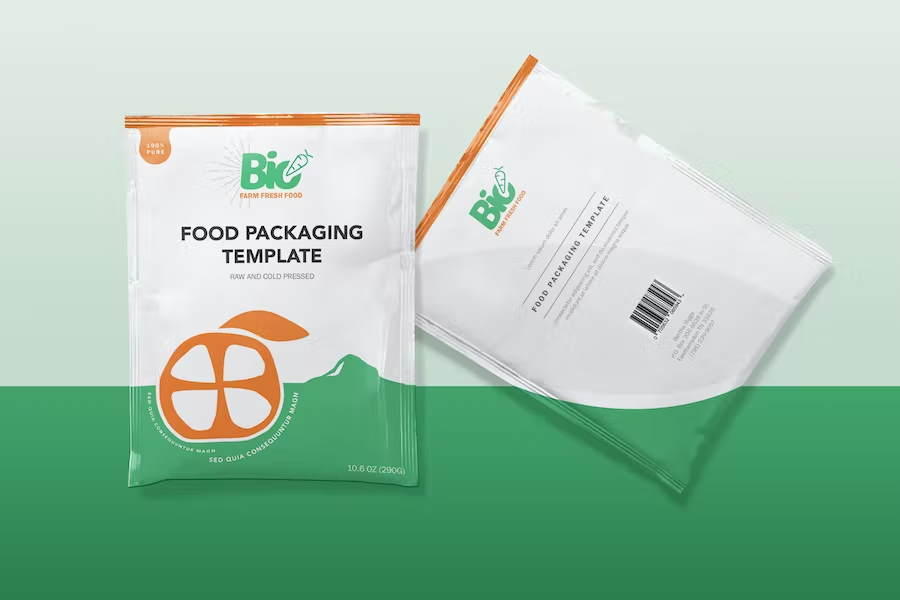
The Fast Moving Consumer Goods( FMCG) companies have witnessed a significant consumption rate as more brands and companies in the FMCG sector have resorted to satchet packaging of their goods, thereby, raising their sales as they were economical to the masses, LEADERSHIP learnt.
Apparently, satchet usage has dominated the retail industry, merchandising stores and several economies across Africa but more significantly in Nigeria where the population is high and where the demand for consumer goods is extremely high.
The idea was necessitated by innovation to penetrate the larger market of consumers with low disposable income and shoestring investment by providing retail and refill packs to consumers with low purchasing power.
Checks by LEADERSHIP revealed that over 85 per cent of players in the informal sector rely heavily on the sales of satchet drinks and plastic beverages through road side hawkers, retail stores and domestic sales from consumers in the market who seek patronage on daily basis while boosting retail sales and supply chain in food systems.
Consumer analyst believes the end goal of the satchet economy is to reduce pressure on households income, boost sufficiency in food production while putting consumers in affordable position, to attain marginal utility, invest in brands and safeguard financial behavior to build consumers franchise while sustaining purchasing decisions.
Reacting, Business Development expert, Dr. Timi Olubiyi opined that sachet trend has continued to expand due to shrinking income levels, widespread hardship, and rising poverty levels amongst the populace.
According to him, “these undoubtedly have caused the growing adoption of sachet packs in the country recently. For companies, the tough operating environment, decrepit infrastructure, continuous inflation, porous borders, and waning bulk consumption have further heightened the need for the sachet model’s adoption.”
He lamented that both individuals and businesses are feeling the weight of the economic challenges, noting that, over time, the disposable income of consumers has continued to wane drastically.
Olubiyi asserted that the economy in recent times has eroded the purchasing power of many individuals, households, and even companies while he stated that the current economic situation has also made products and services more expensive nationwide.
He added: many manufacturing companies are witnessing reduced patronage of large items because not everyone can afford bulk purchase or regular packs, and consumers continue to look for cheaper alternatives. He said”.
He affirmed that the “sachetisation” policy is a business strategy and an alternative to engaging customers continually in this trying time, stressing that, the idea is to make products affordable to consumers, particularly the majority of daily income earners who constitute a large chunk of the country’s population.
“Satchet trend encourages quick sell and increases competitiveness in consumer goods, where affordability is a big issue. Importantly, companies need to note that the population of the poor in the country continues to grow, indicating that those unwilling to flow with the sachet usage may be at risk of running out of business,” he said
Olubiyi further implored companies and government to ensure and promote measures to improve sustainable consumption, cleaner productions, circular economy to tackle the multidimensional poverty in the country.
While addressing the impact of the satchet usage, director general, Manufacturers Association of Nigeria, (MAN), Segun Ajayi-Kadir, said, despite the challenges of the real sector, manufacturers have built optimism to plug the leakages of wasting assets in local manufacturing by addressing the numerous challenges of consumers with the ideas to provide sustained consumption.
He noted that most manufacturers embarked on satchet production policy to minimise the inclemency of the operating environment by cutting cost, reprioritizing, expanding their investment in the development and production of raw materials locally.
This, he said, has increased resort to self-energy generation to complement the inadequate electricity supply from the national grid to support the current crippling condition.
Also speaking, national president Association of small business owners of Nigeria (ASBON), Dr. Femi Egbesola said, there’s an increasing number of consumer goods companies in the country which have introduced smaller product units into satchet thus, lowering the market at a lower retail price fot consumers’ wallets under immense pressure.
This is even as smaller and cheaper brands have doubled down on their battle for market share with bigger brands, as competition in the consumer goods space becomes more intense.
ASBON boss said products such as disinfectant and energy drinks now come in sachet packs in a bid to capture the growing value segment among consumers.
The beer makers are also not left out as players have introduced smaller units in 45cl sleek bottles to phase out the traditional 65cl bottles.
In today’s consumer market, affordability rather than the brand seems to the key factor in consumption decisions for most price-sensitive consumers, he stressed.
A Consumer analyst at United Capital, Yinka Ademuwagun said, the winning strategy for most companies is to play cheap considering the nature of the current economy where consumer wallet is depressed.
Consumers are, however, happy to find small unit products that are affordable for them to consume without too much pressure on their income.
We’ve got the edge. Get real-time reports, breaking scoops, and exclusive angles delivered straight to your phone. Don’t settle for stale news. Join LEADERSHIP NEWS on WhatsApp for 24/7 updates →
Join Our WhatsApp Channel