Every Sallah and Christmas, without fail, we receive a flood of goodwill messages from the presidency, the villa, and every government house in the federation. The messages are warm, the sentiments are noble, and the language is almost always the same: unity, sacrifice, tolerance, compassion, and the need to show love across ethnic and religious lines.
We have heard these words so many times that they have started to sound like a national anthem we recite without listening to the words. But this Eid-el-Kabir, I want to make the case that at least some of what President Bola Ahmed Tinubu and Vice President Kashim Shettima said deserves more than a ceremonial nod.
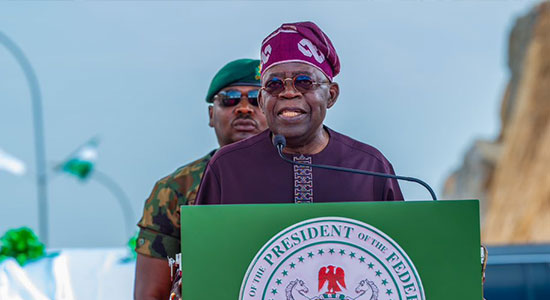
Let me start with the President. Tinubu led the congregational prayers at Dodan Barracks in Lagos on Wednesday, surrounded by familiar faces: performed the congregational prayers at Dodan Barracks in Lagos on Wednesday, surrounded by familiar faces, Governor Babajide Sanwo-Olu, former Governor Babatunde Fashola, the Oba of Lagos, Rilwan Akiolu, Chief of Staff Femi Gbajabiamila, and National Security Adviser Nuhu Ribadu, among others. After prayers, he said something that went beyond the usual pleasantries. He said banditry has no place in Islam. “Nowhere in the holy teachings does it say you should engage in banditry or take a human life,” the President declared.
He reminded his audience that even at the very origins of the Eid sacrifice, Allah replaced the child with an animal to underline the sanctity of human life.
Now I know some people will say a president saying banditry is un-Islamic is not exactly breaking news. Fair enough. But consider the context in which he said it. He said it on a day Muslims across the country were gathered in prayer.
The message that armed criminals cannot hide behind religious identity needs to be said repeatedly, by leaders at every level, until it sinks in. Religious leaders especially need to amplify this message in their own communities. The pulpit has power that no military operation can replicate.
On the economy, the President made a claim that will generate debate for weeks. “The walk through the dark tunnel is over, and the light is here,” he said in his Eid message. He pointed to a more stable macroeconomic environment, increased investment flows, and the gradual payoff of the reforms his administration has pursued over the past three years.
Mind you, I understand why some Nigerians received that line with scepticism, and I am not going to pretend otherwise. For the ordinary market woman in Kano or the civil servant in Makurdi who is still struggling to put food on the table, the tunnel does not feel over. The cost of living remains punishing. Petrol prices, electricity tariffs, and food inflation are not abstract figures to most Nigerians; they are daily emergencies. And the President knows this.
But let us also be honest about what has actually changed. The exchange rate, which was haemorrhaging confidence and driving capital flight under a dysfunctional multiple-rate regime, has stabilised to a degree that even the President’s critics acknowledge. The CBN has rebuilt some of its external reserves buffer.
The removal of the petrol subsidy, whatever pain it has caused at the pump, has freed up fiscal headroom that was being swallowed whole by a racket that benefited oil traders more than ordinary Nigerians. Foreign direct investment flows have picked up in several sectors. These are not invented numbers; they appear in independent reports from the IMF, the World Bank, and the NBS.
The question is not whether any progress has been made. Some have. The question is whether that progress is moving fast enough and reaching far enough down the income ladder. That is where the government still has serious ground to cover. A stable exchange rate does not automatically translate to affordable food. Investor confidence does not automatically translate to jobs. The reforms need a last-mile strategy, and that strategy needs to be visible, specific, and verifiable. That is the honest assessment.
Sometimes I try not to dismiss presidential statements as political noise. Tinubu also assured communities hit by terrorism and banditry that they have not been forgotten. He referenced the recent elimination of a wanted ISIS-affiliated leader by Nigerian security forces, a result that deserves acknowledgement. Our security agencies have taken significant losses in the fight against insurgency and banditry, and where there are genuine operational successes, we should say so. The risk of only ever cataloguing failures is that we inadvertently demoralise the men and women actually doing the fighting.
Now let me turn to Vice President Kashim Shettima, who observed Eid prayers in Maiduguri, and whose message carried a sharper political edge. Shettima warned politicians to approach the 2027 electoral season with “maturity, forbearance and generosity of spirit.”
He specifically called for an end to inflammatory statements that could overheat the polity. This is not a throwaway line. Coming from the Vice President, speaking in Maiduguri of all places, a city that has paid an almost unimaginable price for terrorism and violence over the past decade and a half, it carries weight.
The 2027 elections are already casting their shadow over governance. Politicians are already repositioning. Alliances are being tested. The temptation to play ethnic and religious cards to mobilise grievance rather than aspiration will only grow stronger as the election draws closer. Shettima is right to ring the bell early. The problem, as we all know, is that the people most in need of this message are the last ones to heed it.
Those issuing inflammatory statements rarely do so by accident.
They do it because it works. It drives engagement, it energises bases, and in a political culture that still rewards mobilisation over policy, it wins elections.
The First Lady, Senator Oluremi Tinubu, added her voice to the chorus, urging Nigerians to reach out to the vulnerable and less privileged during the celebration period. It is a message worth taking seriously beyond the ceremonial context. Nigeria’s social protection architecture is still embarrassingly thin for a country of our size and resource base.
Acts of individual generosity during Eid and Christmas are important, but they are not a substitute for functional social safety nets. If the government is serious about compassion as policy, not just as Sallah rhetoric, it needs to expand and properly fund the conditional cash transfer programmes, strengthen the school feeding initiative, and make the social register a credible tool rather than a political instrument.
These Eid messages, taken together, sketch a picture of an administration that is aware of the gaps, willing to speak the right language, and on some fronts beginning to close the distance between rhetoric and reality. But awareness is not the same as delivery.
The dark tunnel the President speaks of will feel genuinely over not when he declares it from a podium, but when the man in Zamfara planting sorghum on land that used to be terrorised by bandits is doing so in peace, and when the young graduate in Maiduguri is walking into a job not a recruitment drive by an armed group because an economy rebuilt by real reform finally has room for her. That is the standard. We should hold the government to it, firmly and fairly.
We’ve got the edge. Get real-time reports, breaking scoops, and exclusive angles delivered straight to your phone. Don’t settle for stale news. Join LEADERSHIP NEWS on WhatsApp for 24/7 updates →
Join Our WhatsApp Channel