
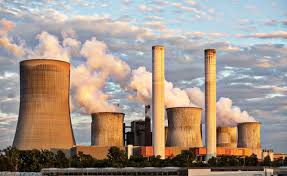
Scientists are moving towards finding solutions to nuclear energy crisis which for decades, has been regarded as the black sheep of the energy universe.
Nuclear waste is notorious for the fact that it can remain dangerously radioactive for many thousands of years. Currently, there are thousands of metric tons of used solid fuel from nuclear power plants worldwide and millions of liters of radioactive liquid waste from weapons production sitting in temporary storage containers.
The world has just come closer to finding a permanent solution to its nuclear menace as scientists in the U.S. Department of Energy’s Thomas Jefferson National Accelerator Facility (Jefferson Lab) are currently developing an Accelerator-Driven Systems (ADS) designed to transmute long-lived nuclear waste into shorter-lived isotopes, potentially cutting the required storage time for nuclear waste by 99.7 per cent.
The Jefferson Lab particle accelerator employs high-energy proton beams to strike a heavy metal target (like liquid mercury), triggering spallation to create neutrons. These neutrons then bombard the nuclear waste (minor actinides and long-lived fission products), “burning” them up and converting them into more stable or shorter-lived elements. The fission reactions triggered by this process generate heat, which can be converted into carbon-free electricity. This process can reduce the required isolation time for nuclear waste from approximately 100,000 years to just 300 years.
The Jefferson Lab project is funded the $8.17 million NEWTON (Nuclear Energy Waste Transmutation Optimized Now) program aimed at developing highly efficient, superconducting radio frequency (SRF) cavities, specifically designing niobium-tin cavities for these high-power proton linear accelerators. Traditional particle accelerators rely on expensive cryogenic cooling systems to reach superconducting temperatures.
The Lab is advancing a cost-effective particle accelerator technology by coating pure niobium cavities with a thin layer of tin, forming a Niobium-Tin high-performance intermetallic compound superconductor that can be used to generate powerful magnetic fields. This innovation allows cavities to achieve superconducting states at a higher temperature of 18 Kelvin.
Also in 2024, Finland unveiled Onkalo, the world’s first permanent deep-geological repository for high-level nuclear waste. Located on Olkiluoto Island and situated over 400 meters deep in stable bedrock, Onkalo uses multi-barrier KBS-3 systems that isolates spent fuel for 100,000 years. The KBS-3 method involves placing spent fuel into copper canisters, which are then placed in tunnels, surrounded by bentonite clay, and sealed in bedrock to prevent radiation leaks. The project, operated by Posiva, has been in development for over 25 years. Onkalo is considered a major breakthrough in nuclear energy sustainability.
Last October, Sweden commenced construction of a deep-earth nuclear waste repository similar to Finland’s’ Onkalo. About a dozen European countries are also planning deep geological repositories for their nuclear waste. Here in the U.S., government officials have proposed storing the country’s nuclear waste in a repository beneath Yucca Mountain in Nevada about 300 m below ground level and 300 m above the water table. However, this idea has gone in and out of favor gone with changes in the presidency. For now, nuclear waste simply accumulates mainly where it’s generated–at the power plants and processing facilities, with some having been sitting in interim storage since the 1940s.
In Hanford alone, more than 200 million liters of radioactive liquid waste–a mix of liquid, sediment, and sludge–has been sitting in tanks waiting to be processed. Obviously, storing this kind of high-level liquid waste indefinitely is hardly sustainable.
The challenge of safely handling nuclear waste is likely to remain at the forefront of the global energy sector even as nuclear energy enjoys a renaissance. Global nuclear capacity is projected to more than double to over 1,000 GW(e) by 2050, driven by decarbonization goals, surging electricity demand primarily from AI data centers and the pursuit of energy security.
Half of all global capacity expansion to 2050 is expected to come from China, with its nuclear fleet on track to overtake the U.S. as the world’s largest by 2030. China is building over 30 new reactors, representing nearly one-third of the world’s ongoing nuclear plant construction. China is investing heavily in both large-scale Gen III/IV reactors and small modular reactors (SMRS), aiming for rapid modernization.
But China is not alone as roughly 50 countries including Egypt, Bangladesh and Turkey are now exploring or planning nuclear programs, which could add ~160 GWe by 2050.
We’ve got the edge. Get real-time reports, breaking scoops, and exclusive angles delivered straight to your phone. Don’t settle for stale news. Join LEADERSHIP NEWS on WhatsApp for 24/7 updates →
Join Our WhatsApp Channel