The Securities and Exchange Commission (SEC) has unveiled plans to raise Nigeria’s market capitalisation-to-GDP ratio from its current 33 per cent to 92 per cent — the level achieved by India — as part of an ambitious 2026–2035 Capital Market Master Plan currently in development.
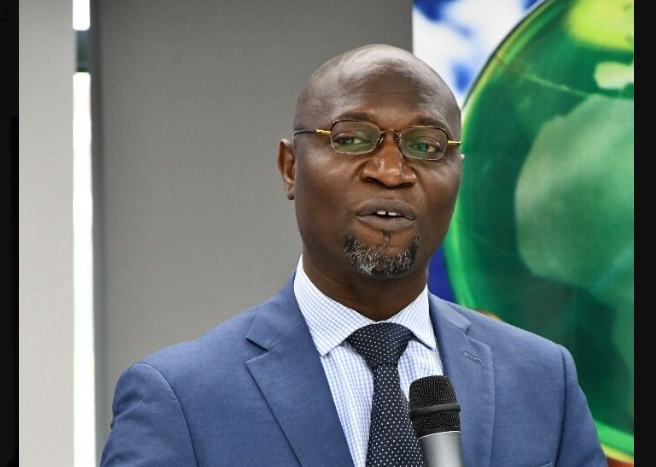
The director general of SEC, Dr Emomotimi Agama, disclosed this on Tuesday at a Citizens’ and Stakeholders’ Engagement session held at the Federal Ministry of Finance in Abuja.
The permanent secretary (Finance) in the Federal Ministry of Finance, Raymond Omenka Omachi said the engagement is part of the ministry’s first quarter 2026 citizens and stakeholders’ engagement on the implementation of Presidential Priorities and Ministerial Deliverables.
The permanent secretary described the quarterly forum as a key platform through which the Ministry shares updates on its policies, programmes, and achievements with citizens and stakeholders in a spirit of transparency and open dialogue.
Agama outlined the commission’s performance scorecard and strategic vision for the decade ahead.
The new master plan marks a transition from the 2015–2025 framework and signals a decisive push to reposition Nigeria’s capital market as a credible emerging market destination.
Agama told stakeholders that the capital market recorded significant growth under his watch, with market capitalisation expanding by 125 per cent — from N55 trillion in April 2024 to N124 trillion by March 2025.
He said the surge translated into a near-tripling of the market’s contribution to national GDP, rising from 13 per cent when he assumed office to 33 per cent. “The growth in market capitalisation amounts to 33 per cent contribution to the national GDP from 13 per cent in 2024 when he took over office,” Agama said.
Between 2024 and March 2026, the Commission facilitated N3.68 trillion in capital raises through new issues, with equities accounting for the bulk — N3.62 trillion of the total.
The SEC chief also highlighted the commission’s role in supporting the Central Bank of Nigeria’s bank recapitalisation exercise. He said the SEC facilitated over N2.7 trillion in capital raises by the banking sector, of which N1.7 trillion was specifically directed at meeting the CBN’s recapitalisation requirements. The recapitalisation of capital market operators was also completed in January 2026, which
Agama also signalled a more assertive regulatory posture against Nigeria’s largely unregulated cryptocurrency market, disclosing that over $96 billion in digital asset transactions flow through the country annually — most of it outside the formal regulatory framework. He described the current state of the market as a largely unregulated shadow economy that the SEC is now working to bring within the regulatory perimeter.
To achieve this, he said the commission launched the Accelerated Regulatory Incubation Programme (ARIP), designed to onboard financial technology companies into the regulated space safely and systematically.
He said SEC also secured $400,000 in financing from the African Development Bank to procure surveillance software aimed at improving market supervision and oversight.
With the 2026–2035 master plan now in its transitional phase, Agama signalled that the commission’s overarching goal is to close the gap between Nigeria and its emerging-market peers in capital market depth, investor participation, and institutional credibility.
India, which the SEC cited as a benchmark, maintains a market capitalisation-to-GDP ratio of approximately 92 percent — nearly three times Nigeria’s current level — underlining the scale of ambition embedded in the new plan.
The permanent secretary emphasised that the far-reaching impact of fiscal policy on the lives of ordinary Nigerians made continuous stakeholder engagement not just desirable but essential.
Calling for candour from participants, the Mr Omachi urged stakeholders to engage critically with the reforms on display — offering praise where deserved and criticism where necessary. “Your suggestions matter a lot,” he said, adding that the session’s feedback would help the ministry determine the way forward.
He described the SEC as central to maintaining investor confidence in Nigeria, warning that without sustained inflows of investment, the broader economy risked being stifled.
We’ve got the edge. Get real-time reports, breaking scoops, and exclusive angles delivered straight to your phone. Don’t settle for stale news. Join LEADERSHIP NEWS on WhatsApp for 24/7 updates →
Join Our WhatsApp Channel