The Senate has resolved to amend Nigeria’s Terrorism (Prevention and Prohibition) Act to prescribe the death penalty—without the option of a fine or judicial discretion—for all kidnapping offences, marking one of the most far-reaching legislative responses yet to the nation’s worsening insecurity.
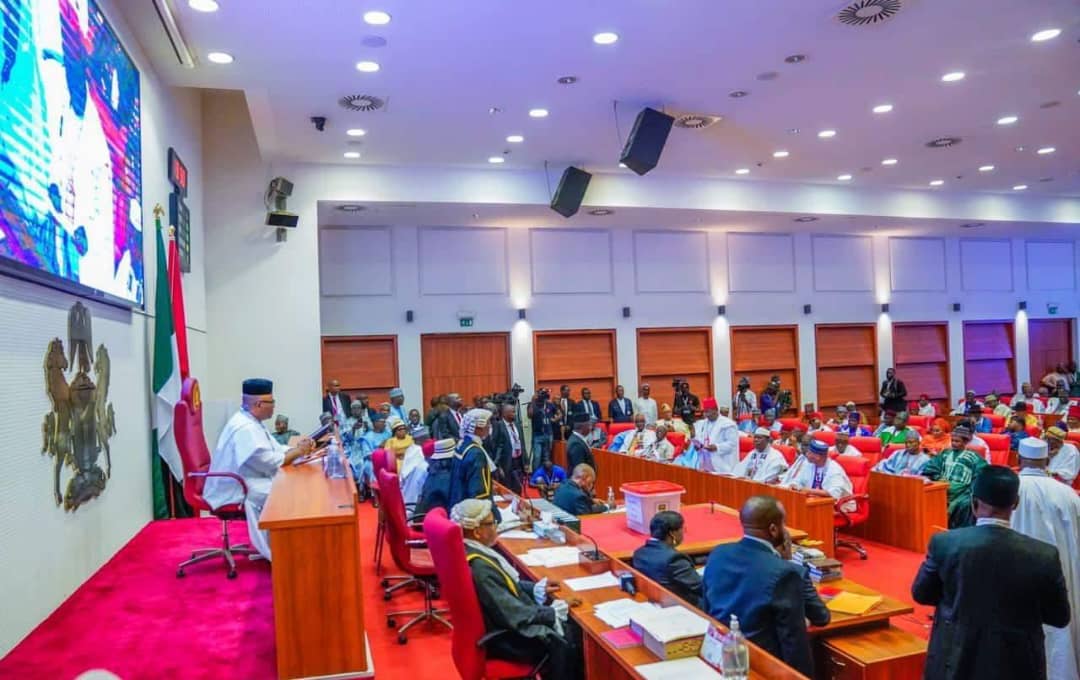
Senate President Godswill Akpabio announced the decision yesterday in Abuja, following the approval of the proposal by a majority of lawmakers through a voice vote during the plenary session.
The resolution followed an additional prayer by Abdul Ningi (PDP, Bauchi Central), who urged the Senate to mandate its Leader, Opeyemi Bamidele, to draft an urgent amendment to the Anti-Terrorism Act.
The amendment would classify kidnapping as a terrorist offence and automatically attract the death penalty, regardless of circumstances or jurisdiction.
The motion received strong backing from Adams Oshiomhole (APC, Edo North), who insisted that the amendment must eliminate all judicial discretion.
“The offence of kidnapping should carry the death penalty for which no judge should have the power of any discretion,” Oshiomhole argued.
“Governors must also be ready to sign death warrants. That is why I signed the death penalty when I was governor. Some governors refused.”
Endorsing the senators’ submissions, Akpabio declared that once kidnapping is proven in court, the punishment must be death.
“An earnest amendment has been proposed: kidnapping should carry the maximum punishment of death. Once the offence is established, a death sentence must follow. There is no discretion,” he ruled.
Akpabio subsequently directed Senate Leader Bamidele to urgently prepare the amendment bill, ensuring kidnapping is explicitly classified as a terrorist act and made punishable by death.
“In the shortest number of days, bring an amendment so that Nigeria will henceforth classify kidnapping as a terrorist act and one that carries the death sentence without the option of a fine.”
Under the existing Anti-Terrorism Act, kidnapping resulting in the death of a victim attracts the death penalty. Where no death occurs, penalties range from lengthy imprisonment to life sentences, depending on the offence. The Act also criminalises the payment of ransom, prescribing a minimum prison term of 15 years for offenders.
However, senators argued that these measures are no longer sufficient as kidnapping has escalated into a national emergency.
Earlier during the debate, Senator Diket Plang (Plateau Central) noted that terrorists rely heavily on ransom payments to finance arms purchases and sustain operations.
Despite frequent attacks, most kidnapping cases end with the victim’s release but without arrests.
Recent examples cited include:” The 25 schoolgirls abducted from Government Girls Comprehensive Secondary School, Maga, Kebbi State, who were rescued on Tuesday—none of the abductors was apprehended.
The 38 worshippers kidnapped in Eruku, Kwara State, who were rescued last Sunday, again, no arrests were made.
We’ve got the edge. Get real-time reports, breaking scoops, and exclusive angles delivered straight to your phone. Don’t settle for stale news. Join LEADERSHIP NEWS on WhatsApp for 24/7 updates →
Join Our WhatsApp Channel