Over the past two years, the Jigawa State Agricultural Transformation Policy has attracted significant commentary and reactions from policymakers, leaders, farmers, civil society organizations, and other key stakeholders in Nigerian food security and global Sustainable Development Goals.
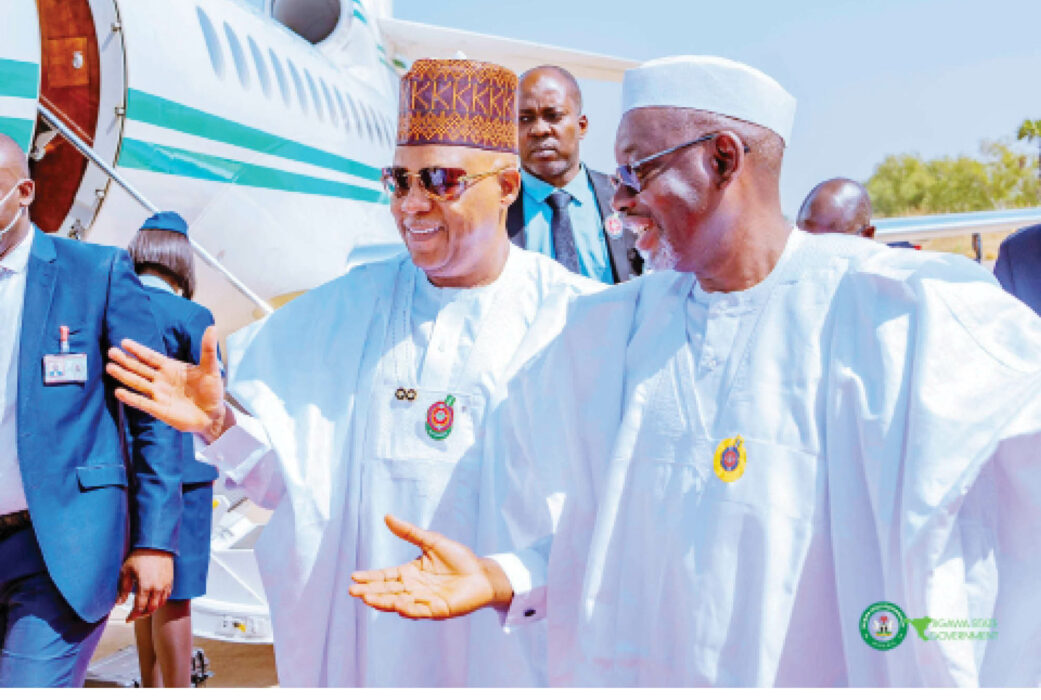
This week, Nigeria’s Vice President, His Excellency Senator Kashim Shettima, shared his insights on the state’s agricultural policy and analyzed its potential for sustainable peace and progress within the state and the country.
The Vice President, who visited Jigawa to commemorate the 45th anniversary on the throne of the Emir of Gumel, Dr. Ahmad Muhammad Sani, also linked the state’s security situation to its ongoing agricultural reforms.
The current Federal Minister of Agriculture and Food Security, Hon. Abubakar Kyari, has frequently visited Jigawa State since assuming office, taking a keen interest in theJigawa agricultural policy led by Governor Malam Umar Namadi.
Beyond the policy on paper, the practical unwavering commitment, political will, and farmers’ zeal have led the Minister to declare Jigawa a “pivotal state” in achieving national food security.
The Jigawa agricultural policy, born from Governor Malam Umar Namadi’s 12-point agenda, has equally attracted various donor partners to join the mission.
These partners are providing technical and financial interventions to build farmers’ capacity to cope with new initiatives.
Although Jigawa is a state battling the crises of climate change—including land degradation, desertification, gully erosion, and flooding, its realistic and resilient policy has enabled continuous advancement of its agricultural agenda.
While fielding questions from journalists during his visit, Vice President Kashim Shettima appeared eager to discuss the state’s agricultural sector, being overwhelmed and elated by the results he witnessed on the ground.
The Vice President recognized the efforts and commitment of all 36 state governors in the federation toward achieving national food security, noting that they have surpassed their predecessors.
In the same vein, he described the Jigawa State model as the most advanced and promising in enhancing sustainable food security, job creation, poverty alleviation, and economic growth.
He also connected the improved security situation in the state to the practical agricultural policy, which engages thousands of youth and takes into full consideration the interests and needs of farmers and herders.
Jigawa is currently among the leading states in Nigeria in the production of wheat, rice, sesame, hibiscus, and other crops.
Senator Shettima described the state’s improvement in wheat production—from 30,000 hectares to over 110,000 hectares in two years, with a target of 500,000 hectares in the next five years—as very encouraging and inspiring.
“Today, Jigawa State stands tall as a role model in agricultural transformation. We promise to continue collaborating with the state government on this journey, and we hope others will emulate them,” the Vice President stated.
Since assuming office, Governor Namadi has declared the agricultural sector the mainstay for driving the state’s economic agenda, given its comparative advantage in this sector.
The state introduced a multi-sectoral approach, along with policies and projects to transform the sector, and declared its preparedness to collaborate with any government, public or private institution, individual, or partner with a genuine interest in helping the state achieve its desired goals.
Under Governor Namadi’s Agricultural Transformation Agenda, thousands of hectares of virgin land were cleared and allocated to farmers to expand crop production.
Irrigation facilities were rehabilitated, and new fields were developed, including in areas like Lallashi in Maigatari Local Government. a border area between Nigeria and the Niger Republic, where irrigation facilities were previously unexpected.
The state government also declared unlimited agricultural grants and interventions for farmers, including a “Rice Millionaires” package that attracted hundreds of university graduates and thousands of youth to venture into farming as a business.
The provision of new farming techniques, modern and simple technology at subsidized rates, and an increase in the number of agricultural extension workers from 300 to 2,000 have equally improved the state’s agricultural output.
Livestock and poultry production were also enhanced through free veterinary services, the employment of 300 nimal Health Workers, an agreement with Indian firms on animal feed production, animal disease surveillance and control, and the gazetting and improvement of cattle routes and grazing reserves.
The state’s agricultural mechanization initiative led to the establishment of the Jigawa Agricultural Mechanization Agency. Under this agency, sixty Mechanization Service Centers (workshops) were established two in each of the state’s 30 constituencies for the continuous training of manpower to meet the demands of the state’s mechanization project.
Thirty university graduates with relevant agricultural engineering certificates were trained in China to manage the workshops and train others. They have returned to the state and are now participating in assembling thousands of farm implements including tractors, combine harvesters, planters, and sprayers—ordered by the state government.
As everyone in the state anxiously awaits the launch and distribution of these thousands of modern farm implements to farmers across Jigawa, it is generally believed that they will be a game-changer for the agricultural sector and will certainly unveil a new model for others to emulate.
We’ve got the edge. Get real-time reports, breaking scoops, and exclusive angles delivered straight to your phone. Don’t settle for stale news. Join LEADERSHIP NEWS on WhatsApp for 24/7 updates →
Join Our WhatsApp Channel