Vice President Kashim Shettima has called for urgent and sustained investment in education, healthcare, nutrition and skills development to reverse declining human capital outcomes across Northern Nigeria and unlock the region’s vast potential.
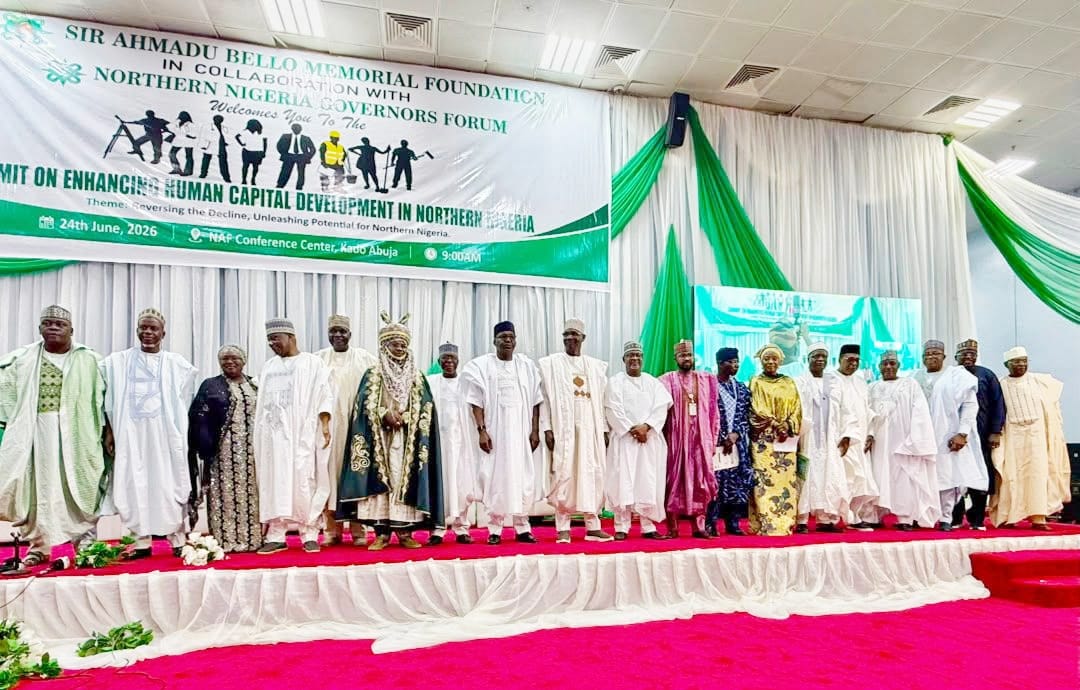
Speaking at the Summit on Enhancing Human Capital Development in Northern Nigeria, themed “Reversing the Decline, Unleashing Potential for Northern Nigeria,” held at the NAF Conference Centre in Abuja, Shettima said the region’s greatest challenge is not a lack of potential but inadequate investment in its people.
The Vice President, represented by the Deputy Chief of Staff to the President, Senator Ibrahim Hassan Hadejia, noted that no region in the country has felt the impact of weak human capital investment more than Northern Nigeria.
“The North is not poor in spirit, nor in numbers, nor in promise. It is poor in the one investment that turns population into prosperity, and that single deficit has cost us more than any drought, flood or season of insecurity ever has,” he said.
Shettima described the Human Capital Development (HCD) 2.0 Strategy as the Tinubu administration’s roadmap for building a healthier, more educated and productive population, amid growing demographic pressures and global competition for talent and productivity.
According to him, the strategy aims to raise Nigeria’s Human Capital Index score to 0.6 and position the country among the top 80 nations globally by 2030.
He urged governors, policymakers and development partners to move beyond policy declarations and focus on measurable outcomes, stressing that state governments remain central to delivering quality education, healthcare and economic opportunities.
“The classrooms are in your states. The primary health centres are under your authority. No federal programme, however well designed, can educate a child you have not enrolled or save a mother you have not reached,” he stated.
The Vice President explained that the HCD 2.0 Strategy is built around four key pillars: health, education and skills development, labour force participation and livelihoods, while also incorporating food and nutrition, gender inclusion, digital innovation and climate resilience.
He warned that failure to invest in Northern Nigeria’s growing youth population could undermine future development, noting that countries around the world are rapidly preparing their young people for success in a knowledge-based economy.
Calling for accountability and concrete action, Shettima urged stakeholders to ensure that commitments made at the summit result in meaningful improvements in the lives of citizens.
“We must resolve that the Northern child born this year will be healthier, better fed and better taught than the one born before. We must reverse the decline not with grand declarations but with budgets defended, teachers deployed and clinics equipped,” he said.
Participants at the summit, including governors, policymakers, development partners, traditional rulers and human capital advocates, pledged to deepen investments in people and strengthen development outcomes across Northern Nigeria.
The gathering focused on translating policy commitments into action aimed at unlocking the region’s human capital potential and accelerating sustainable development.
We’ve got the edge. Get real-time reports, breaking scoops, and exclusive angles delivered straight to your phone. Don’t settle for stale news. Join LEADERSHIP NEWS on WhatsApp for 24/7 updates →
Join Our WhatsApp Channel