There is a boom of Hausa female literature writers today, and it is all thanks to the social and digital media platforms.
According to siblings and founders of the Hausa International Books & Arts Festival (HIBAF), Sada and Habiba Malumfashi, there are three eras in Hausa literature writing. The 1930s, which saw fewer Hausa language writers. They were the first generation to write novels in Hausa. The 1980s saw a boom of Hausa novel writers, including northern female writers, largely writing from their homes and self-publishing their works. In fact, University of London’s School of Oriental and African Studies documented over 1000 books written in Hausa Language between 1980 to 1997. Then, there is the current generation of Hausa literature writers, that features increased female writers, and a shift from the pamphlet and novella self-published works of the 80s, to internet and traditionally published Hausa literature.
The boom in Hausa female writers is largely attributed to social media and digital platforms, like WhatsApp, Facebook, Wattpad among others.
“There are more Hausa female writers now than they were in the 80s. They were a lot of women writing in the 80s from the comfort of their homes. They mostly wrote about issues they faced. They were quite confident writing about social issues.
“Today, with technology and social media. There are Hausa WhatsApp groups where they post stories, Facebook pages where they write, and Wattpad. These young women are aged between 15 and 25 years,” said Habiba.
However, with the increased access to expression and publication, comes exposure to criticism and denigration by those who have different opinions to the issues addressed by the female writers in their works.
“There is a lot of controversy surrounding the digital space and humans in digital spaces. It is not very safe you could say for these female writers. There is backlash, some people come on social media to say that what they are doing is immoral, or how the works they are creating is taking away the essence of Hausa culture,” said Habiba.
There is also the problem of the absence or default on copyright and Intellectual Property (IP) policies, which leaves the female writers’ victims of piracy, and thus deprived of their just royalties or acknowledgment.
“They write these stories which they post on WhatsApp and sell them chapter by chapter. You pay, they send you a chapter. But there is nothing preventing the buyers from reselling the stories and making profit off their works. This is a major problem in these digital spaces,” Habiba averred.
To create safe spaces for themselves on these internet spaces, the women have taken to writing with pseudonyms, in addition to the swift removal or blocking of denigrative persons in the groups. In the process they were able to provide a certain amount self-censorship, editing and proofreading service to refine their works before publishing.
“There is always going to be backlash, but I think they have managed to create a sense of community for themselves, and take care of each,” Habiba said.
And while not entirely safe, social media and digital tech platforms have made it easier for Hausa female writers to make profit from their works, compared to pre-digital era when they self-publish, take the books to the market, and try to find buyers on their own.
“Now it’s easier for them to find buyers. Although there is less protection from piracy”.
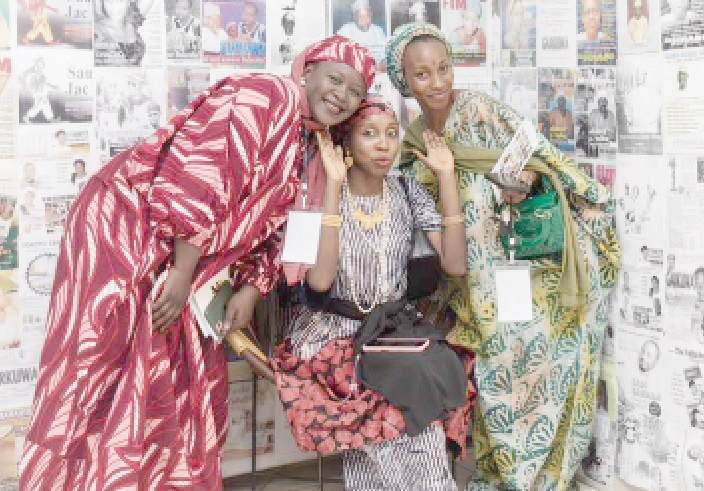
HIBAF, Habiba said provides a platform where current generation of Hausa female literature writers connect and converse with their idols, female Hausa authors who wrote in the 80s and whom they had read, learn from their experiences, and borrow their writing styles to create even better works.
An illustration is the festival’s hosting of Rahma Abdulmajid, the author of the longest Hausa literature novel, Mace Mutum (2005), parts of which has been translated to English in Words Without Borders.
Founded in 2021, HIBAF is dedicated to the celebration of literature and arts written in Hausa language, and in creating a platform for fostering conversation on Hausa language and literature, what it means to speak Hausa, either by origin, or by adoption, and generally improving the Hausa literature writing and publishing ecosystem.
The 2024 edition themed ‘Popular Culture’ held at the Exhibition Pavilion in Abuja December 20 to 21.
We’ve got the edge. Get real-time reports, breaking scoops, and exclusive angles delivered straight to your phone. Don’t settle for stale news. Join LEADERSHIP NEWS on WhatsApp for 24/7 updates →
Join Our WhatsApp Channel