As Nigeria continued to battle youth unemployment rates exceeding 30 per cent, a Lagos-based pilot project, Spark-ED (SPAR-ED) Financial Literacy Programme, is demonstrating that early exposure to money management skills could become a critical pillar of economic preparedness for young people.
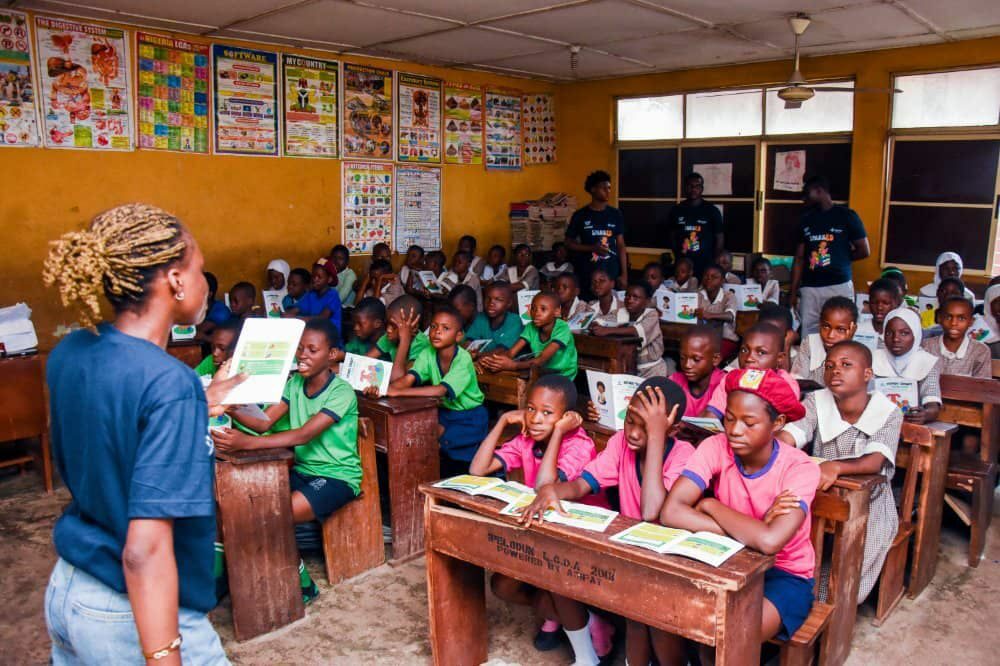
The Spark-ED Project, implemented by Worden HCD Ltd/GTE with support from Access Holdings, has trained 2,543 secondary school students across Lagos State in financial management and digital literacy, offering what experts describe as a scalable model that can inform national education policy.
Despite several curriculum reforms over the years, Nigerian secondary schools remained largely focused on academic subjects, with little attention to practical life skills such as budgeting, saving and basic financial planning.
Executive Director of Worden HCD Ltd/GTE, Ifereke Brendan, said, “We’re producing graduates who can solve quadratic equations but can’t create a household budget, This isn’t a criticism of our teachers or schools; it’s a systemic gap that requires policy intervention”
Through a blended learning approach that combined classroom teaching with practical exercises, students were introduced to budgeting, expense tracking, book-keeping and the use of digital financial tools.
Education experts have posited that such programmes should not be isolated initiatives but should shape national policy reforms. Even as they insist that financial literacy can be embedded into existing curricula, teacher training institutions incorporate financial education modules to ensure consistency nationwide.
Access Holdings’ backing of the initiative underscores what stakeholders described as a growing private sector understanding that financial inclusion goes beyond infrastructure to building financially informed users.
“The partnership between Worden HCD and Access Holdings demonstrates what’s possible when policy goals align with corporate social responsibility, “This model could be replicated across Nigeria with appropriate government support and private sector investment,” Brendan said.
In its design, the programme deliberately targeted schools from different socioeconomic backgrounds across Lagos, ensuring that financial education was not restricted to privileged communities.
According to the organisers, the initiative aligns with Sustainable Development Goals 8 on decent work and economic growth, and 10 on reduced inequality, showing how targeted educational interventions can contribute to national development.
Meanwhile, Worden HCD is currently engaging Lagos State education authorities on how Spark-ED’s curriculum and methodology can be integrated into the state’s official education framework, with a view to possible adoption in other states.
“We’ve proven the concept works, “Now the question is: do we have the political will and institutional capacity to scale this from 2,500 students to 2.5 million?” Brendan said.
We’ve got the edge. Get real-time reports, breaking scoops, and exclusive angles delivered straight to your phone. Don’t settle for stale news. Join LEADERSHIP NEWS on WhatsApp for 24/7 updates →
Join Our WhatsApp Channel