Stakeholders in Nigeria’s health sector have called for increased domestic financing and stronger national ownership of malaria control programmes as declining donor support threatens efforts to eliminate the disease.
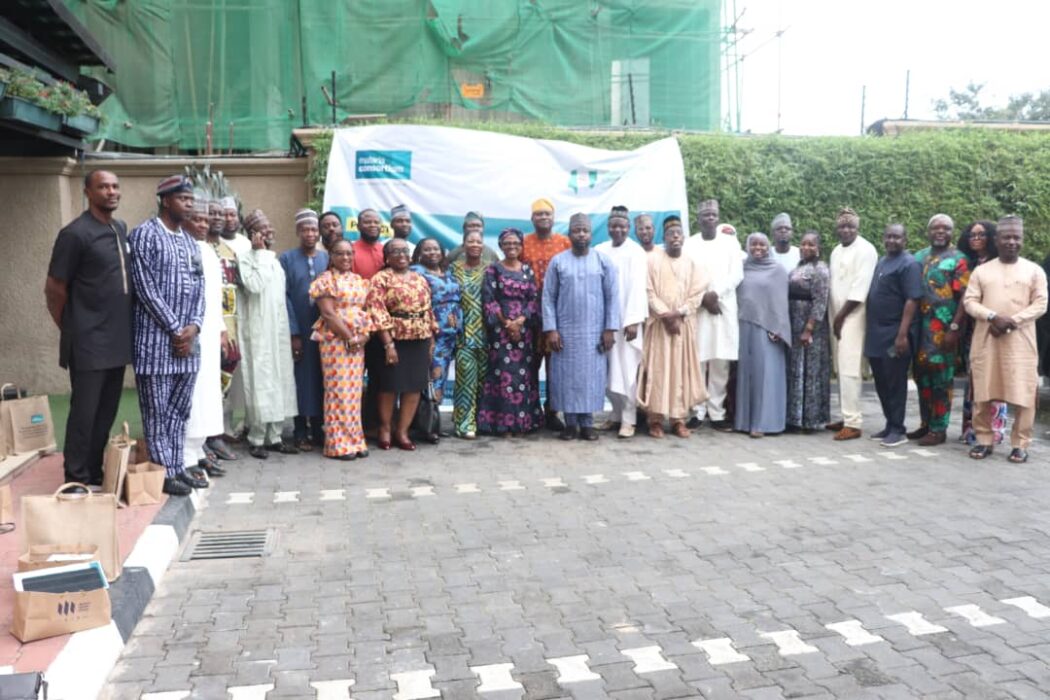
The call was made during a high-level advocacy engagement on domestic financing for malaria elimination in Nigeria organised by the National Malaria Elimination Programme (NMEP) in collaboration with Malaria Consortium and other key partners on Friday.
The policy dialogue brought together policymakers, legislators, development partners, civil society organisations, private sector leaders and health experts to explore sustainable financing mechanisms for malaria elimination and strengthen political commitment towards increased domestic investment in the fight against the disease.
Participants at the event stressed that while external funding has played a critical role in malaria control over the years, it is no longer sufficient to meet Nigeria’s long-term malaria financing needs.
They also encouraged community participation in efforts to keep the malaria scourge in check as well as support for local pharmaceutical firms.
Delivering the keynote address, national coordinator of NMEP, Dr Nnenna Ogbulafor, said Nigeria must take greater ownership of financing its malaria response as the global health funding landscape continues to evolve.
According to her, Nigeria remains the country with the highest malaria burden in the world, accounting for more than one-quarter of global malaria cases and nearly one-third of malaria-related deaths.
“External financing alone cannot eliminate malaria in Nigeria. The scale of our burden is too large, the needs are too great, and the future of global health financing is increasingly uncertain,” she said.
She noted that while development partners, including the Global Fund, the World Bank, the United States and United Kingdom governments, the World Health Organisation and UNICEF, have contributed significantly to malaria control efforts, Nigeria must now build a sustainable financing framework driven by domestic resources.
“Domestic resource mobilisation is no longer optional. It is a national necessity,” Ogbulafor declared.
She explained that domestic financing goes beyond increasing government budget allocations and should involve federal and state governments, legislatures, the organised private sector, civil society groups, philanthropists, local manufacturers, health insurance schemes and innovative financing institutions.
The NMEP coordinator argued that sustainable malaria elimination requires predictable funding for prevention, diagnosis, treatment, surveillance, health worker training and community engagement.
She warned that interruptions in funding often result in shortages of essential commodities, forcing patients to seek treatment out-of-pocket or rely on poor-quality alternatives.
Ogbulafor further stressed that investing in malaria control makes economic sense because the disease undermines productivity, education, agricultural output and household income.
“Malaria is not only a disease; it is an economic burden. Investing in malaria prevention and treatment produces direct economic returns,” she said.
She urged state legislatures to create and protect malaria budget lines, ensure timely releases of approved funds and strengthen oversight of programme implementation.
The NMEP boss also called on state governments to increase counterpart funding, while encouraging the private sector to move beyond charitable donations to strategic investments in malaria control through workplace programmes, health insurance packages, logistics support, local manufacturing and community interventions.
Speaking during the engagement, chief Executive officer and executive secretary of the Pharmaceutical Manufacturers Group of the Manufacturers Association of Nigeria (PMGMAN), Frank Muoneme, said local pharmaceutical manufacturers remain committed to closing the country’s access-to-medicines gap and strengthening medicine security.
Muoneme disclosed that more than 200 pharmaceutical companies currently operate in Nigeria, contributing to employment creation and healthcare delivery.
He acknowledged the contributions of philanthropic organisations and private companies to health financing, but stressed that government ownership remains essential for sustainable progress.
Speaking on donor funding from foreign and local philanthropists and funding agencies, Muoneme said: “However, while these contributions are important, the government must take ownership. During the session, I spoke about ownership, responsiveness, responsibility and accountability.
“We cannot eliminate malaria in Nigeria until we take ownership and place ourselves firmly in the driver’s seat. This is the essence of the Medicine Security concept, developed by Nigerian pharmaceutical manufacturers around 2018.
The concept emphasises that we must take responsibility for the medicines we consume and the healthcare products we use, from end to end — from research and development to Active Pharmaceutical Ingredients (APIs), regulatory strengthening, accountability and budgeting.”
Muoneme argued that Nigeria cannot eliminate malaria without taking full responsibility for the medicines and healthcare products consumed within the country.
“What is our contribution to healthcare financing? The Abuja Declaration recommended allocating 15 per cent of national budgets to healthcare. If that is the target, what are we, as a nation, putting on the table?” he said.
The PMGMAN chief executive further explained that the concept of Medicine Security, developed by local pharmaceutical manufacturers, emphasises national responsibility across the entire healthcare value chain, including research and development, Active Pharmaceutical Ingredients (APIs), regulation, budgeting and accountability.
According to him, expanding health insurance coverage and increasing budgetary allocations to healthcare are critical steps towards closing existing financing gaps.
“We cannot outsource responsibility for malaria elimination to other countries. We must look inward. COVID-19 exposed our vulnerabilities, yet it seems we have not fully learned the lessons. The recent reduction in international funding support has further highlighted the need for self-reliance. We must look inward and take ownership, not only of malaria control but of healthcare programmes across the board,” he said.
Muoneme added that strong political will remains one of the most important ingredients for successful policy implementation.
“I also believe that the strongest element of any well-executed policy is the political will of those responsible for implementing it. We need people who are committed to doing things properly and who are willing to think outside the box,” he added.
On his part , chairman of the House Committee on Health in the Plateau State House of Assembly, Hon. Daniel Nanbol Listick, stressed the need to strengthen health systems through increased investments in malaria funding, infrastructure, technology, equipment, community engagement and elimination strategies.
According to him, while governments at the subnational level have made progress in tackling malaria, more coordinated efforts are required to achieve lasting results.
“For success in the fight against malaria, we should work as a larger team and integrate health services. Verticalisation can sometimes lead to financing leaks. I support the integration of all services,” he said.
Hon Listick advocated a whole-of-society approach involving various ministries, departments and agencies, noting that malaria elimination extends beyond the responsibilities of health workers alone.
“For success in the fight against malaria, we should work as a larger team and integrate health services. Verticalisation can sometimes lead to financing leaks. I support the integration of all services.
“For instance, in malaria elimination, we need sociologists to assist with social and behavioural change. It is not only health workers who can drive this process. We also need to collaborate with ministries, departments, and agencies involved in the fight against malaria.
“‘When it comes to environmental issues, particularly prevention, the Ministry of Health is not the only one with a role to play; the Ministry of Environment must also be involved. In terms of infrastructure, the Ministry of Works and Housing has a role. When it comes to education and orientation, the Ministry of Education should be involved in revising primary school curricula so that pupils understand the role they can play in eliminating malaria.”
On her part, national coordinator of the Civil Society in Malaria Control, Immunisation and Nutrition (ACOMIN), Lovelyn Agbor-Gabriel, said dwindling donor support had made domestic resource mobilisation an urgent necessity.
She noted that dependence on external funding is no longer sustainable or predictable given changing global funding priorities.
“Part of the strategy to tackle malaria is to mobilise domestic resources through initiatives such as this event in order to secure sustainable funding,” she said.
Agbor-Gabriel acknowledged improvements in government funding for malaria programmes but maintained that more investment is required to achieve elimination targets.
She also urged Nigerians to adopt preventive measures to reduce malaria transmission, including proper environmental sanitation and the consistent use of mosquito nets.
“If we eliminate mosquito breeding sites, we will have fewer mosquitoes in our environment, fewer mosquito bites and, ultimately, fewer malaria infections,” she said.
She further advised members of the public to seek proper medical testing whenever they develop a fever, stressing that not all fevers are caused by malaria.
We’ve got the edge. Get real-time reports, breaking scoops, and exclusive angles delivered straight to your phone. Don’t settle for stale news. Join LEADERSHIP NEWS on WhatsApp for 24/7 updates →
Join Our WhatsApp Channel