Stakeholders have called for the responsible use of social media and heightened public vigilance against misinformation ahead of the August 15 Osun State governorship election, warning that the spread of false information and hate speech could trigger electoral violence and undermine the credibility of the poll.
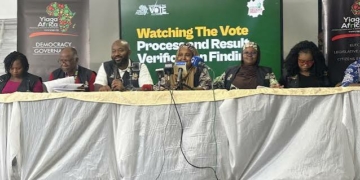
The call was made at a one-day Policy Dialogue on Electoral Offences, Peaceful Elections, Responsible Use of Social Media and Consequence Management, organised by the Peering Advocacy and Advancement Centre in Africa (PAACA) in collaboration with the Digital Africa Research and Safety Lab (DigiAfricaLab) in Osogbo, Osun State.
The dialogue brought together representatives of the Independent National Electoral Commission (INEC), the Nigeria Police Force, the National Orientation Agency (NOA), civil society organisations, academia, the media, traditional and religious leaders, and digital influencers to examine emerging electoral risks and identify practical measures for ensuring a peaceful, credible and inclusive governorship election.
Speaking at the event, the Osun State Director of the National Orientation Agency (NOA), Mr Adebiyi Stephen Adefarasin, urged residents to verify information before sharing it on social media and to make the forthcoming governorship election a model of peaceful and credible democratic practice.
He said the agency remained committed to working with stakeholders to build a digitally responsible society while promoting peaceful, free, fair and transparent elections.
According to him, although social media has become a powerful tool for information sharing, civic engagement and democratic participation, it must not be used to spread misinformation, disinformation, hate speech or other harmful content capable of threatening democratic processes.
“As we prepare for the forthcoming off-season governorship election in Osun State and look ahead to the nationwide general elections in 2027, I urge all Nigerians, particularly young people, media practitioners, civil society organisations, political actors and digital content creators, to embrace the principles of fact-checking and responsible communication. Peaceful elections are built on the foundation of informed, responsible and patriotic citizens,” Adefarasin said.
In his welcome address, the Executive Director of PAACA, Mr Ezenwa Nwagwu, stressed the need to deepen public understanding of electoral offences, peaceful elections and the responsible use of social media.
He lamented that many Nigerians were unaware of the legal consequences of electoral offences, noting that both buying and selling Permanent Voter Cards (PVCs) are criminal acts punishable under the law
Nwagwu warned that electoral violence often begins with inflammatory rhetoric and misinformation, urging political actors and citizens alike to exercise restraint.
“We have a responsibility to educate citizens against violence. It is easy to speak truth to power, but we must also speak to ourselves. Osun people, it is your responsibility to make sure that the election is peaceful. Elections will come and go, but Osun will remain,” he said.
He added that democracy should not be measured solely by physical infrastructure but also by the protection of citizens’ freedoms and rights.
Founder and Executive Director of DigiAfricaLab, Rosemary Ajayi, said in her remarks that digital threats now extend beyond misinformation to include fake social media accounts, impersonation and coordinated online manipulation capable of eroding public trust in elections.
Delivering the keynote address, Prof Adetunji Ogunyemi of the Department of History and International Relations, Obafemi Awolowo University, Ile-Ife, said peaceful elections remain the bedrock of democratic legitimacy, stressing that credible polls require the collective commitment of electoral institutions, security agencies, political actors, the media, civil society organisations and citizens.
The Don urged political actors to embrace democratic values by accepting electoral outcomes, pursuing grievances through lawful channels and strengthening institutions rather than seeking to delegitimize the electoral process.
Prof Ogunyemi also warned that threats to electoral integrity now extend beyond physical violence to the digital space, where misinformation, disinformation, hate speech and the premature declaration of election results on social media can inflame tensions and erode public confidence.
The Resident Electoral Commissioner (REC) in Osun State, Mrs Oluwatoyin Babalola, reaffirmed the commission’s commitment to conducting a free, fair, transparent and inclusive governorship election, assuring stakeholders that INEC would continue to work closely with security agencies, civil society organisations and other partners to strengthen public confidence in the electoral process.
The REC also emphasised the importance of verified information in maintaining public trust, urging citizens to rely on official channels for election-related updates and avoid circulating unverified reports capable of creating tension.
In a communiqué issued at the end of the meeting, participants warned that the irresponsible use of social media, including the spread of misinformation, disinformation and hate speech, poses a direct threat to public confidence in elections and could escalate into real-world violence.
They resolved to reject electoral violence, vote-buying, voter intimidation, hate speech and misinformation before, during and after the governorship election.
We’ve got the edge. Get real-time reports, breaking scoops, and exclusive angles delivered straight to your phone. Don’t settle for stale news. Join LEADERSHIP NEWS on WhatsApp for 24/7 updates →
Join Our WhatsApp Channel