
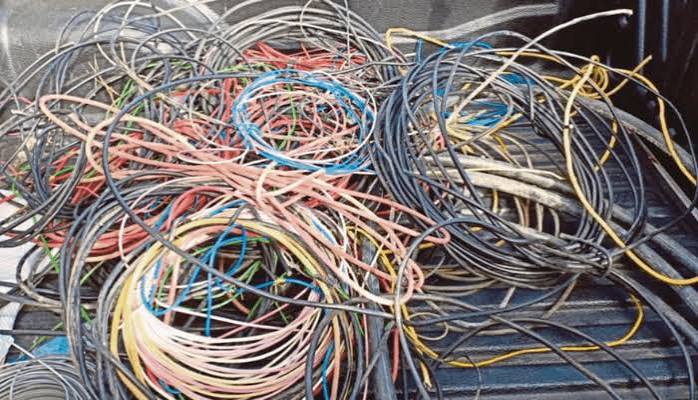
Stakeholders in Nigeria’s telecommunication industry have raised the alarm over the vandalism of telecoms infrastructure.
They said it was high time the government penalises organisations and individuals whose activities damage fibre networks.
The chairman of the Association of Licensed Telecom Operators of Nigeria, Gbenga Adebayo, who spoke in Lagos, said the association had repeatedly called for greater protection of telecom infrastructure nationwide.
He said the issue goes beyond the telecom industry because the infrastructure now carries an expanding share of everyday economic activity, from Point of Sales (PoS) payments and bank transfers to digital commerce and other services.
He explained that, ‘’Nigeria’s electronic payments economy recorded a major expansion in the first quarter of 2026, with Point of Sale transactions rising to N18.78 trillion, even as repeated damage to telecom infrastructure threatens the reliability of the networks supporting the country’s growing cashless economy.
‘’The N18.78 trillion recorded in POS transactions in the first quarter therefore represents more than growth in the use of electronic payment terminals. It shows how deeply digital transactions have become embedded in everyday commerce — and how increasingly costly network disruption could become as more businesses and consumers move away from cash.
‘’With electronic payments expanding into communities previously underserved by formal banking, the resilience of the telecommunications networks supporting those transactions is becoming an increasingly important part of Nigeria’s financial-inclusion and digital-economy agenda.’’
The association further posited that data from the Nigeria Inter-Bank Settlement System (NIBSS) showed that POS transaction value increased by 79.03 per cent year-on-year in the first quarter, from N10.49 trillion in the corresponding period of 2025 to N18.78 trillion in January-March 2026.
According to him, the figure represents an average of about N208.7 billion processed through POS terminals every day during the 90-day quarter, adding that the surge underlines the rapid expansion of electronic payments beyond conventional bank branches and into markets, transport hubs and communities where agent banking has become an important channel for accessing financial services.
‘’Industry stakeholders have consequently continued to push for stronger protection of telecom infrastructure and better coordination between network operators, government agencies and contractors working on roads and other public projects,’’ he said.
We’ve got the edge. Get real-time reports, breaking scoops, and exclusive angles delivered straight to your phone. Don’t settle for stale news. Join LEADERSHIP NEWS on WhatsApp for 24/7 updates →
Join Our WhatsApp Channel