Stakeholders in Nigeria’s peacebuilding sector have called for stronger coordination, institutional alignment, and political commitment to drive the successful implementation of the National Peace Policy (NPP), emphasizing that peace is a fundamental requirement for national development.
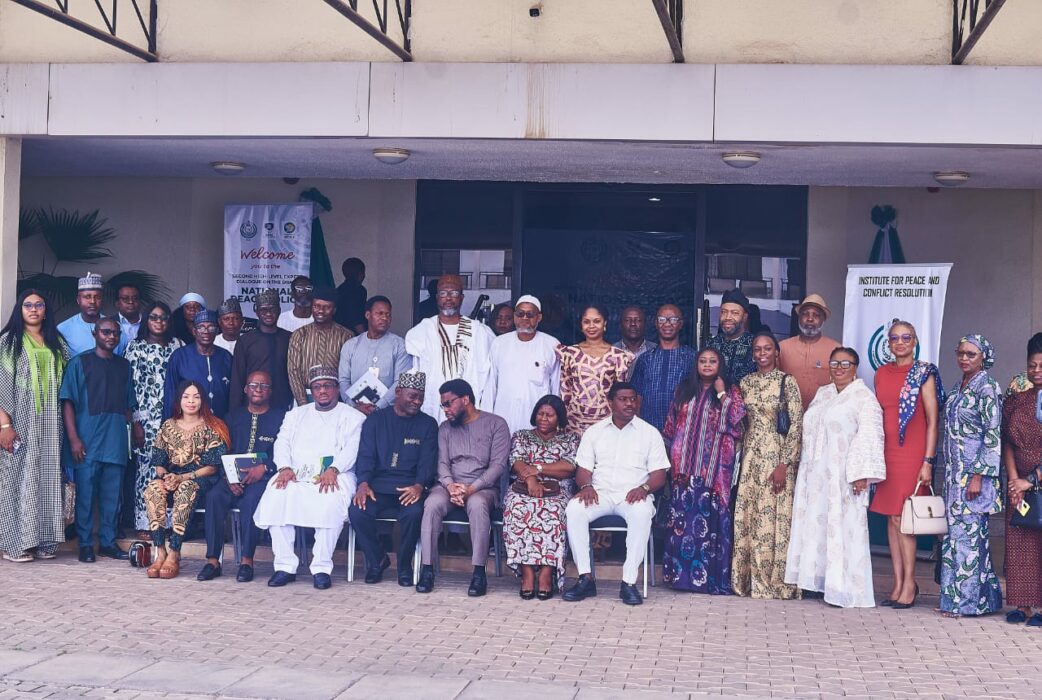
The call was made at the Second High-Level Experts Dialogue on the Draft National Peace Policy, convened by the Institute for Peace and Conflict Resolution (IPCR) in collaboration with the Office of Strategic Preparedness and Resilience (OSPRE) and Triple Peace Africa.
Nigeria at a Critical Crossroads.
In his opening remarks, the Director-General of IPCR, Dr. Joseph Ochogwu, said Nigeria’s security landscape remains complex and multi-layered, citing insurgency in the North-East, banditry in the North-West, communal conflicts in the North-Central, and separatist tensions in the South-East.
He noted that the proliferation of small arms and weakening community trust have further compounded the country’s peace and security challenges.
According to him, these realities underscore the urgent need for a comprehensive and coordinated national framework.
Bridging Fragmentation in Peacebuilding
Ochogwu observed that Nigeria currently lacks a unified policy to harmonise peacebuilding efforts across federal, state, and non-state actors, resulting in duplication, resource wastage, and limited impact.
“The absence of coordination has led to institutional rivalry and gaps that leave communities vulnerable despite multiple interventions,” he said.
He explained that the National Peace Policy is designed to address these gaps by providing a central framework that aligns efforts, enhances accountability, and ensures measurable outcomes.
A key focus of the proposed policy is the transition from crisis-driven responses to preventive and strategic peacebuilding.
Stakeholders emphasised the need for early warning systems, data-driven decision-making, and long-term planning to mitigate conflicts before they escalate.
They also stressed that peacebuilding must be mainstreamed across critical sectors, including security, justice, governance, education, and economic development.
Participants at the dialogue underscored the importance of adopting a whole-of-government and whole-of-society approach.
The Director-General of the Office of Strategic Preparedness and Resilience (OSPRE) , Chris Ngwodo, noted that while the peacebuilding community in Nigeria is relatively small, it holds significant influence and must leverage collaboration rather than operate in silos.
“The goal is to move away from fragmented and competitive approaches towards a unified national effort,” the representative said.
Additionally, a representative of the House Committee on Peacebuilding and Social Cohesion, Hon. Joshua Ado Gana, highlighted the role of shared values in sustaining peace.
Drawing from personal experiences of interfaith harmony, he stressed the need to return to principles of unity, tolerance, and mutual respect.
“Peacebuilding must be rooted in love for one another and a collective commitment to national unity,” he said.
The National Peace Policy is structured to align with international and regional frameworks, including the United Nations Sustaining Peace Agenda, the African Union’s Agenda 2063, and the ECOWAS Conflict Prevention Framework.
This alignment is expected to strengthen Nigeria’s position in regional and global peacebuilding efforts while ensuring policy coherence to finalise and update the draft policy to reflect current realities, in addition to strengthening coordination among institutions,
securing sustainable funding mechanisms, and expanding consultations across all levels of government and society.
Participants stressed that dialogue must translate into action, noting that communities affected by conflict cannot afford delays.
They called for sustained commitment from all stakeholders to ensure the National Peace Policy evolves from a draft framework into a fully operational tool for national stability and development.
We’ve got the edge. Get real-time reports, breaking scoops, and exclusive angles delivered straight to your phone. Don’t settle for stale news. Join LEADERSHIP NEWS on WhatsApp for 24/7 updates →
Join Our WhatsApp Channel