
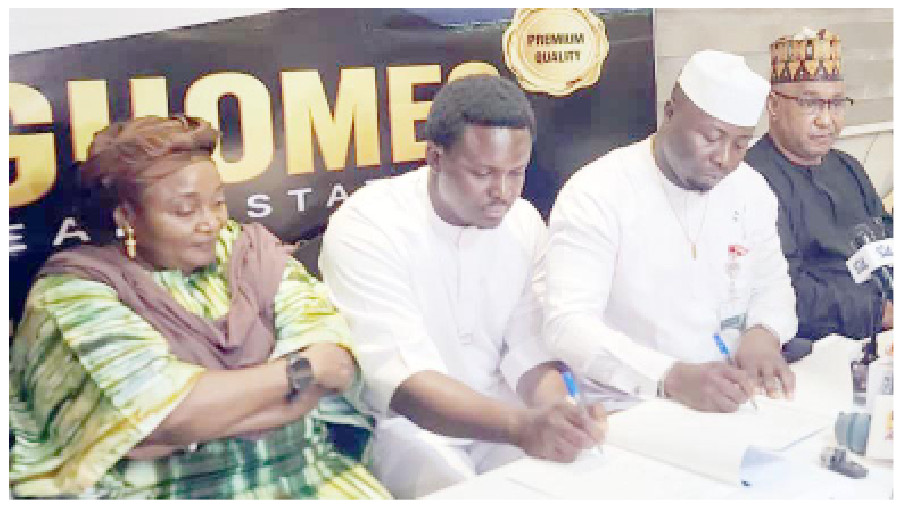
A major step toward transforming Nigeria’s tourism landscape has been taken with the signing of a strategic pact to reposition the country as a leading global tourism destination in Africa.
This agreement, unveiled in Abuja, introduces a comprehensive framework focused on infrastructure-driven tourism development, designed to unlock Nigeria’s vast cultural, historical, and natural assets for both domestic and international visitors.
The initiative brings together key stakeholders across the public and private sectors, with a shared commitment to improving critical infrastructure, enhancing tourist experiences, and promoting sustainable tourism practices nationwide.
The National Infrastructural Tourism Development Initiative (NITDI) marks a significant milestone ahead of World Tourism Day 2026. It sets the stage for the Infrastructural Tourism Development Summit 2026, scheduled for 24th September in Abuja.
Speaking during the signing of a Memorandum of Understanding (MoU), Phil Roberts, Executive Director of the Tourism Volunteers Network, emphasised the critical role infrastructure plays in unlocking Nigeria’s vast tourism potential.
Drawing from his travel experiences across Nigeria and beyond, including road trips from Abuja to Delta State and an attempted drive from Nigeria to Ethiopia, Roberts said such journeys exposed how countries deliberately design and sustain tourism ecosystems.
According to him, one of the major challenges in Nigeria’s tourism sector is the gap between “tourism sites” and “tourism destinations.”
“A tourism site remains stagnant, but it becomes a destination when supported with infrastructure, good roads, electricity, housing, internet, food systems, and security,” he said.
He disclosed that Abuja has been designated as a “Living Infrastructure Tourism City,” serving as a pilot model for nationwide replication.
“The Memorandum of Understanding (MoU) was signed by Phil Roberts, Convener of the forthcoming Infrastructural Tourism Development Summit and representative of tourism stakeholders, and Big Homes Ltd, representing real estate practitioners.”
Roberts outlined key development zones within the Abuja master plan, including Aso Rock as an iconic tourism zone; Jabi Lake as a blue economy and waterfront destination; Maitama and Asokoro as luxury tourism and experiential real estate hubs; Mpape and Katampe as nature and adventure tourism zones; and Bwari and AMAC as agro-tourism and rural development zones.
He noted that the structured zoning approach is designed to maximise the capital city’s natural, cultural, and infrastructural assets.
Citing global examples, Roberts pointed to countries like China, Dubai, and the United States, where infrastructure development has been effectively leveraged to drive tourism growth and economic expansion.
“We don’t need to take our money abroad for tourism experiences. With the right infrastructure, Nigeria can become the destination the world comes to see,” he added.
He further highlighted the need for collaboration with tourism experts and identified the Nigeria Tourism Development Authority as a key institution in driving tourism investment and policy direction.
“Tourism remains the biggest marketing tool for any country. Nations promote themselves globally through tourism, yet in Nigeria, those responsible for this promotion are often neglected,” he said.
Roberts also noted that limited access to financing continues to hinder growth in the sector, restricting investors and practitioners from scaling operations.
A major highlight of the engagement was the role of real estate in tourism development. Stakeholders emphasised that infrastructure planning must go beyond basic construction to include designs tailored to tourism.
“Every building should be designed as a potential destination. People should be able to visit, experience, and even pay to access unique spaces,” he stated.
He added that cities such as Dubai and major destinations in China generate significant revenue by turning infrastructure into tourist attractions—a model Nigeria can adopt.
The NITDI framework aims to integrate tourism, real estate, and infrastructure; promote sustainable housing and urban development; drive job creation and economic growth; and attract foreign direct investment (FDI).
Abuja has been selected as the pilot city, with plans to expand to other states through collaboration with federal ministries and agencies.
Roberts also announced that the Infrastructural Tourism Development Summit 2026 will be held in September to commemorate World Tourism Day 2026, under the theme: “Building Today, Building Tomorrow: Infrastructure for a Stronger Tourism Future.”
In his remarks, Topsy Essien, Managing Director of Big Homes Nigeria, reaffirmed the company’s commitment to developing sustainable, tourism-friendly communities.
He revealed ongoing high-rise projects in key Abuja locations, including Jabi, Dakibiyu, and Durumi, designed as integrated ecosystems combining housing, recreation, healthcare, and commercial services.
“Sustainable communities are self-sufficient. They provide everything residents need while also creating attractive environments for visitors,” he said.
He also stressed the need for Nigeria to adopt unique architectural designs that reflect local culture and climate rather than replicating foreign models.
Stakeholders noted that originality in infrastructure would enhance Nigeria’s appeal to international tourists seeking authentic experiences.
They concluded that with the right policies, investments, and collaboration, Nigeria can unlock its tourism potential, reduce capital flight, and establish itself as a world-class destination.
We’ve got the edge. Get real-time reports, breaking scoops, and exclusive angles delivered straight to your phone. Don’t settle for stale news. Join LEADERSHIP NEWS on WhatsApp for 24/7 updates →
Join Our WhatsApp Channel